





Common Checkered Whiptail
Aspidoscelis tesselatus
The Common Checkered Whiptail is a lively lizard with beautiful patterns on its skin. It loves to run fast and can often be seen darting around in sunny places.
Habitat: Desert
The Common Checkered Whiptail has a slender body with a very long, whip-like tail, often twice its body length. It features a distinct pattern of dark brown or black squares on a lighter tan or yellow background, giving it a checkered look. Juveniles sometimes display a bright blue tail tip.
Category
ReptilesRarity
Common
Danger
1/5 · Very low
Snaps
6
Its super long tail can be twice as long as its whole body!
They use their tongues to 'smell' the world, just like a snake!
This speedy lizard often runs on just two legs to go even faster!
Whiptails are masters at digging, creating burrows for cool hideouts.
Common Checkered Whiptail can drop its wiggling tail to distract predators, letting the lizard escape to safety!
Common Checkered Whiptail has incredibly fast bursts of speed that help it catch quick insects and flee from danger.
Some Common Checkered Whiptails can lay eggs that hatch without a male because they are all-female populations, making babies alone!
They munch on all sorts of creepy crawlies like insects and spiders.
Geococcyx californianus
Fast birds that hunt lizards in the desert.
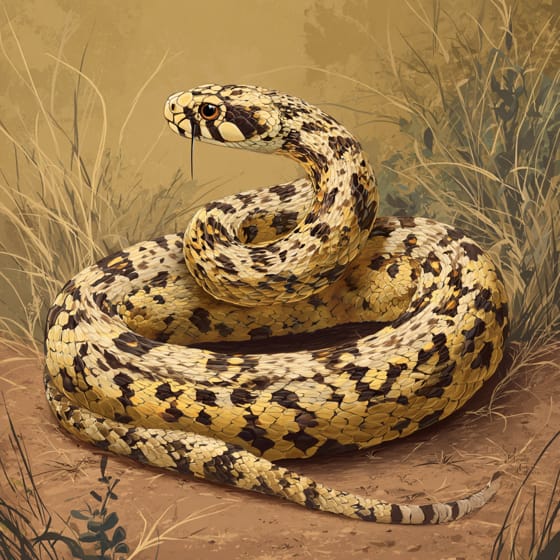
Pituophis catenifer
Larger snakes that ambush these lizards as prey.
Acheta domesticus
A common insect often hunted by whiptails.
Pogonomyrmex barbatus
Hunts ants with its pointed snout.
Solitary animals live alone for most of their lives, only interacting with others for mating or parental care.
Camouflaged describes organisms that possess coloring or patterns that allow them to blend into their environment.
Colorful describes organisms or objects displaying a wide range of bright and distinct colors.
This trait identifies organisms whose diet primarily consists of insects and other small invertebrates.

Desert habitats are arid regions characterized by extremely low precipitation and often extreme temperatures, supporting specialized flora and fauna.

This trait identifies organisms whose diet consists entirely or primarily of animal tissue.

Diurnal animals are primarily active during daylight hours, typically resting or sleeping at night.

This trait identifies organisms that exhibit exceptional swiftness in movement for hunting, escape, or travel.
No aliases listed yet.
Danger
1/5 · Very low
Always watch where you step in the desert, as lizards can be quick and might surprise you!
The easiest way to identify Common Checkered Whiptail is to use the Snappit nature identifier app.
20-30 cm
0.005-0.02 kg
2-5 years
25 km/h
They munch on all sorts of creepy crawlies like insects and spiders.
Desert
Foraging
Zoom in to split clusters and explore where this object has been snapped.

New Mexico, US
You might spot Vermilion Flycatcher, Turkey, and American Rubyspot.
View guide →

New Mexico, US
You might spot Sunflower, Sideoats Grama, and Tree Cholla.
View guide →

US
You might spot Creosote Bush, Great-Tailed Grackle, and Ocotillo.
View guide →

Texas, US
You might spot Tree Cholla, House Sparrow, and Tahoka Daisy.
View guide →

New Mexico, US
You might spot Texas Rainbow Cactus, Giant Desert Centipede, and Ocotillo.
View guide →

New Mexico, US
You might spot Ocotillo, Texas Mountain Laurel, and Agarita.
View guide →
Take the discovery with you
Snap it with Snappit to identify it, learn what makes it special, and add the discovery to your collection.












