





common cowparsnip
Heracleum maximum
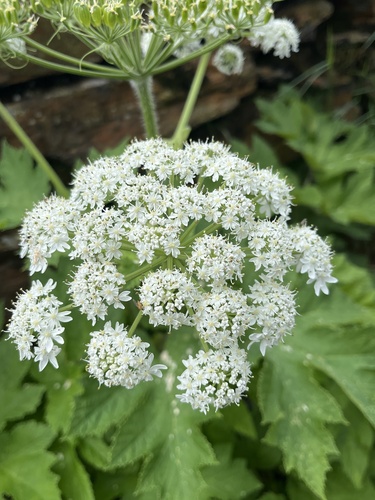
Common cowparsnip is a tall plant with big, green leaves and white flowers that look like umbrellas. It grows in sunny places and can be found near rivers and streams.
Habitat: Wetlands
The common cowparsnip has large, deeply-lobed leaves and towering, hollow stems, topped with broad, flat-topped clusters of tiny white flowers. Its impressive height and umbrella-like flower heads make it a distinctive sight in meadows and woodlands.
Category
PlantsRarity
Common
Danger
2/5 · Low
Snaps
63
Its giant leaves can create cool shade for small forest creatures on a sunny day!
Native Americans once used its young stems as a spring vegetable!
The plant's tough, hollow stems were sometimes used to make whistles!
You can sometimes see ladybugs resting on its wide, flat flower clusters.
Common cowparsnip has sap that irritates skin in sunlight, helping it deter hungry animals from eating its leaves.
Common cowparsnip has large, flat flower clusters that act like a giant landing pad, attracting many insect pollinators.
Common cowparsnip has sturdy, hollow stems that help it grow tall quickly, reaching sunlight effectively.
Apis mellifera
attracted to its large flower clusters

Bombus bimaculatus
important native pollinator for its flowers

Odocoileus virginianus
young plants are sometimes browsed by deer
Flowering plants are any plants that produce flowers as part of their reproductive cycle.
Cluster flowers are inflorescences where individual flowers are arranged closely together on a common stem.
Summer blooming plants produce their flowers during the summer season, often providing vibrant color when many other plants have finished.
Broadleaf trees are angiosperms characterized by flat, wide leaves that are typically shed annually in temperate climates.

Medicinal plants possess chemical compounds that can be used for therapeutic purposes to treat illnesses or maintain health.

Describes plants that are particularly attractive and beneficial to a wide range of pollinating organisms.

Rapid growing plants exhibit accelerated growth rates, quickly increasing in size and biomass within a short period.

This habitat trait identifies species found in wetlands, which are areas of land saturated with water, either permanently or seasonally, including marshes, swamps, and bogs.

Describes a species whose presence and role have a disproportionately large effect on its environment.
No aliases listed yet.
Danger
2/5 · Low
Do not touch the plant's sap, as it can cause skin irritation. Always look but don't touch!
The easiest way to identify common cowparsnip is to use the Snappit nature identifier app.
100-300 cm
50-150 cm
0.5-1.5 cm
Late spring to mid-summer
No
Moderate
Biennial
Zoom in to split clusters and explore where this object has been snapped.
Jun 16, 2026
Saxman Totem ParkPhoto attribution
no rights reserved
License: CC0 1.0 ↗
Image may be shown cropped inside the card frame.

Illinois, US
You might spot Common Eastern Bumble Bee and Brown-Belted Bumble Bee.
View guide →
Iowa, US
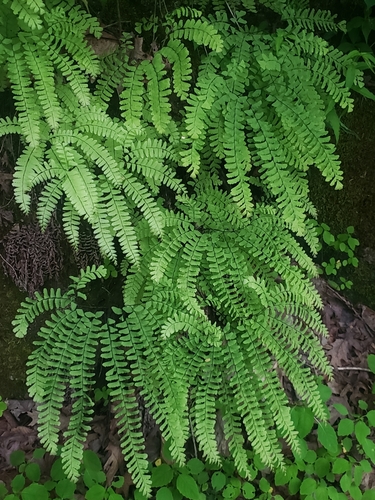
You might spot Northern Maidenhair Fern and Wood Nettle.
View guide →

Ohio, US
You might spot Large White Trillium, Fire Pink, and Christmas Fern.
View guide →

Wisconsin, US
You might spot Turkey, White-Tailed Deer, and Dame's Rocket.
View guide →

US
You might spot Bald Eagle, Common Raven, and Salmonberry.
View guide →

Vermont, US
You might spot Eastern White Pine, Staghorn Sumac, and Box Elder.
View guide →
Take the discovery with you
Snap it with Snappit to identify it, learn what makes it special, and add the discovery to your collection.







.jpg&width=800)


_001.jpg&width=800)




