.jpg&width=800)




giant vetch
Vicia gigantea
Giant vetch is a climbing plant with beautiful purple flowers. It grows in many places and helps make the soil healthy by adding nutrients.
Habitat: Grasslands
The giant vetch has robust, scrambling stems that climb high, adorned with many oval, paired leaves. Its clusters of pea-like flowers range from pale pink to purplish-blue, often with darker veins, making them visually distinct against the green foliage.
Category
PlantsRarity
Common
Danger
1/5 · Very low
Snaps
Be the first to snap!
It's a cousin to peas and beans, part of the same big plant family!
Its scientific name, Vicia gigantea, literally means 'giant vetch'!
Some people eat its young leaves in salads, tasting a bit like spinach!
The word 'vetch' comes from an old Latin word meaning 'to bind'!
Giant vetch can take nitrogen from the air and put it into the soil, acting like a natural fertilizer for nearby plants.
When its seed pods dry, they can twist and pop open, flinging seeds far away to find new places to grow.
Bombus impatiens
Bumblebees visit its flowers for nectar and pollen.
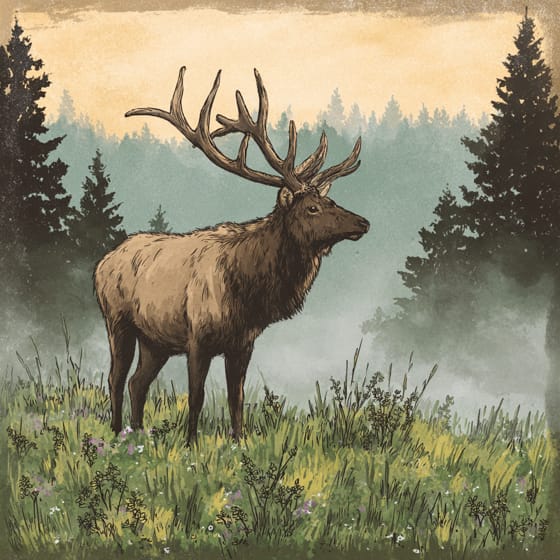
Cervus canadensis
Elk browse on the leaves and stems of giant vetch.
Rhizobium leguminosarum
Tiny bacteria in its roots help it make its own fertilizer.
Apis mellifera
Honey bees are frequent visitors to its nectar-rich flowers.
Climbing or vine plants are characterized by a growth habit that allows them to ascend upwards by twining, tendrils, or adhesive roots.
Flowering plants are any plants that produce flowers as part of their reproductive cycle.
Describes organisms capable of converting atmospheric nitrogen into compounds usable by plants.
Summer blooming plants produce their flowers during the summer season, often providing vibrant color when many other plants have finished.

Grassland habitats are terrestrial biomes dominated by grasses and herbaceous plants, supporting a variety of grazing animals.

Describes plants that are particularly attractive and beneficial to a wide range of pollinating organisms.

Rapid growing plants exhibit accelerated growth rates, quickly increasing in size and biomass within a short period.

Describes a species whose presence and role have a disproportionately large effect on its environment.
No aliases listed yet.
Danger
1/5 · Very low
Always check with an adult before touching plants, just to be safe.
The easiest way to identify giant vetch is to use the Snappit nature identifier app.
100-300 cm
50-200 cm
1-2 cm
Late Spring to Summer
Yes
None
Perennial
Zoom in to split clusters and explore where this object has been snapped.
Recent snaps will appear here as new observations are added.
Take the discovery with you
Snap it with Snappit to identify it, learn what makes it special, and add the discovery to your collection.








.jpg&width=800)



_001.jpg&width=800)




