


Common Earthball
scleroderma citrinum
Earthballs (genus Scleroderma) are round, stemless fungi with a tough, scaly skin and a dark mass of spores inside. The common earthball, Scleroderma citrinum, grows on acid, sandy soils in woods across Europe and North America, where its threads team up with tree roots. It is poisonous, and although it looks like a puffball, it is more closely related to boletes.
Also known as Pigskin poison puffball, Citrine earthball, Earth ball
Rarity: Common
8–13 µm per spore, far too small to see
3 stages pale, purple-black, spore dust
4–12 cm across when full-grown
Up to 80% of a plant’s N and P can come via mycorrhizal fungi
1–21% of a plant’s yearly growth goes to its root fungi
1–3 mm thick rind
1 host the parasitic bolete grows on nothing elseStill debated
123 times closed spore balls evolved separately
Tap a pin on the model or a part below.
1–3 mm thick rind
citrinum means lemon-yellow
Never pure white inside
8–13 µm across, one spore
Wind + rain carry the spores away
10 mg/L cadmium one strain grew through
1–21% of a plant’s yearly growth paid to its root fungi
2.5–7 cm cap of the parasitic bolete
Three looks of the common earthball, plus a puffball to compare. Pick one to repaint the model.
Fungi don’t have moods, but an earthball shows clear signs of how ripe it is.
Photos from Wikimedia Commons. Some of them can repaint the 3D model.
Measured by mycologists and recorded by naturalists, with comparisons you can picture.
Lookalikes, old stories and popular claims, checked against the evidence.
0 of 8 answered
Earthballs belong to the Boletales, the same order as boletes. Common puffballs belong to the Agaricales, with gilled mushrooms. Their ball shapes evolved separately.[7, 6, 19, 20]
The common earthball is poisonous and is behind many mushroom poisonings in the UK each year. At one German hospital it caused 4.7% of mushroom-poisoning cases.[3, 26]
An earthball is never pure white inside: it is whitish with a pink-purple tinge at first and soon turns purple-black. Young puffballs are pure white. Even so, never eat wild fungi.[3, 2]
That is a puffball. An earthball has no ready-made opening: its ripe skin tears into a large, irregular hole.[3, 1, 6]
The expert guides we checked describe an unpleasant, rubbery smell like gas. The potato comparison is about its warty, potato-like look.[3, 1]
Earthballs are mycorrhizal fungi: their threads partner tree roots, swapping nutrients from the soil for the tree’s sugars.[2, 14, 12]
The parasitic bolete, Pseudoboletus parasiticus, sprouts out of common earthballs and grows nowhere else.[3, 10]
Reportedly, yes: the Woodland Trust notes that earthballs were sometimes sold as truffles in the past. Real truffles are a different group of fungi that grow underground.[3, 27]
Superlatives with numbers behind them.
What happens above and below the ground, from summer into early winter (Britain and Ireland).
Earthballs are poisonous, but a few simple habits keep everyone safe. Admire them, photograph them and leave them where they grow.
Don’t eat
any wild fungus
Earthballs are poisonous and are often mistaken for edible puffballs. Never eat a mushroom you find.[3, 26]
Don’t sniff
spore clouds
Breathing in lots of puffball spores has made people ill, so keep your face away from dusty, ripe fungi.[13]
Wash
your hands
If you touch a fungus, wash your hands before eating, and keep your fingers away from your mouth and eyes.
Tell
an adult
If someone may have eaten part of a mushroom, tell an adult straight away. A photo or a piece of the mushroom helps experts work out what it was.[4]
111 / 999
in the UK
Call NHS 111 if you’re not sure whether something swallowed, touched or breathed in is harmful. Call 999 if someone is seriously unwell.[21]
This page is for learning, not medical advice. Outside the UK, call your local poison centre or emergency number.
Three kinds of fungus balls that people mix up.
| Common earthball | Common puffball | Périgord black truffle | |
|---|---|---|---|
| Fungus group[18, 6, 27] | Boletales, with boletes | Agaricales, with gilled mushrooms | Ascomycetes (sac fungi) |
| Where it grows[3, 23, 27] | On the ground in woods, often on moss or sandy soil | On the ground in woods, by roadsides and in towns | Underground, in chalky soils of southern Europe |
| How it lives[2, 23, 27] | Partner of tree roots (mycorrhizal) | Recycles dead plant matter | Partner of tree roots (mycorrhizal) |
| How spores get out[3, 1, 6, 27] | Skin tears open; wind and rain | Small hole on top; raindrops squeeze out puffs | Forms underground (not covered here) |
| Spore width[1, 6] | 8–13 µm, spiny | 3.5–4.5 µm | Not covered here |
| Food?[3, 6, 27] | No: poisonous | Young ones are eaten by experts; lookalikes are risky | A prized delicacy, sold by experts |
Never eat any wild fungus you find. Lookalikes fool people every year.
The common earthball is the most-recorded earthball in the GBIF database, but like many fungi it has never been formally assessed.
IUCN Red List
Not Evaluated (NE)
Trend unknownThe IUCN Red List has not assessed Scleroderma citrinum. It is very common: GBIF holds 85,784 records, 77,486 of them from Europe.[18, 28]
Not evaluated (IUCN status checked via GBIF, 2026)
Changing forests
Mycorrhizal fungi depend on their host trees. Across European forests, the environment and the host trees explain most of the variation in which of these fungi are found.[29]
Hungrier trees
Many European forests show worsening tree nutrition. Scientists suspect changes in mycorrhizal fungi may be part of the reason, but this is still being tested.[30]
Unknown trend
Without a Red List assessment, nobody knows whether earthball numbers are rising or falling.[18]
Record sightings85,784
Photos and records shared by naturalists build maps like GBIF’s. Snap it, don’t pick it.[18]
Earthballs at work
A tropical earthball, Scleroderma bermudense, partners seagrape trees that are planted to stabilise and restore damaged coastal sand dunes.[31]
Stronger seedlings1.13–2.48×
Hazel seedlings partnered with another earthball, Scleroderma bovista, grew roots 1.13 to 2.48 times bigger in length, area and volume than seedlings without it.[32]
12 questions. Every answer is somewhere on this page.
Question 1 of 12Score 0
Answer: Hard skin. It comes from Greek words for “hard” and “skin”.
Answer: Purple-black with white marbling. The pale inside turns purple-black with white veins, then becomes dark spore powder.
Answer: Its skin tears open and wind and rain carry them away. There is no ready-made hole: the skin splits into a large, irregular opening.
Answer: Boletales, with boletes. Despite looking like puffballs, earthballs are related to boletes.
Answer: A mycorrhiza. A mycorrhiza is a partnership between a fungus and plant roots.
Answer: Sugars. Plants hand 1–21% of their yearly production to their mycorrhizal fungi as sugars.
Answer: Parasitic bolete. Pseudoboletus parasiticus grows on the common earthball and nowhere else.
Answer: 8–13 µm. That is a few thousandths of a millimetre: far too small to see on its own.
Answer: July to early December. Their season runs from July to early December.
Answer: Tell an adult straight away and get medical advice. Tell an adult. In the UK, call NHS 111, or 999 if someone is seriously unwell.
Answer: 123 times. Earthballs, puffballs and other closed spore balls evolved separately 123 times.
Answer: Not evaluated. The IUCN has not assessed it, although it is very common.
Diet, food web, safety and badges from the Snappit field guide.

OakSymbiotic with
Helps oak trees get water and nutrients from the soil.

Scots PineSymbiotic with
Forms beneficial root connections, aiding pine tree growth.
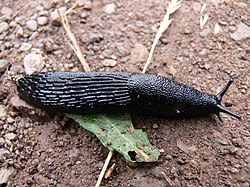
Black SlugEaten by
Slugs occasionally nibble on its developing fruiting body.

Ground BeetleEaten by
Some beetles might feed on its decomposing tissues.
Danger 2/5 · Low
Do not touch or eat wild mushrooms without adult supervision.
Pigskin poison puffball · Citrine earthball · Earth ball · Common Earthball Fungus · Earthball Mushroom · Scleroderma
Compare the cap shape, the underside, the stem and base, and whether the fungus grows on wood or soil. Some fungi have gills, others pores or teeth. A cap seen only from above often hides the most useful features. Mushroom Identifier: upload a photo and compare the visible details.
poisonous
3-10 cm
Forests, grasslands, and sometimes gardens.
soil
Summer to Fall
Olive-brown to purplish-brown
Yes. The common earthball is poisonous and causes mushroom poisonings in the UK and elsewhere every year. It is not usually described as deadly, but it should never be eaten.
Earthballs have a thick, warty, yellow-brown skin, no hole on top, and are never pure white inside: they turn purple-black early. Common puffballs are pear-shaped and open by a small hole at the top. Even so, never eat a wild fungus you find.
The gleba, a mass of developing spores. It is whitish when young, turns purple-black with white marbling, and ends as a dark, dusty spore powder.
It’s best not to pick wild fungi, and if you do touch one, wash your hands afterwards. Keep your face away from the dusty spores of ripe ones. If you’re worried someone has swallowed, touched or breathed in something harmful, in the UK call NHS 111, or 999 if they are seriously unwell.
It is probably the parasitic bolete, Pseudoboletus parasiticus. It grows only on the common earthball, alone or in small clusters, in summer and autumn.
Not closely. Earthballs belong to the Boletales, with boletes, while truffles are ascomycetes that form their fruiting bodies underground. Earthballs were reportedly once passed off as truffles.
On acid, sandy soils in woods, often on moss, forest paths and the banks of ditches, near the trees they partner. In Britain and Ireland they appear from July to early December.
Fungi can’t use sunlight. The earthball’s threads partner tree roots: the tree sends down sugars, and the fungus delivers nitrogen and phosphorus from the soil. In culture studies, plants gave 1–21% of their yearly production to such fungi.
Zoom in to split clusters and explore where this object has been snapped.
Take the discovery with you
Snap it with Snappit to identify it, learn what makes it special, and add the discovery to your collection.