

Common Periwinkle
littorina littorea
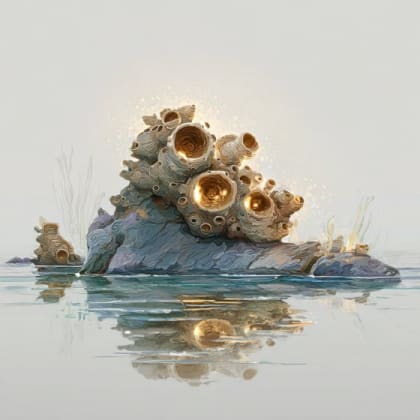
The Common Periwinkle (Littorina littorea) is a small but mighty marine gastropod that dominates the rocky shores of the North Atlantic. Known for its incredible resilience, this robust sea snail is a master of the intertidal zone, enduring pounding waves, fluctuating temperatures, and prolonged exposure to air during low tide. Native to Europe but now widespread along the North American coastline as an introduced species, it plays a massive role in shaping coastal ecosystems through its constant grazing on algae. Beyond its ecological significance, the Common Periwinkle has a long history intertwined with human culture. It has been gathered as a nutritious coastal food source for thousands of years, commonly boiled and eaten as a traditional seaside snack. Whether you are turning over rocks in a tidal pool or admiring the biodiversity of a rugged shoreline, you are almost guaranteed to cross paths with this hardy, ubiquitous little mollusk.
Habitat: Found along rocky coastlines, often clinging to rocks, tide pools, and seaweed in the intertidal zone.
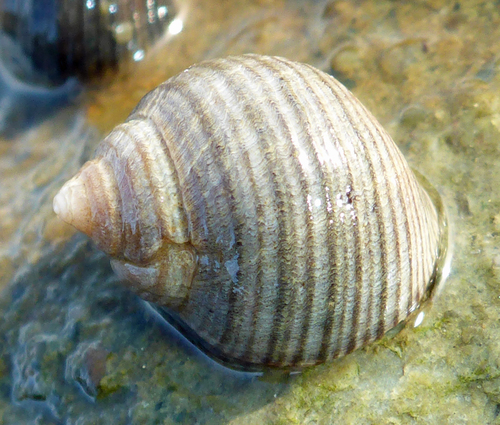
The Common Periwinkle features a thick, robust, spiral shell that typically measures between 1 to 3 centimeters in height. The shell has five to six slightly convex whorls, tapering to a sharply pointed apex. Its coloration is generally dark, ranging from grey-black to dark brown, though it can occasionally exhibit lighter spiral banding or a reddish tint. The opening of the shell is ovate with a pale inner lip. When active, its fleshy, dark-grey body and two sensory tentacles emerge. When threatened or exposed to air, the snail retreats and seals the opening with a dark, corneous 'trapdoor' known as an operculum.
Category
InvertebrateRarity
Common
Danger
1/5 · Very low
Snaps
7
Common Periwinkles were introduced to North America in the mid-19th century and have since become one of the most abundant shoreside snails there.
In the UK, eating boiled winkles using a pin to extract the snail from its shell is a traditional seaside activity dating back centuries.
Their constant grazing uses a radula covered in microscopic teeth that actually erodes coastal rocks over long periods of geological time.
To survive low tide on hot days, they can produce a specialized glue that attaches their shell lip to a rock, hanging freely to avoid absorbing excess heat from the stone.
It can seal its shell tightly with a horny trapdoor called an operculum, allowing it to survive for weeks out of water without drying out.
Equipped with a ribbon of microscopic, chitinous teeth known as a radula, it efficiently scrapes tough algae and diatoms directly off hard rock surfaces.
It secretes a powerful mucus foot-hold that allows it to grip slick, wave-battered rocks, preventing it from being washed out to sea during storms.
The Common Periwinkle is primarily a grazing herbivore, feeding on microalgae and the germlings of larger seaweeds.
Age differences: Larvae are pelagic and feed on phytoplankton before settling on rocks to graze on benthic algae as adults.

Carcinus maenas
A common predator that actively crushes and eats periwinkles.
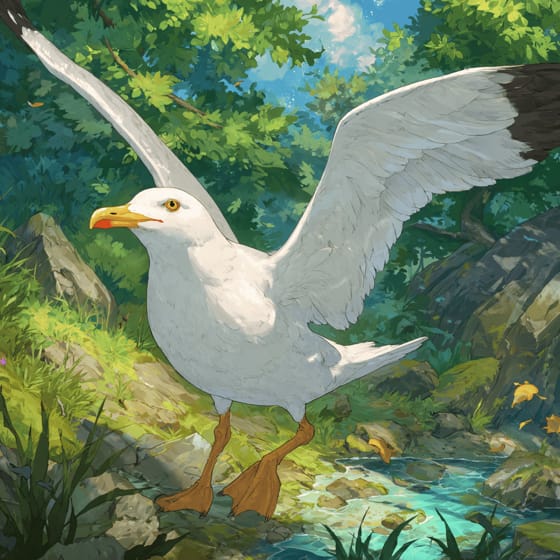
Larus argentatus
Birds that forage in the intertidal zone will swallow periwinkles whole or drop them on hard rocks to break their shells.
Ascophyllum nodosum
Provides a resting place and a source of epiphytic algae for the periwinkle to graze upon.
No trait badges are assigned for this object yet.
No aliases listed yet.
Collections for this object will appear here as more themes are added.
Danger
1/5 · Very low
No special safety notes yet.
The easiest way to identify Common Periwinkle is to use the Snappit nature identifier app.
1-3 cm
0.002-0.015 kg
3-10 years
The Common Periwinkle is primarily a grazing herbivore, feeding on microalgae and the germlings of larger seaweeds.
Found along rocky coastlines, often clinging to rocks, tide pools, and seaweed in the intertidal zone.
Grazing
10000-100000
Zoom in to split clusters and explore where this object has been snapped.

Massachusetts, US
You might spot Common Eastern Bumble Bee and Asian Lady Beetle.
View guide →

US
You might spot Common Eider, American Herring Gull, and Common Periwinkle.
View guide →

Connecticut, US
You might spot Brant, American Herring Gull, and Double-Crested Cormorant.
View guide →

Maine, US
You might spot Rugosa Rose and European Green Crab.
View guide →

Rhode Island, US
You might spot American Herring Gull and White-Tailed Deer.
View guide →

US
You might spot Rugosa Rose and European Green Crab.
View guide →
Take the discovery with you
Snap it with Snappit to identify it, learn what makes it special, and add the discovery to your collection.