





Conifer Sawflies
Diprionidae
Conifer sawflies are small insects that love to munch on pine trees! They have a unique look with their soft bodies and can be found in many forests.
Habitat: Forests
The Conifer Sawflies has a stocky, cylindrical body with a broad waist, unlike the narrow 'wasp waist' of true wasps. Adults often exhibit dull metallic sheens or patterns of black, brown, green, or yellow. Their four membranous wings are usually clear or slightly smoky.
Category
InsectsRarity
Common
Danger
1/5 · Very low
Snaps
Be the first to snap!
Sawfly larvae look like caterpillars but have more tummy legs!
Some sawflies can clone themselves without a male parent!
Their name comes from the female's saw-like organ used to cut slits for eggs!
Young sawflies wiggle their bodies together to scare away birds!
Conifer Sawflies larvae can regurgitate a defensive, sticky resin because it deters predators that try to eat them.
Conifer Sawflies larvae often feed in large groups that helps them overwhelm tree defenses and deter predators.
Some Conifer Sawflies species can reproduce asexually, creating offspring without needing a male partner.
Young sawflies munch on conifer needles, while adults often sip nectar.
Age differences: Larvae are herbivores, consuming conifer needles, while adults primarily feed on nectar or tree sap.
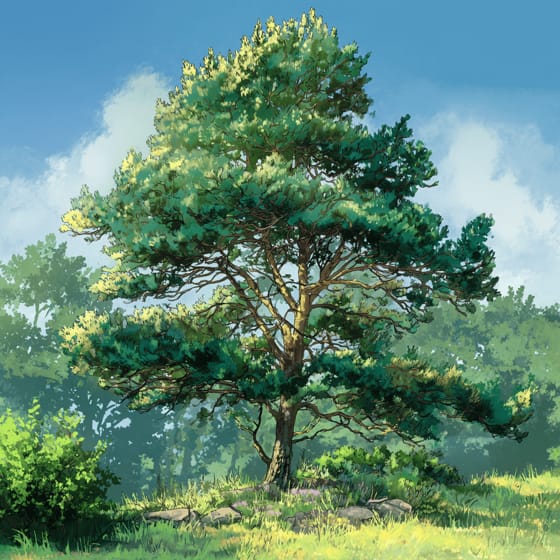
Pinus sylvestris
Sawfly larvae feed on their needles.
%2C_Parc_de_Woluw%C3%A9%2C_Brussels_(13042792905).jpg&width=800)
Parus major
They prey on sawfly larvae.
Lophyroplectus oblongus
This wasp lays eggs inside sawfly larvae.
Solitary animals live alone for most of their lives, only interacting with others for mating or parental care.
Camouflaged describes organisms that possess coloring or patterns that allow them to blend into their environment.
This trait characterizes organisms whose diet consists entirely or primarily of plant material.
Forest habitats are terrestrial environments dominated by dense tree cover, supporting a high diversity of plant and animal life.

Diurnal animals are primarily active during daylight hours, typically resting or sleeping at night.

Describes a species whose presence and role have a disproportionately large effect on its environment.

Pertaining to species that are significantly smaller than typical or average for their kind.

Describes organisms that transfer pollen, enabling the fertilization and reproduction of plants.
No aliases listed yet.
Danger
1/5 · Very low
Don't touch insects without asking an adult, as some can be delicate.
The easiest way to identify Conifer Sawflies is to use the Snappit nature identifier app.
10-20 mm
5-10 mm
30-90 days
5-10 km/h
Young sawflies munch on conifer needles, while adults often sip nectar.
Forests
Foraging
Zoom in to split clusters and explore where this object has been snapped.
Recent snaps will appear here as new observations are added.
Take the discovery with you
Snap it with Snappit to identify it, learn what makes it special, and add the discovery to your collection.







.jpg&width=800)


