

Creamcups
platystemon californicus
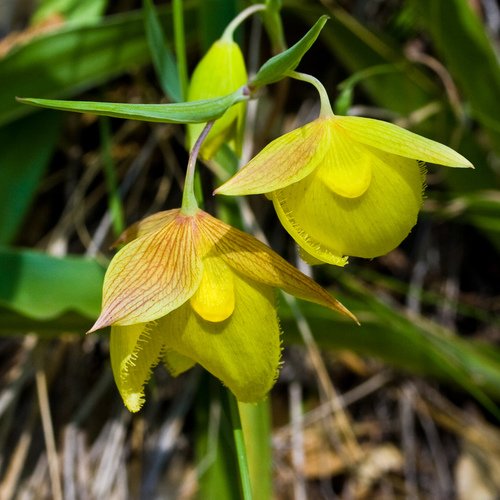
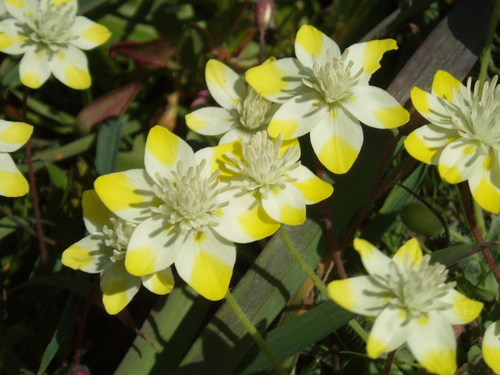
Creamcups (Platystemon californicus) is a charming and resilient annual wildflower native to the western United States, particularly abundant throughout California's diverse landscapes. As the sole member of its genus, this member of the poppy family forms magnificent, sprawling carpets of pale yellow and white across spring grasslands, coastal bluffs, and recently burned chaparral. Its ability to thrive in poor, sandy soils and its striking mass-blooming behavior make it a beloved sight for nature enthusiasts. Creamcups beautifully illustrates the ephemeral nature of desert and scrubland flora, bursting into bloom following winter rains and quickly completing its life cycle before the intense summer heat sets in.
Habitat: Found in open grasslands, sandy coastal bluffs, desert scrub, and recently burned chaparral areas across western North America.
Creamcups is a low-growing herbaceous plant that typically reaches 10 to 30 centimeters in height. It features distinctively hairy stems and slender, linear leaves that grow in opposite pairs or whorls. The star of the plant is its delicate, bowl-shaped flower, which showcases six pale cream to bright yellow petals, often adorned with a darker yellow spot at the base or bright yellow tips. The center of the flower is filled with numerous flattened, ribbon-like stamens. As the flowers mature, they develop into unique, elongated seed capsules that eventually segment into individual, bead-like units, a trait that easily distinguishes them from other poppies.
Category
PlantsRarity
Common
Danger
1/5 · Very low
Snaps
Be the first to snap!
Despite being in the poppy family, Creamcups' seed pods behave completely differently than a typical poppy's salt-shaker style pod, instead breaking apart into individual little bead-like segments.
During 'superbloom' years in California, Creamcups can grow in such dense, massive patches that entire hillsides appear to be painted in a pale, creamy yellow.
Platystemon is a monotypic genus, meaning Creamcups is the only species within its entire scientific genus.
The scientific name 'Platystemon' translates to 'flat stamen' in Greek, referring to the flattened, ribbon-like male reproductive parts of the flower.
It completes its entire life cycle rapidly during the moist spring months, leaving hardy seeds dormant in the soil to survive the dry, hot summer.
The plant thrives in post-fire environments where competing brush has been cleared, utilizing the newly opened canopy and nutrient-rich ash to germinate en masse.
Unlike other poppies that release seeds from pores in a unified capsule, its fruit splits into individual, indehiscent one-seeded segments to aid in ground-level dispersal.
As a photosynthetic plant, Creamcups produces its own food using sunlight, absorbing water and essential minerals from the soil.
Andrena spp.
Native mining bees are frequent visitors that help pollinate the flowers.
Bromus diandrus
Invasive annual grasses outcompete Creamcups for water and sunlight in California grasslands.
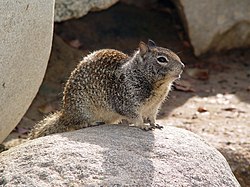
Otospermophilus beecheyi
Herbivorous rodents forage on the tender stems and seed capsules.
No trait badges are assigned for this object yet.
No aliases listed yet.
Collections for this object will appear here as more themes are added.
Danger
1/5 · Very low
No special safety notes yet.
Start with the whole plant, then compare leaf arrangement, leaf edges, stems and any flowers or fruit. Opposite leaves grow in pairs; alternate leaves come one at a time along the stem. These details tell you far more together than a single green leaf does. Plant Identifier: upload a photo and compare the visible details.
10-30 cm
0-1 years
As a photosynthetic plant, Creamcups produces its own food using sunlight, absorbing water and essential minerals from the soil.
Found in open grasslands, sandy coastal bluffs, desert scrub, and recently burned chaparral areas across western North America.
Photosynthesis
10-100
7-21 days
Zoom in to split clusters and explore where this object has been snapped.
Recent snaps will appear here as new observations are added.
Take the discovery with you
Snap it with Snappit to identify it, learn what makes it special, and add the discovery to your collection.