





cut-leaved toothwort
Cardamine concatenata
Cut-leaved toothwort is a pretty little plant with delicate white flowers. It grows in shady places and is often found in forests during springtime.
Habitat: Forests
The cut-leaved toothwort has a slender stem topped with clusters of delicate, four-petaled white to pale pink flowers. Its most distinguishing feature is its deeply lobed, almost finger-like, green leaves that emerge early in spring, giving it a unique textured appearance.
Category
PlantsRarity
Common
Danger
1/5 · Very low
Snaps
17
Ants act like gardeners, carrying its tiny seeds to plant new ones!
Its roots are like peppery mini-carrots, once eaten for a spicy zing!
This plant is a 'spring ephemeral,' meaning it pops up then vanishes fast.
You can sometimes spot a rare pink version among the common white flowers!
The cut-leaved toothwort can complete its entire life cycle quickly in early spring, helping it thrive before forest trees leaf out.
It has thick, toothed rhizomes that store energy, which helps it sprout quickly and survive the hot summer dormancy.
Its seeds possess a fatty treat called an elaiosome, which attracts ants to carry and disperse them to new spots.
Andrena carlini
An early spring bee that visits its flowers for nectar.
Bombus impatiens
This native bumblebee helps spread its pollen.
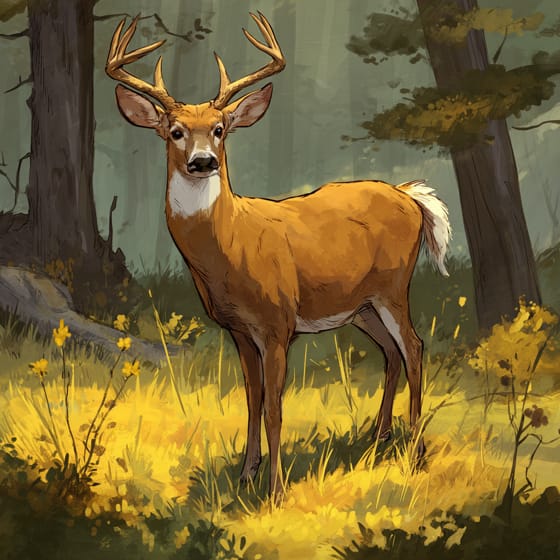
Odocoileus virginianus
Deer browse its tender young leaves in early spring.
Aphaenogaster picea
Ants carry its seeds, helping to disperse them to new locations.
Aromatic plants produce and emit fragrant volatile organic compounds, often for defense or to attract pollinators.
Deciduous plants periodically shed all their leaves, typically during autumn or dry seasons.
Flowering plants are any plants that produce flowers as part of their reproductive cycle.
Shade tolerant plants are adapted to grow and thrive in areas with low light levels, requiring less direct sunlight.

Spring blooming plants produce their flowers during the spring season, often signifying the end of winter and the start of new growth.

Medicinal plants possess chemical compounds that can be used for therapeutic purposes to treat illnesses or maintain health.

Edible plants are those parts of a plant that are considered safe for human consumption.

Describes plants that are particularly attractive and beneficial to a wide range of pollinating organisms.

Forest habitats are terrestrial environments dominated by dense tree cover, supporting a high diversity of plant and animal life.
No aliases listed yet.
Danger
1/5 · Very low
Always look but don't touch wild plants unless a grown-up says it's okay.
The easiest way to identify cut-leaved toothwort is to use the Snappit nature identifier app.
15-40 cm
10-20 cm
1-1.5 cm
Early spring
Yes
None
Perennial
Zoom in to split clusters and explore where this object has been snapped.

Vermont, US
You might spot Japanese Knotweed and Red-Bellied Woodpecker.
View guide →

New York, US
You might spot Allegheny Mountain Dusky Salamander.
View guide →

Virginia, US
You might spot Osage-Orange, Purple Finch, and Turkey.
View guide →

Iowa, US
You might spot False Rue Anemone, Sharp-Lobed Hepatica, and Common Shiner.
View guide →

Wisconsin, US
You might spot Duck, Turkey, and Sandhill Crane.
View guide →

Pennsylvania, US
You might spot Virginia Bluebells, Bloodroot, and Duck.
View guide →
Take the discovery with you
Snap it with Snappit to identify it, learn what makes it special, and add the discovery to your collection.






.jpg&width=800)



_001.jpg&width=800)


