





cutleaf evening primrose
Oenothera laciniata
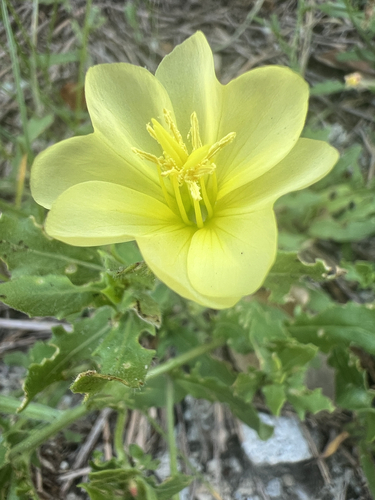
The cutleaf evening primrose is a beautiful flower with bright yellow petals. It blooms in the evening and attracts many nighttime pollinators like moths. Its unique leaves are deeply cut, making it easy to recognize!
Habitat: Grasslands
The cutleaf evening primrose has bright yellow, four-petaled flowers that often open at dusk. Its distinctive leaves are deeply lobed, giving them a 'cut' or jagged appearance along the edges, making it unique.
Category
PlantsRarity
Common
Danger
1/5 · Very low
Snaps
10
Its 'cutleaf' name comes from the jagged edges of its leaves!
Its flowers can open fully in just a few minutes, like magic!
Some evening primrose seeds can stay sleepy in soil for decades!
This plant is a master at growing in tough, disturbed ground.
Cutleaf evening primrose can open its bright flowers quickly at dusk, attracting nocturnal insect pollinators like moths.
This plant has a strong taproot that helps it find deep water, allowing it to survive in dry, sandy soils.
Cutleaf evening primrose can grow rapidly and produce many seeds, quickly colonizing new, disturbed areas.
Hyles lineata
visits flowers for nectar
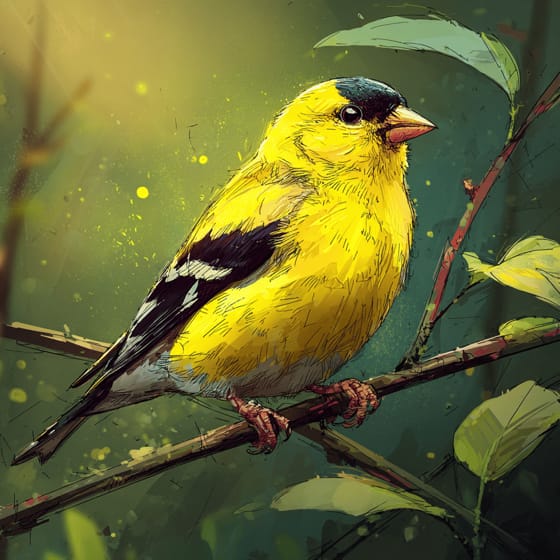
Spinus tristis
eats its oil-rich seeds
Manduca sexta
larvae munch on leaves
Flowering plants are any plants that produce flowers as part of their reproductive cycle.
Biennial plants complete their life cycle over two growing seasons, typically forming foliage in the first year and flowering/seeding in the second.
Fragrant flowers emit a pleasant aroma, often to attract pollinators or for defense.
Night blooming plants open their flowers after sunset, often to attract nocturnal pollinators with their scent and appearance.

Grassland habitats are terrestrial biomes dominated by grasses and herbaceous plants, supporting a variety of grazing animals.

Describes plants that are particularly attractive and beneficial to a wide range of pollinating organisms.

Rapid growing plants exhibit accelerated growth rates, quickly increasing in size and biomass within a short period.
No aliases listed yet.
Danger
1/5 · Very low
Always look but don't touch flowers without asking an adult.
The easiest way to identify cutleaf evening primrose is to use the Snappit nature identifier app.
10-60 cm
15-30 cm
1-3 cm
Spring to fall
Yes
None
Annual
Zoom in to split clusters and explore where this object has been snapped.
Jun 6, 2026
Pawleys Island Historic DistrictPhoto attribution
no rights reserved
License: CC0 1.0 ↗
Image may be shown cropped inside the card frame.

Georgia, US
You might spot Common Vetch, Tiny Bluet, and Carolina Crane's-Bill.
View guide →

Arkansas, US
You might spot Pear-Shaped Puffball and American Beautyberry.
View guide →

Georgia, US
You might spot Spanish Moss, Anole, and Resurrection Fern.
View guide →

California, US
You might spot Western Fence Lizard, Eastern Fox Squirrel, and Duck.
View guide →

Nebraska, US
You might spot Monarch, Black Swallowtail, and European Mantis.
View guide →

Georgia, US
You might spot Spanish Moss, Anole, and Resurrection Fern.
View guide →
Take the discovery with you
Snap it with Snappit to identify it, learn what makes it special, and add the discovery to your collection.








.jpg&width=800)


_001.jpg&width=800)




