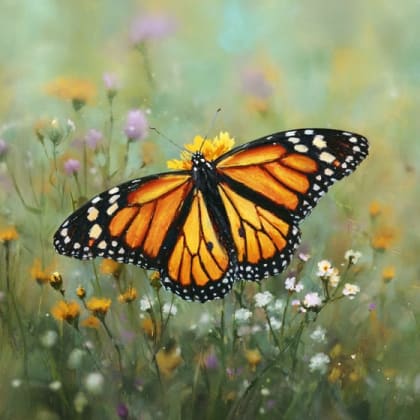





Monarch Butterfly

The Howard County Courthouse in St. Paul, Nebraska, is a historic Classical Revival architectural landmark. This grand building, completed in 1914, serves as a testament to the region's rich past and enduring civic pride. Its impressive design, featuring Indiana limestone, ornate marble, and intricate terrazzo, makes it a significant example of early 20th-century public architecture in Nebraska and a distinguished feature of the local landscape.
Visitors can marvel at the courthouse's exterior, noting its symmetrical facade, engaged columns, and the meticulous craftsmanship evident in its brickwork and limestone detailing. Inside, the pale pink marble stairs, solid white marble railings, and gleaming terrazzo floors offer a glimpse into the opulent design choices of the era. The grounds also host the poignant Grand Army of the Republic (G.A.R.) monument, a tribute to Civil War veterans, adding a layer of historical depth to the site.
More than just a functioning government building, the Howard County Courthouse invites travelers to step back in time, offering a unique opportunity to appreciate architectural heritage and local history. Its prominent location, adjacent to the Howard County Historical Village, positions it as a key focal point for exploring St. Paul's pioneering spirit and the stories of those who shaped the community. It's a memorable stop for anyone interested in American history and architectural splendor. Explore the grounds like a pro—download the Snappit app to instantly identify animals and plants.
buffs and civic history students * Photographers seeking historical subjects * Travelers interested in small-town American heritage
Admire the grand architectural style of the courthouse, photograph its intricate details, and reflect on the history represented by the G.A.R. monument. Consider taking a walk around Courthouse Square. For a deeper dive into local history, visit the Howard County Historical Village located just across the street.
Outdoor viewing is pleasant in spring, summer, and fall. Winter visits offer a stark, dramatic perspective on the architecture, though Nebraska winters can be cold.
As a public civic building, the courthouse is generally expected to have accessible entrances. For specific accessibility needs, it is advisable to contact the courthouse directly.
The Classical Revival architecture, particularly the Indiana limestone facade, and the Grand Army of the Republic (G.A.R.) Civil War monument on the grounds. If accessible, the interior's pink marble staircase, white marble railings, and terrazzo floors are also notable.
Each card links to a full Explore page with photos, traits, and fun facts.
Start with the big picture, then zoom in to explore individual wildlife observations around this place.
Bring a camera to capture the detailed Classical Revival architecture and the historic G.A.R. monument.
Wear comfortable shoes if you plan to explore the surrounding Courthouse Square and the nearby Howard County Historical Village.
Check the official Howard County website for current business hours and any holiday closures if you intend to enter the building.
Combine your visit with the Howard County Historical Village, which is located directly across the street and offers further insights into local pioneer life.
Look for historical markers on the courthouse grounds that provide additional context about the building and the county's past.
Apr 8, 2026
Photo attribution
no rights reserved
License: CC0 1.0 ↗
Image may be shown cropped inside the card frame.
Sep 21, 2025
Aug 29, 2025
Aug 26, 2025
Aug 6, 2025

Maryland, US
You might spot White-Tailed Deer and Eastern Gray Squirrel.
View guide →
.jpg)
District of Columbia, US
You might spot Eastern Gray Squirrel, Duck, and House Sparrow.
View guide →

Illinois, US
You might spot American Robin, Canada Goose, and House Sparrow.
View guide →

Virginia, US
You might spot Spotted Lanternfly and Northern Cardinal.
View guide →
Take the discovery with you
Identify the wildlife you spot, learn as you go, and keep a collection of the adventure.













_(7558922774).jpg&width=800)



