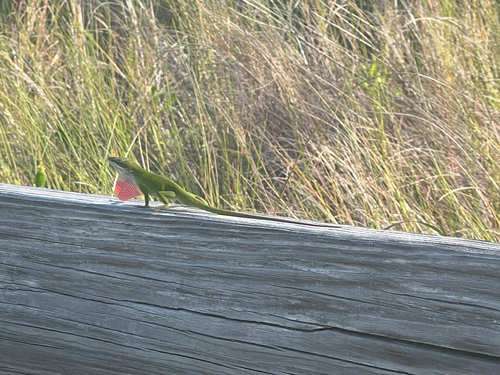





Anole

Pawleys Island Historic District offers a glimpse into a bygone era of coastal South Carolina.
Pawleys Island Historic District offers a glimpse into a bygone era of coastal South Carolina. This National Historic District, renowned as one of the East Coast's oldest summer resorts, is celebrated for its "arrogantly shabby" charm, showcasing a collection of historic antebellum homes and a unique architectural style adapted to its seaside environment.
The district encompasses at least 12 contributing historic buildings, many dating from as early as 1780, characterized by their West Indian-inspired architecture, designed for maximum ventilation with multi-sided piazzas and high brick foundations to withstand coastal elements. Notable structures include the Joseph Blyth Allston House (Pawley House), the Ward House/Liberty Lodge, and the quaint Pawleys Island House of Worship (Chapel). Beyond the architecture, visitors are enchanted by the natural beauty, including majestic live oak trees draped in Spanish moss, wooden docks with "summer houses" extending into the salt marsh, and long boardwalks providing access to the pristine beach.
A visit to Pawleys Island Historic District is an invitation to experience a laid-back, "shoeless, carefree" lifestyle, where the tranquil beauty of the salt marsh meets a pristine beachfront devoid of high-rises. It's a place where history, distinctive architecture, and the serene Lowcountry landscape converge, offering a memorable escape and a deep appreciation for the area's rich cultural heritage. Be ready to snap and learn! Get the Snappit app to identify any nature species you find here.
Pawleys Island began its life in the early 18th century as a vital summer retreat for wealthy rice plantation families from the nearby mainland. From May through November, these families would relocate to the island, along with their enslaved people and household goods, to escape the intense heat and malaria prevalent on their inland plantations. The residential architecture that emerged was a practical adaptation of West Indian styles, prioritizing ventilation and sturdy construction over opulence, built to endure coastal storms. The district was officially recognized and listed on the National Register of Historic Places on November 15, 1972, acknowledging its significant collection of homes dating from approximately 1780 to the post-World War I era. Many of these historic homes have remarkably withstood numerous hurricanes, including Hurricane Hugo in 1989, a testament to their resilient construction and the enduring "Pawleys Island Look."
Embark on a self-guided walking or driving tour to admire the distinct West Indian-style architecture. The "Hammock Coast" app provides narrated tours and historical details about 10 specific locations within the district. Enjoy photography, walk along the pristine beach, observe the salt marsh ecosystem, and look for historical markers that dot the area.
Summer brings heat and humidity, along with a higher chance of tropical storms. Winter is mild, but some seasonal businesses might have reduced hours. Spring and Fall provide ideal weather for outdoor activities and exploring.
The district is generally flat, making walking tours feasible. The "Hammock Coast" app is designed for both walking and driving, accommodating different mobility levels. Many of the long boardwalks across the dunes offer easy access to the beach. Please note that most historic homes are privately owned and can only be viewed from the exterior.
The collection of 12 original historic homes, including the Joseph Blyth Allston House, Ward House/Liberty Lodge, and the Pawleys Island House of Worship (Pawleys Chapel). Don't miss the picturesque wooden docks extending into the salt creek and the boardwalks leading to the beach. The live oak trees draped in Spanish moss are also a defining feature.
Each card links to a full Explore page with photos, traits, and fun facts.
Start with the big picture, then zoom in to explore individual wildlife observations around this place.
Download the App
Before your visit, download the free "Hammock Coast" app for a self-guided, narrated tour of the historic sites.
Bring a Camera
The district's unique architecture, Spanish moss-draped live oaks, and stunning marsh/beach vistas provide excellent photography opportunities.
Wear Comfortable Shoes
Exploring the district involves walking, so comfortable footwear is recommended, especially if you plan to venture onto the boardwalks and beach.
Respect Private Property
Remember that most historic homes are private residences; admire them from the street or public areas and be mindful of residents' privacy.
Explore the Natural Beauty
Don't just focus on the houses; take time to appreciate the salt marsh and walk on the uncrowded beach, easily accessed via boardwalks.
Combine with Nearby Attractions
Consider visiting other nearby historical and natural sites like Brookgreen Gardens or Huntington Beach State Park for a fuller Lowcountry experience.
Jun 6, 2026
Photo attribution
no rights reserved
License: CC0 1.0 ↗
Image may be shown cropped inside the card frame.
Jun 6, 2026
Photo attribution
no rights reserved
License: CC0 1.0 ↗
Image may be shown cropped inside the card frame.
Jun 6, 2026
Photo attribution
no rights reserved
License: CC0 1.0 ↗
Image may be shown cropped inside the card frame.
Jun 6, 2026
Photo attribution
no rights reserved
License: CC0 1.0 ↗
Image may be shown cropped inside the card frame.
Jun 6, 2026
Photo attribution
no rights reserved
License: CC0 1.0 ↗
Image may be shown cropped inside the card frame.

Maryland, US
You might spot White-Tailed Deer and Eastern Gray Squirrel.
View guide →
.jpg)
District of Columbia, US
You might spot Eastern Gray Squirrel, Duck, and House Sparrow.
View guide →

Illinois, US
You might spot American Robin, Canada Goose, and House Sparrow.
View guide →

Virginia, US
You might spot Spotted Lanternfly and Northern Cardinal.
View guide →
Take the discovery with you
Identify the wildlife you spot, learn as you go, and keep a collection of the adventure.