





dahoon holly
Ilex cassine
Dahoon holly is a lovely evergreen shrub with shiny green leaves and bright red berries. It grows in warm places and provides food for birds and other animals.
Habitat: Coastal areas
The dahoon holly is a medium-sized evergreen tree or large shrub with smooth, pale gray bark. It has narrow, shiny green leaves with smooth or slightly toothed edges. Bright red, round berries cling to the branches through fall and winter, contrasting with the dark foliage.
Category
PlantsRarity
Common
Danger
2/5 · Low
Snaps
Be the first to snap!
Dahoon holly has separate male and female plants, so only female plants grow berries!
Even though its berries are red, they're mildly toxic to humans, so don't eat them!
It's often called "water holly" because it loves to grow in very wet, swampy places!
Its scientific name, 'cassine', comes from a Native American word for the plant!
Dahoon holly has roots adapted to wet soil, helping it survive in soggy swamps and floodplains.
Dahoon holly holds onto its bright red berries through winter, providing vital food for many bird species.
Dahoon holly keeps its leaves all year, allowing it to photosynthesize even when other plants are bare.
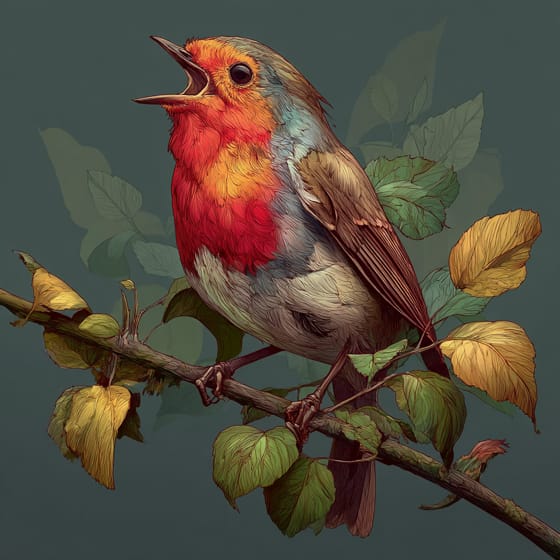
Turdus migratorius
feasts on its bright red berries
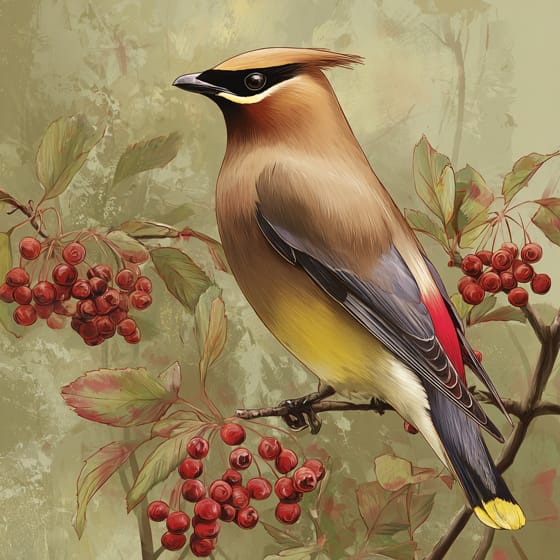
Bombycilla cedrorum
relies on winter berries for food
Apis mellifera
gathers nectar and pollen from flowers
A shrub is a woody plant smaller than a tree, typically with multiple stems branching from or near the ground.
Broadleaf trees are angiosperms characterized by flat, wide leaves that are typically shed annually in temperate climates.
Cold hardy plants are able to withstand low temperatures and freezing conditions without significant damage.
Evergreen plants retain their foliage throughout the year, never shedding all their leaves at once.

Fruit-bearing plants produce fruits, which are the mature ovaries of flowering plants containing seeds.

Edible plants are those parts of a plant that are considered safe for human consumption.

Describes plants that are particularly attractive and beneficial to a wide range of pollinating organisms.

Coastal habitats are dynamic environments located along the interface between land and sea, influenced by tides, waves, and saltwater.
No aliases listed yet.
Danger
2/5 · Low
Don't eat the berries without asking an adult, as some berries can be harmful.
The easiest way to identify dahoon holly is to use the Snappit nature identifier app.
600-1200 cm
300-600 cm
0.3-0.5 cm
Spring to early summer
No
Mild
Perennial
Zoom in to split clusters and explore where this object has been snapped.
Recent snaps will appear here as new observations are added.
Take the discovery with you
Snap it with Snappit to identify it, learn what makes it special, and add the discovery to your collection.









.jpg&width=800)


_001.jpg&width=800)


