





Red Osier Dogwood
Cornus sericea
The Red Osier Dogwood is a shrub with bright red stems that stand out in winter. It has clusters of white flowers in spring and berries that birds love to eat.
Habitat: Wetlands
The Red Osier Dogwood is a multi-stemmed shrub known for its striking bright red stems, especially vibrant in winter. It has opposite green leaves, small white flower clusters in spring, and white berries in late summer, with fall foliage turning reddish-purple.
Category
PlantsRarity
Common
Danger
1/5 · Very low
Snaps
26
Even its branches, stripped of bark, were once smoked in ceremonial pipes by some Indigenous groups.
Its name 'osier' comes from willow-like branches used for weaving baskets long ago.
Some Native American tribes traditionally used its bark to make a crimson-red dye for crafts.
The red color in its stems gets brighter and more intense when the weather gets colder!
Red Osier Dogwood has vivid red stems that perform photosynthesis in winter, helping it absorb sunlight and survive cold temperatures.
Red Osier Dogwood can spread by rhizomes, forming dense thickets that effectively stabilize soil, especially near water.
Red Osier Dogwood has white berries that provide a crucial food source for many bird species, aiding its seed dispersal.

Turdus migratorius
Eats the shrub's white berries
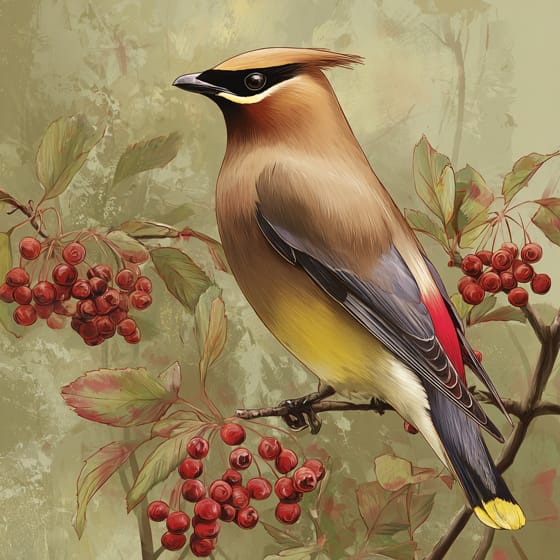
Bombycilla cedrorum
Feeds on its small white fruits
Apis mellifera
Visits its flowers for nectar

Odocoileus virginianus
Browses on its twigs and leaves
Deciduous plants periodically shed all their leaves, typically during autumn or dry seasons.
Winter Interest refers to plants that provide aesthetic appeal through their foliage, bark, berries, or structure during the winter season.
Shade tolerant plants are adapted to grow and thrive in areas with low light levels, requiring less direct sunlight.
A shrub is a woody plant smaller than a tree, typically with multiple stems branching from or near the ground.

Fruit-bearing plants produce fruits, which are the mature ovaries of flowering plants containing seeds.

This trait characterizes organisms with an exceptionally long lifespan compared to others of their kind.

This habitat trait identifies species found in wetlands, which are areas of land saturated with water, either permanently or seasonally, including marshes, swamps, and bogs.
Danger
1/5 · Very low
Enjoy looking at the Red Osier Dogwood from a safe distance. Avoid touching or eating any part of the plant.
The easiest way to identify Red Osier Dogwood is to use the Snappit nature identifier app.
150-300 cm
150-300 cm
0.5-1 cm
Late spring to early summer
No
Mild
Perennial
Zoom in to split clusters and explore where this object has been snapped.

New York, US
You might spot American White Waterlily, Buttonbush, and Common Milkweed.
View guide →

Washington, US
You might spot Pacific Banana Slug and Oregon Forestsnail.
View guide →

Washington, US
You might spot Bigleaf Maple, Mule Deer, and Oregon Grape.
View guide →

Alaska, US
You might spot Sandhill Crane, Fireweed, and Prickly Wild Rose.
View guide →

Michigan, US
You might spot Eastern Box Turtle, Autumn Olive, and Common Watersnake.
View guide →
Nevada, US
You might spot Canada Goose, Antelope Bitterbrush, and Steller's Jay.
View guide →
Take the discovery with you
Snap it with Snappit to identify it, learn what makes it special, and add the discovery to your collection.








.jpg&width=800)



_001.jpg&width=800)


