





Dangleberry
gaylussacia frondosa
The Dangleberry is a small, sweet berry that grows on bushes in the forest. Kids love to pick these juicy berries and enjoy their delicious flavor during outdoor adventures!
Habitat: Dangleberries thrive in moist, wooded areas and often grow in the understory of forests.
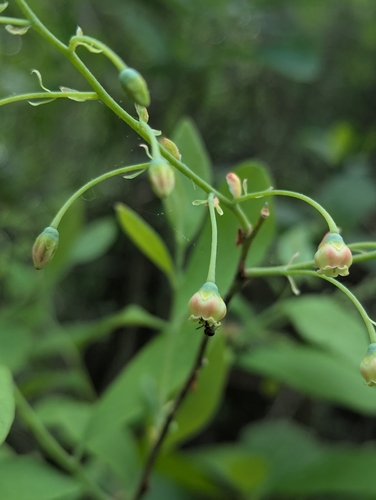
The Dangleberry has small, bell-shaped flowers that range from greenish-white to pink. Its roundish leaves are smooth and often turn reddish in autumn. The distinctive, powder-blue to black berries hang in clusters, often coated with a waxy bloom.
Category
PlantsRarity
Common
Danger
0/5 · No known danger
Snaps
3
Dangleberries are a wild cousin to the popular blueberry and cranberry!
Its ripe berries often look like they're dusted with a pale, frosty powder!
Some leaves have sticky, resin dots on the underside you can feel!
The tiny flowers hang upside down, like little bells ringing in the forest!
Dangleberry produces tasty berries that attract animals, helping spread its seeds far and wide!
Its roots can survive underground fires and resprout, helping it thrive in areas that burn.
The Dangleberry partners with tiny underground fungi to help it gather extra nutrients from the soil.
Apis mellifera
They collect nectar from its tiny bell-flowers.
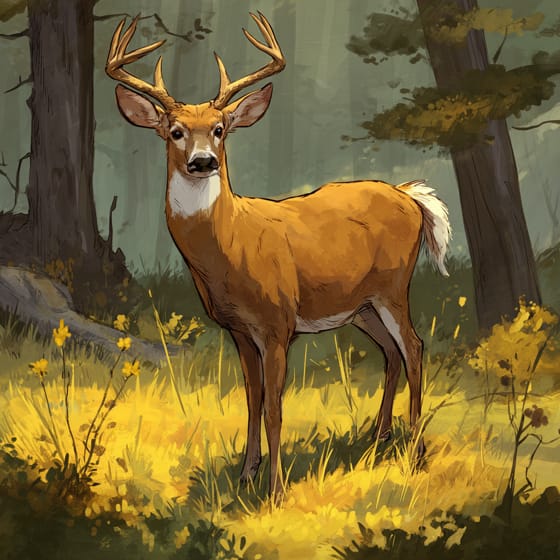
Odocoileus virginianus
They browse on its leaves and tender stems.
Ursus americanus
They enjoy feasting on its sweet, ripe berries.
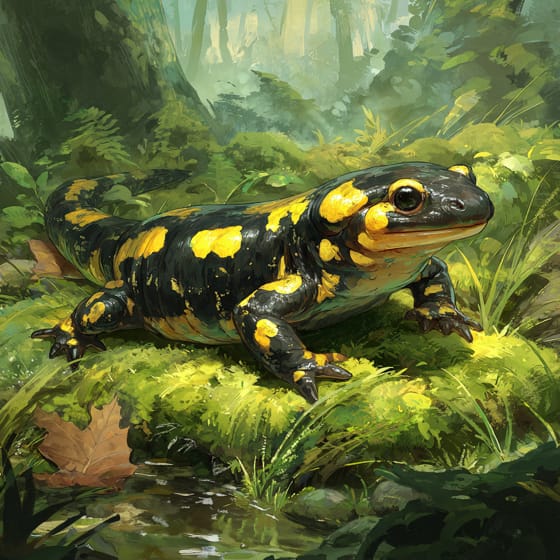
Ambystoma tigrinum
Prefers cool, moist soil found under Dangleberry shrubs.
Social animals live in organized groups, cooperating for survival benefits such as foraging, defense, and raising offspring.
Colorful describes organisms or objects displaying a wide range of bright and distinct colors.
This trait characterizes organisms whose diet consists entirely or primarily of plant material.
Forest habitats are terrestrial environments dominated by dense tree cover, supporting a high diversity of plant and animal life.

Describes organisms that transfer pollen, enabling the fertilization and reproduction of plants.
Danger
0/5 · No known danger
No special safety notes yet.
The easiest way to identify Dangleberry is to use the Snappit nature identifier app.
50-150 cm
50-150 cm
0.5-0.8 cm
Late spring to early summer
Yes
None
Perennial
Zoom in to split clusters and explore where this object has been snapped.
May 28, 2026
Connetquot River State Park PreservePhoto attribution
no rights reserved
License: CC0 1.0 ↗
Image may be shown cropped inside the card frame.

New York, US
You might spot Black Huckleberry, Eastern Skunk Cabbage, and Osprey.
View guide →
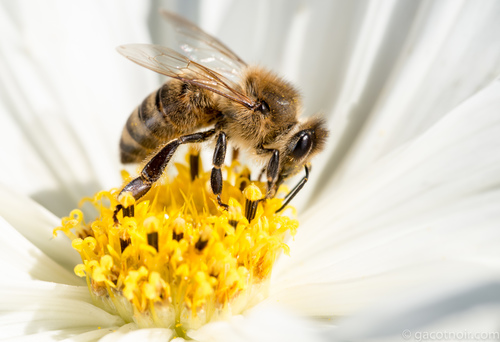
Massachusetts, US
You might spot Bee, Common Eastern Bumble Bee, and Sweet Pepperbush.
View guide →
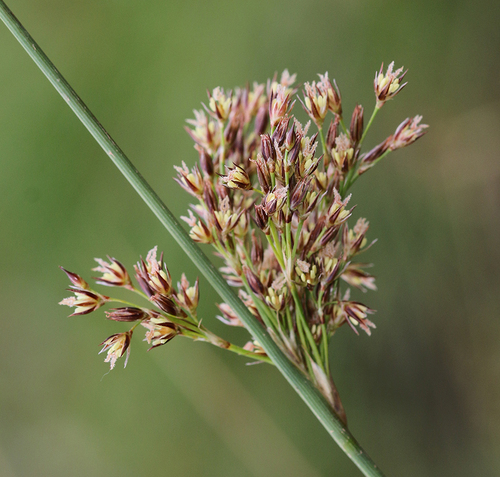
Virginia, US
You might spot Rushes, Engelmann's Spikerush, and Dangleberry.
View guide →
Take the discovery with you
Snap it with Snappit to identify it, learn what makes it special, and add the discovery to your collection.








.jpg&width=800)



_001.jpg&width=800)




