





Dasymutilla californica
Dasymutilla californica
The California Velvet Ant is a colorful insect that looks like a fuzzy ant but is actually a wasp! They are known for their bright colors and can be found in sunny places.
Habitat: Grasslands
The Dasymutilla californica is a striking, fuzzy insect with a bright red or orange head and abdomen, contrasting with a black middle section. Females are wingless and resemble large, hairy ants, while males possess dark, translucent wings. Its dense, velvety hair gives it a unique, plush appearance.
Category
InsectsRarity
Common
Danger
3/5 · Moderate
Snaps
1
Despite their name, velvet ants are actually a type of solitary wasp, not ants!
Female velvet ants are wingless and run incredibly fast across the ground.
The sting of some velvet ants is rumored to be painful enough to 'kill a cow'!
Their vibrant colors like red and orange are a 'danger sign' to predators.
Dasymutilla californica females have an extremely potent sting because of specialized venom, that helps them defend against predators.
Dasymutilla californica has a remarkably tough exoskeleton that helps them resist crushing and other physical attacks.
Dasymutilla californica can make a squeaking sound by rubbing body parts that helps them warn predators to stay away.
Adults sip nectar from flowers, while their young are parasitic on other insect larvae.
Age differences: Larvae are ectoparasitoids, feeding on the larvae and pupae of ground-nesting bees and wasps.

Bombus vosnesenskii
Its larvae develop inside the nests of this bee.

Sphex ichneumoneus
Its larvae are parasites of this wasp's young.
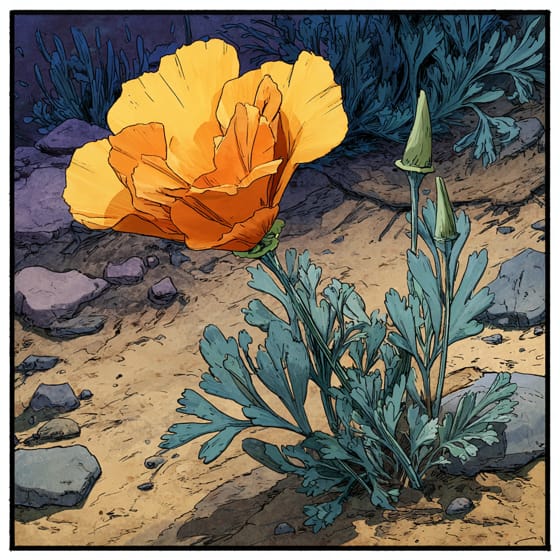
Eschscholzia californica
Adults visit this flower for nectar, aiding its reproduction.
Furry describes animals possessing a dense covering of soft hair or fur.
Solitary animals live alone for most of their lives, only interacting with others for mating or parental care.
Colorful describes organisms or objects displaying a wide range of bright and distinct colors.
Grassland habitats are terrestrial biomes dominated by grasses and herbaceous plants, supporting a variety of grazing animals.

This trait identifies organisms whose diet consists entirely or primarily of animal tissue.

Diurnal animals are primarily active during daylight hours, typically resting or sleeping at night.

Venomous organisms produce toxins that are injected into another animal, typically through a bite or sting.

Describes organisms that transfer pollen, enabling the fertilization and reproduction of plants.
Danger
3/5 · Moderate
If you see one, it's best to admire it from a distance and not touch it.
The easiest way to identify Dasymutilla californica is to use the Snappit nature identifier app.
20-40 mm
10-25 mm
30-90 days
Adults sip nectar from flowers, while their young are parasitic on other insect larvae.
Grasslands
Foraging
6
Zoom in to split clusters and explore where this object has been snapped.
Take the discovery with you
Snap it with Snappit to identify it, learn what makes it special, and add the discovery to your collection.







.jpg&width=800)



