





Davis' Big-headed Ant
Pheidole davisi
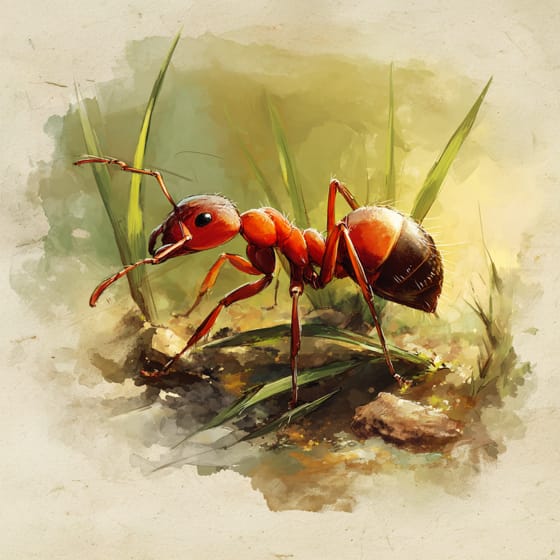
Davis' Big-headed Ant is a small ant known for its big head! These ants work together in groups and are often found in gardens and forests. They are very busy and love to explore!
Habitat: Forests
The Davis' Big-headed Ant has two distinct worker forms: smaller minor workers and larger major workers with disproportionately massive, shiny, reddish-brown heads. Its body is also reddish-brown to dark brown, appearing smooth and somewhat glossy. The major's powerful head is its most distinguishing feature.
Category
InsectsRarity
Common
Danger
2/5 · Low
Snaps
Be the first to snap!
A single queen can live for several years, laying thousands of eggs in her lifetime!
Major workers can block nest entrances with their huge heads, acting as living doors!
These ants are super fast diggers, creating complex tunnels underground for their homes.
They clean up their environment by scavenging dead insects and plant material.
Davis' Big-headed Ant has powerful jaws on its large-headed soldiers that help them crush tough seeds and defend the colony from threats.
Davis' Big-headed Ant can lay invisible scent trails because of special glands that helps them guide fellow workers to newly found food sources.
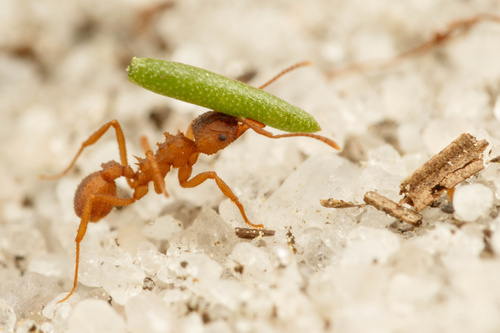
Davis' Big-headed Ant can lift objects many times its own body weight because of its strong exoskeleton and muscles that help them carry food back to the nest.
These ants are omnivores, eating almost anything from tiny insects to sweet plant juices.

Phrynosoma cornutum
A favorite prey for this unique reptile in their shared habitats.
Rhopalosiphum maidis
They collect sugary honeydew produced by these tiny plant sap-suckers.
Musca domestica
Scavenges dead flies and other small insects for protein.
Solenopsis invicta
Often preyed upon by aggressive invasive fire ants in battle.
Social animals live in organized groups, cooperating for survival benefits such as foraging, defense, and raising offspring.
This trait identifies organisms whose diet includes both plant and animal matter.
Describes organisms that break down dead organic material, recycling nutrients back into the ecosystem.
Forest habitats are terrestrial environments dominated by dense tree cover, supporting a high diversity of plant and animal life.

Diurnal animals are primarily active during daylight hours, typically resting or sleeping at night.

Pertaining to species that are significantly smaller than typical or average for their kind.

Describes organisms that transfer pollen, enabling the fertilization and reproduction of plants.
No aliases listed yet.
Danger
2/5 · Low
Be careful not to disturb ant nests, as they can bite if they feel threatened.
The easiest way to identify Davis' Big-headed Ant is to use the Snappit nature identifier app.
1.8-5 mm
60-90 days
These ants are omnivores, eating almost anything from tiny insects to sweet plant juices.
Forests
Foraging
6
20000
Zoom in to split clusters and explore where this object has been snapped.
Recent snaps will appear here as new observations are added.
Take the discovery with you
Snap it with Snappit to identify it, learn what makes it special, and add the discovery to your collection.








.jpg&width=800)



