





Deerberry
vaccinium stamineum
Deerberry is a delightful plant that produces sweet, edible berries! Kids will love spotting its colorful fruits in the woods during summer.
Habitat: Deerberry commonly grows in forests, along roadsides, and in open areas.
The Deerberry has an upright, spreading shape with oval, bright green leaves that turn reddish-purple in fall. Its unique bell-shaped, white to pinkish flowers hang in clusters, and its pale green, yellowish, or sometimes purplish berries are often covered in a waxy bloom.
Category
PlantsRarity
Common
Danger
1/5 · Very low
Snaps
5
Deerberry flowers have long, yellow stamens that stick out like tiny antennae.
It's a wild cousin to your favorite cultivated blueberries and tart cranberries!
Its berries can stay pale green or yellowish, unlike typical blue blueberries!
Native Americans traditionally used Deerberry for both food and various medicines.
Deerberry can thrive in very acidic, poor soils, using special adaptations to absorb nutrients where other plants struggle.
Deerberry has a strong root system that helps it withstand dry periods, making it quite drought-tolerant once established.
Deerberry has a unique flower shape with protruding stamens that encourages 'buzz pollination' by certain bees for better seed production.
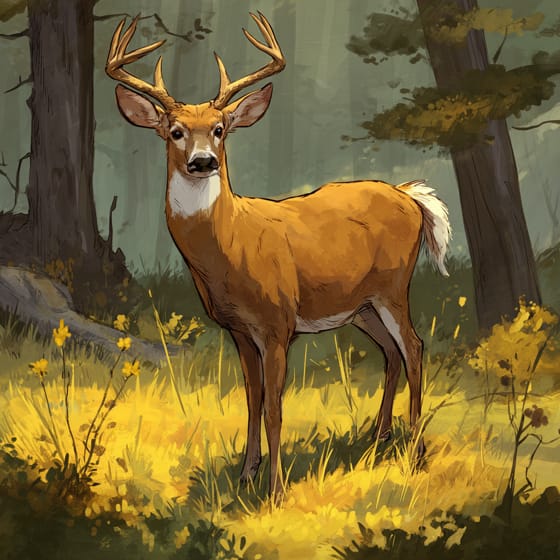
Odocoileus virginianus
Eats its leaves and berries.
Meleagris gallopavo
Forages on the nutritious berries.
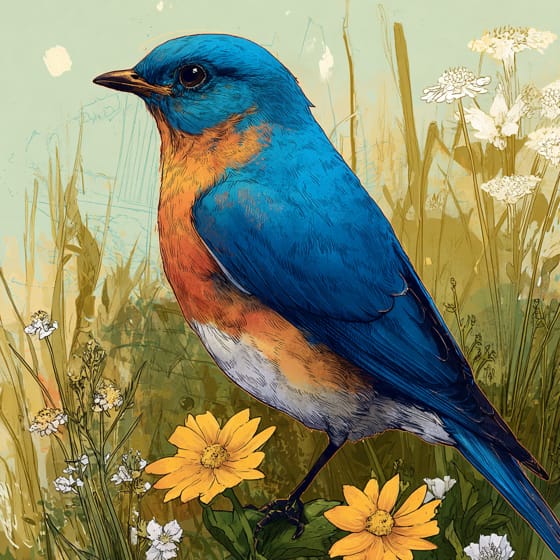
Sialia sialis
Enjoys eating the ripe berries.
Apis mellifera
Collects nectar and pollen from flowers.
Bombus impatiens
Uses buzz pollination on its flowers.
Social animals live in organized groups, cooperating for survival benefits such as foraging, defense, and raising offspring.
Colorful describes organisms or objects displaying a wide range of bright and distinct colors.
This trait characterizes organisms whose diet consists entirely or primarily of plant material.
Forest habitats are terrestrial environments dominated by dense tree cover, supporting a high diversity of plant and animal life.

Describes organisms that transfer pollen, enabling the fertilization and reproduction of plants.
Danger
1/5 · Very low
Always ask an adult before picking and eating wild berries.
The easiest way to identify Deerberry is to use the Snappit nature identifier app.
50-250 cm
50-200 cm
0.5-1 cm
Spring
Yes
None
Perennial
Zoom in to split clusters and explore where this object has been snapped.

Florida, US
You might spot Resurrection Fern and Evans' Deer Moss.
View guide →

Georgia, US
You might spot Spanish Moss, Anole, and Wood Stork.
View guide →

New York, US
You might spot Common Eastern Bumble Bee and Eastern Skunk Cabbage.
View guide →

Georgia, US
You might spot Tiny Bluet, Mountain Laurel, and Eastern Box Turtle.
View guide →

New Jersey, US
You might spot Great Blue Heron, Duck, and Spotted Lanternfly.
View guide →
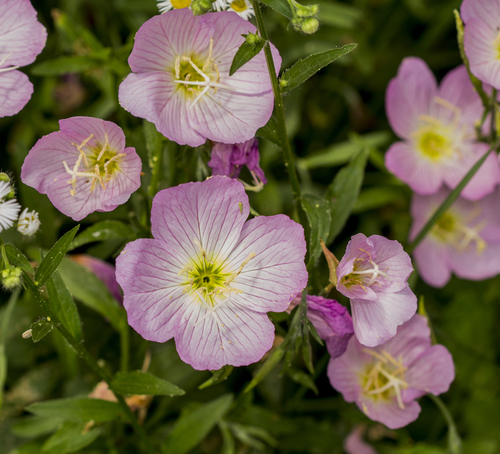
Virginia, US
You might spot Pinkladies, Hickories, and Japanese Aucuba.
View guide →
Take the discovery with you
Snap it with Snappit to identify it, learn what makes it special, and add the discovery to your collection.








.jpg&width=800)



_001.jpg&width=800)




