





American black elderberry
Sambucus canadensis
The American black elderberry is a bushy plant with beautiful clusters of white flowers and dark berries. It grows in many places and is loved by birds and butterflies!
Habitat: Wetlands
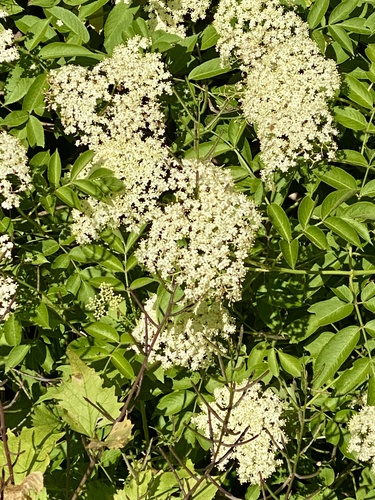
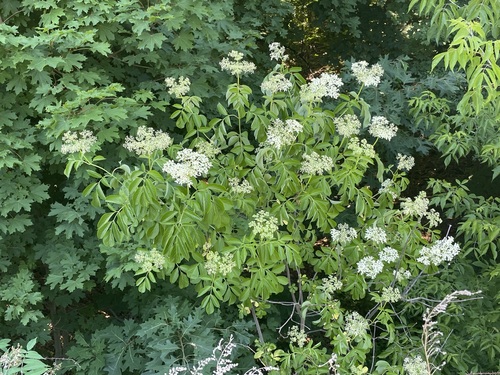
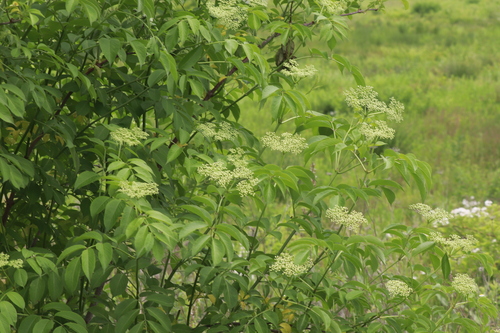
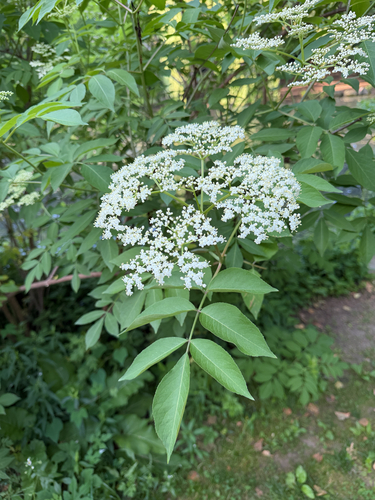
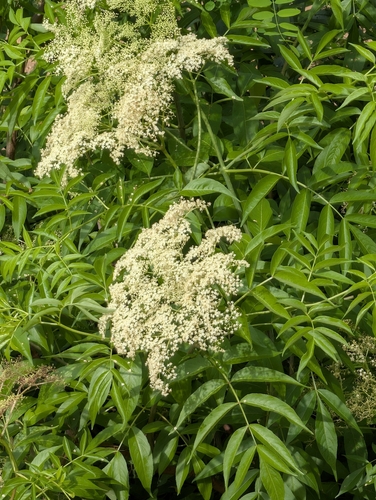
The American black elderberry has large, flat-topped clusters of creamy white flowers that mature into drooping bunches of dark purple, nearly black berries. Its distinct compound leaves are typically bright green with serrated edges, adding a lush texture to its shrubby form.
Category
PlantsRarity
Common
Danger
2/5 · Low
Snaps
72
Its hollow stems were historically used by indigenous peoples to make flutes!
Raw elderberries can upset your tummy, so always cook them first!
The berries get their deep purple color from powerful natural pigments!
Tiny elderberry flowers can be used to make delicious, fizzy drinks!
American black elderberry produces abundant, nutritious berries that attract birds, helping it spread seeds far and wide.
American black elderberry can thrive in moist, even swampy soils, allowing it to colonize diverse watery habitats.
American black elderberry can grow quickly and resprout vigorously after pruning or disturbance, ensuring its survival.
Apis mellifera
collects nectar and pollen
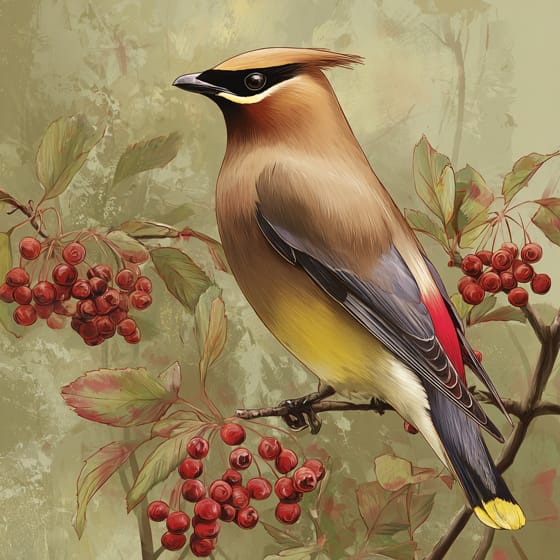
Bombycilla cedrorum
consumes its ripe berries
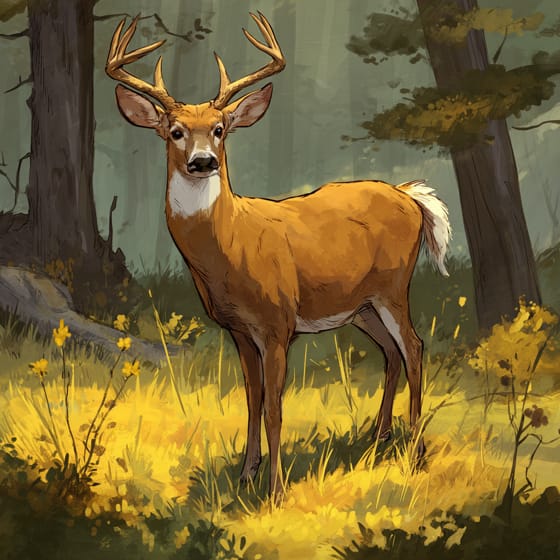
Odocoileus virginianus
browses its leaves and twigs
Deciduous plants periodically shed all their leaves, typically during autumn or dry seasons.
Flowering plants are any plants that produce flowers as part of their reproductive cycle.
A shrub is a woody plant smaller than a tree, typically with multiple stems branching from or near the ground.
Fragrant flowers emit a pleasant aroma, often to attract pollinators or for defense.

Fruit-bearing plants produce fruits, which are the mature ovaries of flowering plants containing seeds.

Medicinal plants possess chemical compounds that can be used for therapeutic purposes to treat illnesses or maintain health.

Edible plants are those parts of a plant that are considered safe for human consumption.

Describes plants that are particularly attractive and beneficial to a wide range of pollinating organisms.

This habitat trait identifies species found in wetlands, which are areas of land saturated with water, either permanently or seasonally, including marshes, swamps, and bogs.

Describes organisms that transfer pollen, enabling the fertilization and reproduction of plants.
No aliases listed yet.
Danger
2/5 · Low
Do not eat the berries raw, as they can make you feel sick. Always ask an adult before tasting any wild plants.
The easiest way to identify American black elderberry is to use the Snappit nature identifier app.
200-600 cm
150-300 cm
0.5-1 cm
Late spring to early summer
Yes
Mild
Perennial
Zoom in to split clusters and explore where this object has been snapped.
Jun 17, 2026
Pines Bridge Historic DistrictPhoto attribution
(c) Michael K. Oliver, Ph.D., some rights reserved (CC BY)
License: CC BY 4.0 ↗
Image may be shown cropped inside the card frame.
Jun 13, 2026
Blackstone Boulevard–Cole Avenue–Grotto Avenue Historic DistrictPhoto attribution
(c) lejones417, some rights reserved (CC BY-SA)
License: CC BY-SA 4.0 ↗
Image may be shown cropped inside the card frame.
Jun 7, 2026
East Windsor Hill Historic DistrictPhoto attribution
(c) Mark Apgar, some rights reserved (CC BY)
License: CC BY 4.0 ↗
Image may be shown cropped inside the card frame.
Jun 6, 2026
Central Park West Historic DistrictPhoto attribution
(c) betsyyyy, some rights reserved (CC BY)
License: CC BY 4.0 ↗
Image may be shown cropped inside the card frame.
May 31, 2026
Arrowmont School of Arts and CraftsPhoto attribution
(c) Nick Kleinschmidt, some rights reserved (CC BY)
License: CC BY 4.0 ↗
Image may be shown cropped inside the card frame.

Ohio, US
You might spot Eastern Fox Squirrel and Spotted Lanternfly.
View guide →

Tennessee, US
You might spot Black Bear, Yellow Wakerobin, and Pipevine Swallowtail.
View guide →

Rhode Island, US
You might spot Common Mugwort, Duck, and Azure Bluet.
View guide →

Rhode Island, US
You might spot Spotted Lanternfly, Duck, and American Robin.
View guide →

Rhode Island, US
You might spot Spotted Lanternfly, Duck, and American Robin.
View guide →

New York, US
You might spot American Robin, Pond Slider, and Northern Cardinal.
View guide →
Take the discovery with you
Snap it with Snappit to identify it, learn what makes it special, and add the discovery to your collection.







.jpg&width=800)


_001.jpg&width=800)



