





dendroalsia moss
Dendroalsia abietina
Dendroalsia moss is a soft, green plant that loves to grow on trees and rocks. It helps keep the forest cool and moist, making it a special part of nature!
Habitat: Forests
The dendroalsia moss has a lush, deep green color, forming dense, upright tufts. Its tiny, scale-like leaves give it a finely textured, velvety appearance, making it visually distinct from broader-leaved mosses.
Category
PlantsRarity
Common
Danger
1/5 · Very low
Snaps
1
A dense mat of this moss helps keep the forest floor cool and moist.
Dendroalsia moss is a very ancient type of plant, appearing millions of years ago.
It reproduces using tiny spores, not seeds, which travel on the wind.
This moss can grow in places where most other plants can't survive!
Dendroalsia moss can absorb and hold many times its weight in water, which helps it survive dry periods.
It has tiny root-like structures called rhizoids that help it anchor to surfaces, preventing soil erosion.
Dendroalsia moss creates miniature ecosystems, offering shelter and humidity for countless tiny invertebrates.
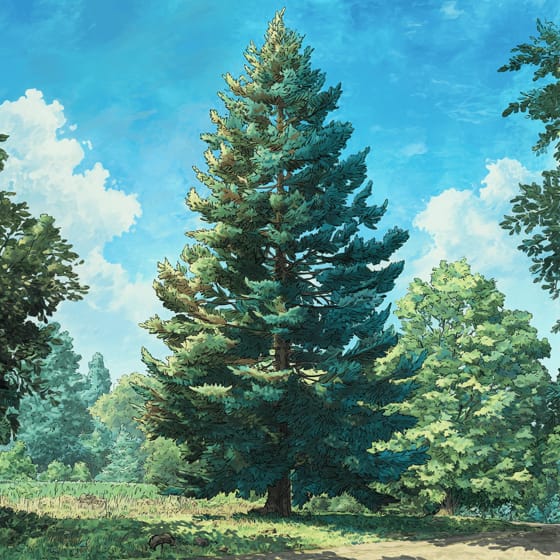
Pseudotsuga menziesii
Provides a moist, stable surface for its epiphytic growth on bark.
Ensatina eschscholtzii
Seeks refuge and moisture within its damp, protective mats.
Isotoma viridis
Lives amongst its fronds, feeding on detritus and microorganisms.
Parmelia sulcata
Often grows alongside it, relying on similar damp, stable conditions.
This trait characterizes plants lacking specialized vascular tissues (xylem and phloem) for transporting water and nutrients.
Shade tolerant plants are adapted to grow and thrive in areas with low light levels, requiring less direct sunlight.
Describes a relationship between two different species where they live in close association, often benefiting one or both.
Describes organisms that break down dead organic material, recycling nutrients back into the ecosystem.

Forest habitats are terrestrial environments dominated by dense tree cover, supporting a high diversity of plant and animal life.
No aliases listed yet.
Danger
1/5 · Very low
It's safe to touch, but be gentle and don't pull it off the trees.
The easiest way to identify dendroalsia moss is to use the Snappit nature identifier app.
2-10 cm
5-30 cm
No
None
Perennial
Forests
Zoom in to split clusters and explore where this object has been snapped.
Take the discovery with you
Snap it with Snappit to identify it, learn what makes it special, and add the discovery to your collection.









.jpg&width=800)



_001.jpg&width=800)



