





eastern poison ivy
Toxicodendron radicans
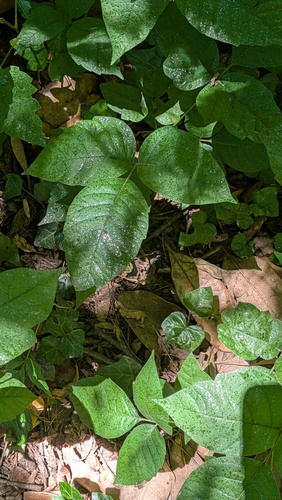
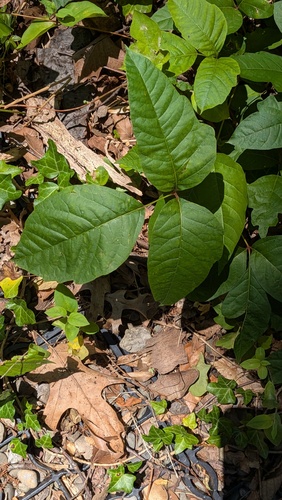
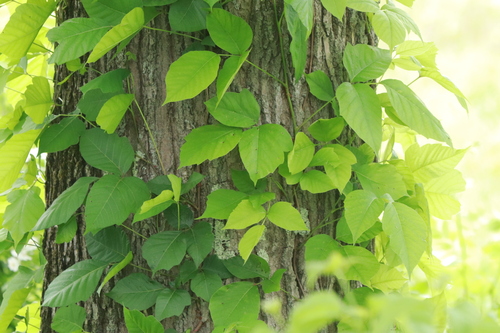
Eastern poison ivy is a plant that can make your skin itchy if you touch it. It has shiny green leaves that grow in groups of three. Be careful around this plant when you're exploring nature!
Habitat: Forests
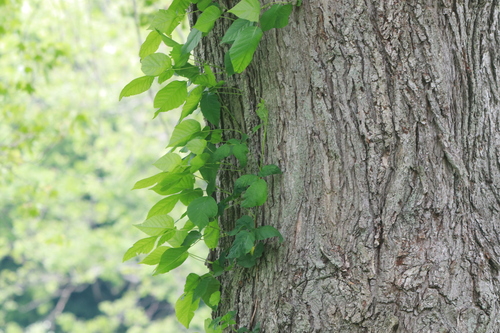
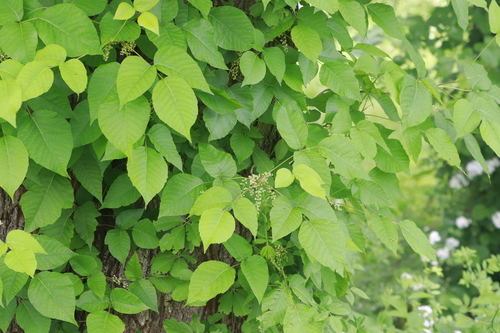
The eastern poison ivy has leaves grouped in three leaflets, which can be glossy green, sometimes notched or lobed, and turn brilliant red or orange in fall. It grows as a low-lying plant, a dense shrub, or a climbing vine using hairy aerial roots to cling to surfaces. Its small greenish-white flowers are inconspicuous.
Category
PlantsRarity
Common
Danger
4/5 · High
Snaps
99
Even smoke from burning poison ivy can cause a severe rash if you breathe it into your lungs!
Its 'leaves of three' rule can be tricky, as leaflet shapes can look quite different!
Many animals, including deer and goats, can eat poison ivy without getting a rash!
Urushiol oil can stay active on objects for years, causing a rash long after touching the plant!
Eastern poison ivy has a unique oily resin, urushiol, that helps it defend against many herbivores by causing an irritating rash.
This plant can grow as a groundcover or climb tall trees and walls using specialized aerial roots, helping it reach sunlight.
Eastern poison ivy can thrive in many environments, from dense shade to full sun, helping it survive in diverse habitats.
Deciduous plants periodically shed all their leaves, typically during autumn or dry seasons.
A shrub is a woody plant smaller than a tree, typically with multiple stems branching from or near the ground.
Fall color refers to the seasonal change in foliage pigmentation, primarily in deciduous plants, displaying vibrant hues.
Forest habitats are terrestrial environments dominated by dense tree cover, supporting a high diversity of plant and animal life.

Toxic organisms contain substances that are poisonous and can cause adverse effects upon exposure.

Poisonous organisms produce toxins that can cause harm when ingested, inhaled, or absorbed through contact.
No aliases listed yet.
Danger
4/5 · High
If you see a plant with three leaves, don't touch it! Always tell an adult if you find it.
The easiest way to identify eastern poison ivy is to use the Snappit nature identifier app.
10-100 cm
30-150 cm
0.2-0.5 cm
Late spring to early summer
No
High
Perennial
Zoom in to split clusters and explore where this object has been snapped.
Jun 20, 2026
Cleveland ParkPhoto attribution
(c) Martin Kalfatovic, some rights reserved (CC BY)
License: CC BY 4.0 ↗
Image may be shown cropped inside the card frame.
Jun 20, 2026
Cleveland ParkPhoto attribution
(c) Martin Kalfatovic, some rights reserved (CC BY)
License: CC BY 4.0 ↗
Image may be shown cropped inside the card frame.
Jun 7, 2026
East Windsor Hill Historic DistrictPhoto attribution
(c) Mark Apgar, some rights reserved (CC BY)
License: CC BY 4.0 ↗
Image may be shown cropped inside the card frame.
Jun 6, 2026
East Windsor Hill Historic DistrictPhoto attribution
(c) Mark Apgar, some rights reserved (CC BY)
License: CC BY 4.0 ↗
Image may be shown cropped inside the card frame.
Jun 6, 2026
East Windsor Hill Historic DistrictPhoto attribution
(c) Mark Apgar, some rights reserved (CC BY)
License: CC BY 4.0 ↗
Image may be shown cropped inside the card frame.

New Jersey, US
You might spot Garlic Mustard, Sensitive Fern, and Common Mugwort.
View guide →

Alabama, US
You might spot Elf Orpine, Canada Goose, and Leatherleaf Mahonia.
View guide →

New York, US
You might spot Sundial Lupine, Spotted Horsemint, and New Jersey Tea.
View guide →

Illinois, US
You might spot Common Eastern Bumble Bee and Brown-Belted Bumble Bee.
View guide →

South Carolina, US
You might spot Anole, Green Treefrog, and Eastern Gray Squirrel.
View guide →

Ohio, US
You might spot Large White Trillium, Fire Pink, and Christmas Fern.
View guide →
Take the discovery with you
Snap it with Snappit to identify it, learn what makes it special, and add the discovery to your collection.








.jpg&width=800)



_001.jpg&width=800)




