





Dill
Tremella Dill.
Dill is a fragrant herb with feathery leaves that smells like a mix of parsley and anise. It is often used in cooking to add flavor to dishes like pickles, salads, and soups.
Habitat: Gardens, Farms
The Dill has delicate, feathery green leaves on slender hollow stems, topped with flat clusters of tiny yellow flowers. Its distinctive airy texture and bright green color help it stand out in a garden bed, looking almost cloud-like.
Category
PlantsRarity
Common
Danger
1/5 · Very low
Snaps
Be the first to snap!
Dill has been used for over 5,000 years, even found in ancient Egyptian tombs!
Dill is a super speedy grower, often ready to harvest in less than two months!
Its name comes from a Norse word meaning 'to lull,' possibly because it was used to help babies sleep.
Roman gladiators believed dill brought good luck and rubbed it on their bodies before battles.
Dill can turn sunlight into energy using its wide, feathery leaves, helping it grow quickly and produce seeds.
Dill releases a special scent that attracts helpful insects like ladybugs, which protect it from pests.
Dill produces many tiny, light seeds that can be easily carried by the wind to new places to sprout.
Apis mellifera
collects nectar and pollen.
Hippodamia convergens
hides and lays eggs on dill.
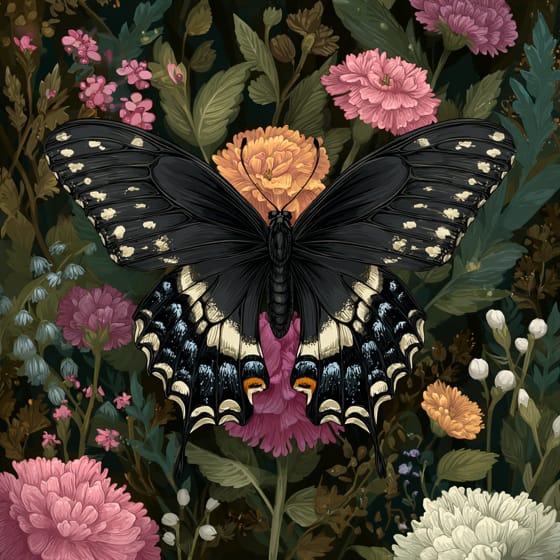
Papilio polyxenes
caterpillars feed on its foliage.
Spodoptera exigua
larvae consume its leaves.
Aromatic plants produce and emit fragrant volatile organic compounds, often for defense or to attract pollinators.
Cluster flowers are inflorescences where individual flowers are arranged closely together on a common stem.
Spring blooming plants produce their flowers during the spring season, often signifying the end of winter and the start of new growth.
Fragrant flowers emit a pleasant aroma, often to attract pollinators or for defense.

Edible plants are those parts of a plant that are considered safe for human consumption.
This human use trait indicates species from which spices are derived, used for flavoring, preserving food, or as aromatic agents.

This trait signifies organisms belonging to a very old evolutionary group with ancestors dating back millions of years.
Danger
1/5 · Very low
Dill plants are safe to touch and smell, but be careful around sharp gardening tools.
The easiest way to identify Dill is to use the Snappit nature identifier app.
30-90 cm
15-30 cm
0.2-0.5 cm
Summer
Yes
None
Annual
Zoom in to split clusters and explore where this object has been snapped.
Recent snaps will appear here as new observations are added.
Take the discovery with you
Snap it with Snappit to identify it, learn what makes it special, and add the discovery to your collection.








.jpg&width=800)


_001.jpg&width=800)



