Diversibipalium Multilineatum
diversibipalium multilineatum
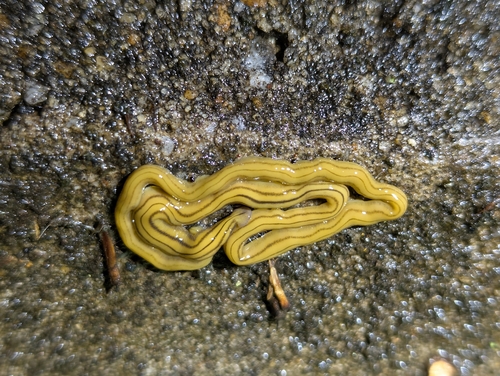
The Diversibipalium Multilineatum is a fascinating predatory flatworm that glides smoothly over surfaces. Its vibrant colors and unique patterns make it a remarkable sight in its natural habitat.
Habitat: Freshwater environments like ponds and rivers.
The Diversibipalium Multilineatum is a long, flattened worm with a distinctive shovel- or hammer-shaped head. It has a yellowish-brown body adorned with several thin, dark brown longitudinal stripes running along its back, making it visually distinct from most earthworms.
Category
InvertebrateRarity
Common
Danger
1/5 · Very low
Snaps
2
It breathes directly through its skin, without lungs, gills, or even a nose!
It hunts earthworms by dissolving them with digestive juices from its mouth!
Its unique hammer-shaped head makes it look unlike almost any other worm you'll ever see!
This worm is an invasive species, sometimes arriving on plants from other countries!
Diversibipalium Multilineatum can regrow lost body parts because of powerful stem cells, which helps them survive injuries.
Diversibipalium Multilineatum has a slimy trail that helps them glide smoothly over surfaces and capture unsuspecting prey.
Diversibipalium Multilineatum can sense prey from a distance using chemical receptors, which helps them track down food.
A carnivorous flatworm that preys on other soil invertebrates.
Lumbricus terrestris
Major food source.
Eisenia fetida
Consumes composting worms.

Arion ater
Preys on garden slugs.
Solitary animals live alone for most of their lives, only interacting with others for mating or parental care.
Colorful describes organisms or objects displaying a wide range of bright and distinct colors.
Describes organisms that break down dead organic material, recycling nutrients back into the ecosystem.
This trait identifies organisms whose diet consists entirely or primarily of animal tissue.

Aquatic habitats encompass environments where organisms live predominantly in water, including oceans, rivers, lakes, and wetlands.
Danger
1/5 · Very low
No special safety notes yet.
The easiest way to identify Diversibipalium Multilineatum is to use the Snappit nature identifier app.
10-20 cm
2-5 years
A carnivorous flatworm that preys on other soil invertebrates.
Freshwater environments like ponds and rivers.
Ambush
0
multiple simple eyespots
Zoom in to split clusters and explore where this object has been snapped.
Jun 17, 2026
The State Botanical Garden of GeorgiaPhoto attribution
(c) Leila Dasher, some rights reserved (CC BY)
License: CC BY 4.0 ↗
Image may be shown cropped inside the card frame.

Georgia, US
You might spot Asian Lady Beetle, Anole, and Joro Spider.
View guide →

Virginia, US
You might spot Eastern Box Turtle, Horned Lark, and Amur Honeysuckle.
View guide →
Virginia, US
You might spot Wavyleaf Basketgrass and Asian Jumpseed.
View guide →
Take the discovery with you
Snap it with Snappit to identify it, learn what makes it special, and add the discovery to your collection.