.jpg&width=800)





tree-of-heaven
Ailanthus altissima
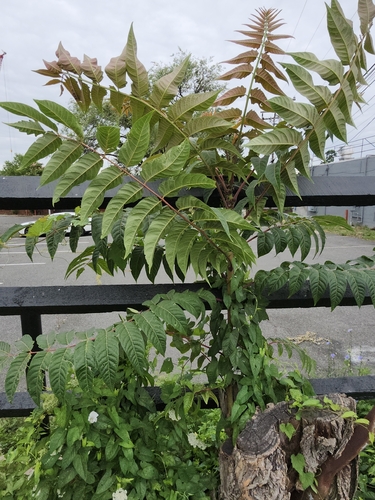
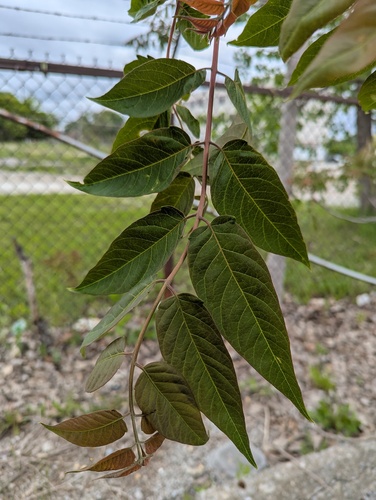
The tree of heaven is a tall tree with big, green leaves that can grow very quickly! It has a strong smell that some people say is like burnt peanuts.
Habitat: Urban areas
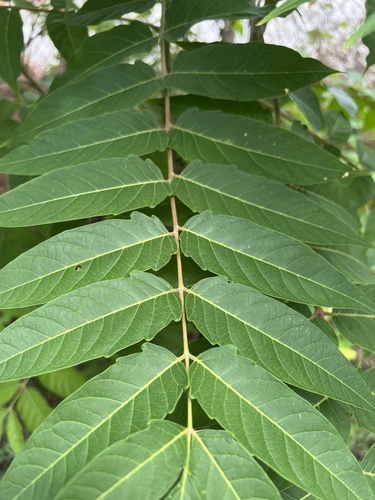
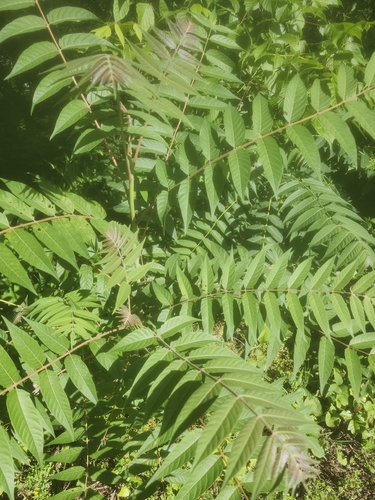
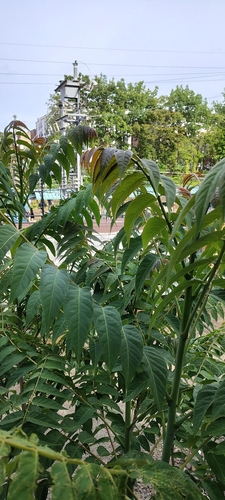
The tree-of-heaven is a rapidly growing deciduous tree, often recognized by its long, compound leaves featuring 10-40 leaflets, each with a distinctive tooth and gland near the base. Its smooth, pale grey bark on young trees darkens and fissures with age, while its clusters of papery, reddish-brown winged seeds, called samaras, persist into winter.
Category
PlantsRarity
Common
Danger
2/5 · Low
Snaps
89
Certain moths, like the Ailanthus silkmoth, love eating its leaves!
Its wood is so soft and weak, it's not good for building!
One tree can make hundreds of thousands of seeds each year!
Some call it "ghetto palm" because it grows in tough city spots!
Tree-of-heaven can grow incredibly fast, shooting up several feet each year to outcompete other plants for sunlight.
Tree-of-heaven releases special chemicals from its roots that make it hard for other plants to grow nearby.
Tree-of-heaven can sprout new trees from its roots, quickly forming dense thickets even after being cut down.

Atteva aurea
Larvae feed on the leaves, sometimes defoliating the tree.
Samia cynthia
Its caterpillars feed exclusively on the leaves of Ailanthus.
Verticillium nonalfalfae
This fungus causes a lethal wilt disease, often used for biocontrol.
Apis mellifera
Honey bees are attracted to its nectar and pollen during bloom.
Deciduous plants periodically shed all their leaves, typically during autumn or dry seasons.
Broadleaf trees are angiosperms characterized by flat, wide leaves that are typically shed annually in temperate climates.
Fragrant flowers emit a pleasant aroma, often to attract pollinators or for defense.
Describes plants that are particularly attractive and beneficial to a wide range of pollinating organisms.

Rapid growing plants exhibit accelerated growth rates, quickly increasing in size and biomass within a short period.

Timber refers to wood that has been prepared for use in building and carpentry.

This trait characterizes organisms with an exceptionally long lifespan compared to others of their kind.

This habitat trait indicates species that can coexist with humans in urban and suburban environments, utilizing man-made structures and green spaces.

Invasive species are non-native organisms that cause harm to the environment, economy, or human health.
Danger
2/5 · Low
Be careful not to touch the leaves too much, as they can sometimes irritate your skin.
The easiest way to identify tree-of-heaven is to use the Snappit nature identifier app.
1500-2500 cm
1000-1500 cm
0.5-1 cm
Summer
No
Mild
Perennial
Zoom in to split clusters and explore where this object has been snapped.
Jun 19, 2026
Leewood ParkPhoto attribution
no rights reserved
License: CC0 1.0 ↗
Image may be shown cropped inside the card frame.
Jun 15, 2026
Herring Run ParkPhoto attribution
no rights reserved
License: CC0 1.0 ↗
Image may be shown cropped inside the card frame.
Jun 3, 2026
Leesburg Historic DistrictPhoto attribution
no rights reserved
License: CC0 1.0 ↗
Image may be shown cropped inside the card frame.
Jun 2, 2026
Hillhouse AvenuePhoto attribution
no rights reserved
License: CC0 1.0 ↗
Image may be shown cropped inside the card frame.
May 20, 2026
Broadway Avenue Historic DistrictPhoto attribution
(c) Brad McLeod, some rights reserved (CC BY)
License: CC BY 4.0 ↗
Image may be shown cropped inside the card frame.

New Jersey, US
You might spot Garlic Mustard, Sensitive Fern, and Common Mugwort.
View guide →

New York, US
You might spot Sundial Lupine, Spotted Horsemint, and New Jersey Tea.
View guide →

Illinois, US
You might spot Common Eastern Bumble Bee and Brown-Belted Bumble Bee.
View guide →

Michigan, US
You might spot Eastern Gray Squirrel, Tree-Of-Heaven, and House Sparrow.
View guide →

Massachusetts, US
You might spot Eastern Cottontail and American Robin.
View guide →

New Mexico, US
You might spot Tree Cholla, Colorado Pinyon, and House Finch.
View guide →
Take the discovery with you
Snap it with Snappit to identify it, learn what makes it special, and add the discovery to your collection.








_001.jpg&width=800)





