





enchanter's-nightshade
Circaea lutetiana
Enchanter's nightshade is a lovely little plant that grows in shady places. It has delicate white flowers that look like tiny stars and can be found in forests and woodlands.
Habitat: Forests
The enchanter's-nightshade is a delicate woodland plant with slender stems and bright green, ovate leaves. Its tiny white or pale pink flowers have two deeply notched petals, giving them a four-petal appearance, and grow in loose clusters.
Category
PlantsRarity
Common
Danger
1/5 · Very low
Snaps
Be the first to snap!
Despite its name, it's not related to the poisonous deadly nightshade!
It can thrive in deep shade, where many other plants struggle to grow!
It often forms green carpets across the forest floor in damp, shady spots!
Its name comes from Circe, a powerful Greek goddess of magic!
This plant can spread using underground stems called rhizomes, helping it form dense colonies and take over new patches of ground.
Enchanter's-nightshade has broad, thin leaves that help it capture sunlight efficiently in the dim light of dense forest floors.
Eristalis tenax
Attracted to its small, white flowers.
Apis mellifera
Visits flowers for nectar.
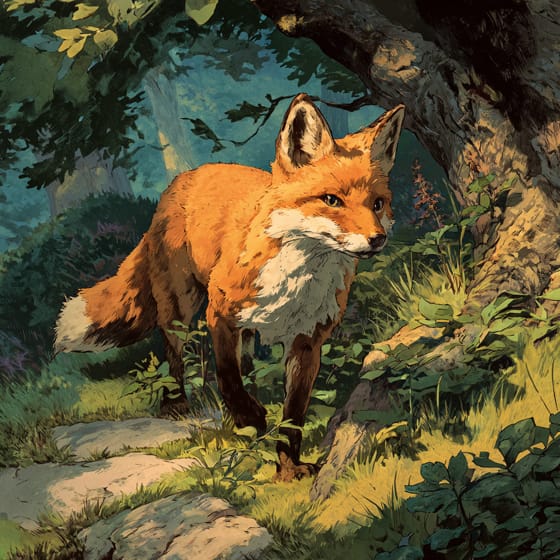
Vulpes vulpes
Carries its hooked seeds on fur for dispersal.
Deciduous plants periodically shed all their leaves, typically during autumn or dry seasons.
Flowering plants are any plants that produce flowers as part of their reproductive cycle.
Shade tolerant plants are adapted to grow and thrive in areas with low light levels, requiring less direct sunlight.
Medicinal plants possess chemical compounds that can be used for therapeutic purposes to treat illnesses or maintain health.

Edible plants are those parts of a plant that are considered safe for human consumption.

Describes plants that are particularly attractive and beneficial to a wide range of pollinating organisms.

Forest habitats are terrestrial environments dominated by dense tree cover, supporting a high diversity of plant and animal life.
No aliases listed yet.
Danger
1/5 · Very low
Always look but don't touch wild plants unless a grown-up says it's okay.
The easiest way to identify enchanter's-nightshade is to use the Snappit nature identifier app.
20-70 cm
15-30 cm
0.2-0.4 cm
Summer (June-August)
No
None
Perennial
Zoom in to split clusters and explore where this object has been snapped.
Recent snaps will appear here as new observations are added.
Take the discovery with you
Snap it with Snappit to identify it, learn what makes it special, and add the discovery to your collection.






.jpg&width=800)



_001.jpg&width=800)


