.jpg&width=800)





European Paper Wasp
Polistes dominula
The European Paper Wasp is a friendly insect that builds beautiful nests out of paper-like material. They are often seen flying around gardens and parks, helping to control pests.
Habitat: Urban areas
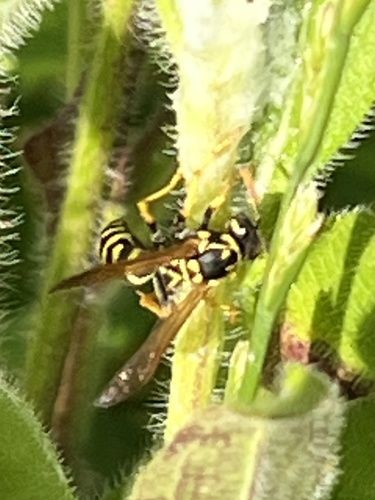
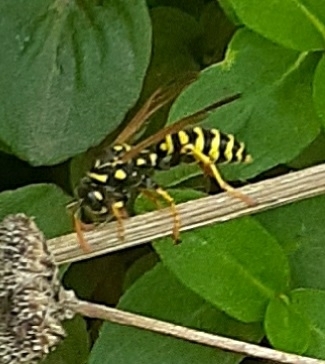
The European Paper Wasp is a slender insect, typically yellow and black with long, reddish-orange antennae. Its body is less fuzzy than a bee and more elongated than a yellowjacket, with distinctive bright yellow markings on its face and a pinched 'waist'.
Category
InsectsRarity
Common
Danger
2/5 · Low
Snaps
26
Adult wasps mainly drink nectar and fruit juices for energy, but their babies need protein from hunted insects!
Queens can choose to cooperate and build a nest together, but only one will lay all the eggs!
These wasps often "sunbathe" to warm up their muscles for flight on cool mornings, like tiny solar panels!
Unlike honeybees, European Paper Wasps can sting multiple times without dying, though they usually prefer to flee.
European Paper Wasps can recognize individual nest mates by their unique facial patterns, helping maintain social order.
European Paper Wasps hunt and paralyze caterpillars and other insects to feed their young, helping control garden pests.
European Paper Wasps have specialized glands that release pheromones, allowing them to communicate warnings or food sources.
Adults drink sweet nectar and juices for energy, while larvae eat protein-rich insects.
Age differences: Adult wasps feed on nectar and plant sap, but hunt insects to feed their carnivorous larvae.
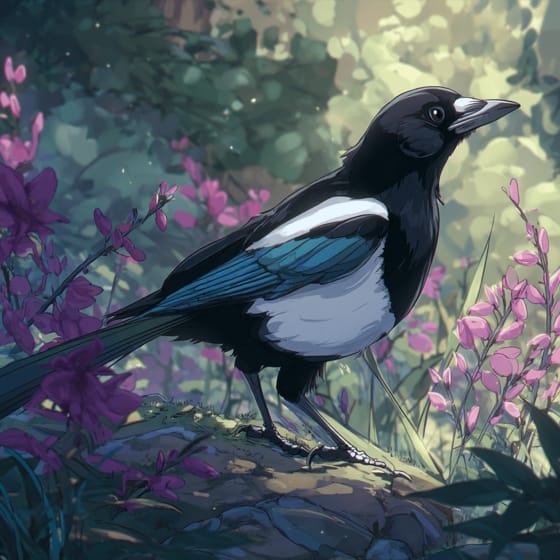
Pica pica
Magpies are known to raid wasp nests for larvae and adults.
Pieris rapae
Wasp larvae feed on the caterpillars of this common butterfly.
Chrysis ignita
This cuckoo wasp lays its eggs in European Paper Wasp nests.
Daucus carota
Adult wasps visit flowers like wild carrot for nectar.
Marked with parallel bands or lines of color.
Social animals live in organized groups, cooperating for survival benefits such as foraging, defense, and raising offspring.
Colorful describes organisms or objects displaying a wide range of bright and distinct colors.
This trait identifies organisms whose diet primarily consists of insects and other small invertebrates.

Diurnal animals are primarily active during daylight hours, typically resting or sleeping at night.

Describes a species whose presence and role have a disproportionately large effect on its environment.

This habitat trait indicates species that can coexist with humans in urban and suburban environments, utilizing man-made structures and green spaces.

Describes organisms that transfer pollen, enabling the fertilization and reproduction of plants.
No aliases listed yet.
Danger
2/5 · Low
If you see a wasp, watch it from a distance and don't disturb its nest.
The easiest way to identify European Paper Wasp is to use the Snappit nature identifier app.
20-30 mm
10-15 mm
30-365 days
20 km/h
Adults drink sweet nectar and juices for energy, while larvae eat protein-rich insects.
Urban areas
Foraging
Zoom in to split clusters and explore where this object has been snapped.
Jun 1, 2026
Oxon Run ParkwayPhoto attribution
(c) Frederick Nunley, some rights reserved (CC BY)
License: CC BY 4.0 ↗
Image may be shown cropped inside the card frame.
May 28, 2026
Buffalo and Erie County Botanical GardensPhoto attribution
(c) lult, some rights reserved (CC BY)
License: CC BY 4.0 ↗
Image may be shown cropped inside the card frame.

Rhode Island, US
You might spot Common Mugwort, Duck, and Azure Bluet.
View guide →

Connecticut, US
You might spot Striped Wintergreen and Common Eastern Bumble Bee.
View guide →

Ohio, US
You might spot Spotted Lanternfly and White-Tailed Deer.
View guide →

New York, US
You might spot White Snakeroot, Rock Pigeon, and Eastern Gray Squirrel.
View guide →

Connecticut, US
You might spot Striped Wintergreen and Common Eastern Bumble Bee.
View guide →

Massachusetts, US
You might spot Common Eastern Bumble Bee and Asian Lady Beetle.
View guide →
Take the discovery with you
Snap it with Snappit to identify it, learn what makes it special, and add the discovery to your collection.








.jpg&width=800)


