





fan clubmoss
Diphasiastrum digitatum
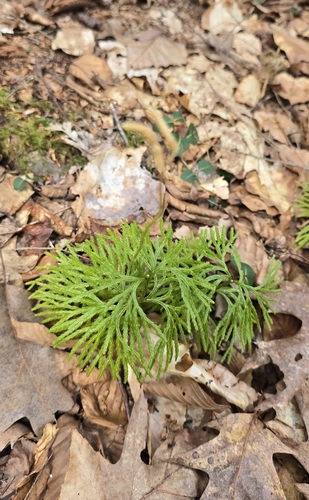
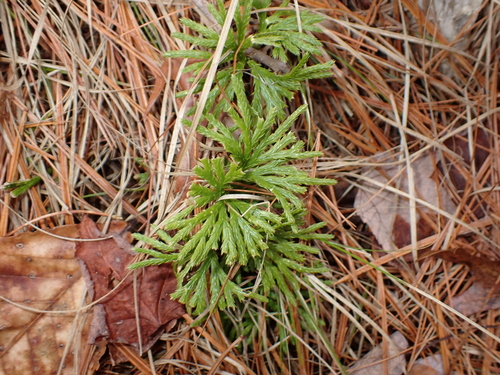
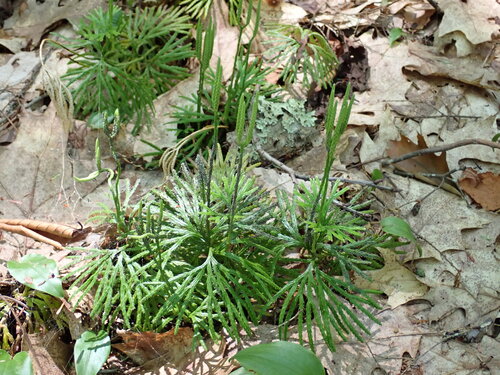
Fan clubmoss is a neat little plant that looks like a green fan! It grows in shady places and is part of a special group of plants called clubmosses. They have been around for a very long time, even before dinosaurs!
Habitat: Forests
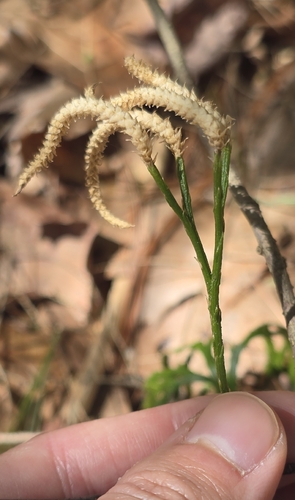
The fan clubmoss has distinct flattened, fan-like branches that resemble tiny, many-fingered hands. Its evergreen foliage is a vibrant deep green, often with a slightly bluish tint, forming dense carpets on the forest floor. It visually stands out with its intricate, layered branching.
Category
PlantsRarity
Common
Danger
1/5 · Very low
Snaps
22
Clubmosses are actually more closely related to ferns than true mosses.
Its tiny spores are so fine, they were once used for camera flash powder!
Some individual clubmoss colonies can live for hundreds of years!
This plant is a living fossil; its relatives grew alongside dinosaurs millions of years ago!
Fan clubmoss has tough, evergreen leaves that help it stay green and make food all year, even in cold winters.
Fan clubmoss reproduces using tiny spores instead of seeds, an ancient plant strategy that helps it spread widely.
Fan clubmoss has creeping rhizomes that help it spread across the forest floor and find new places to grow.
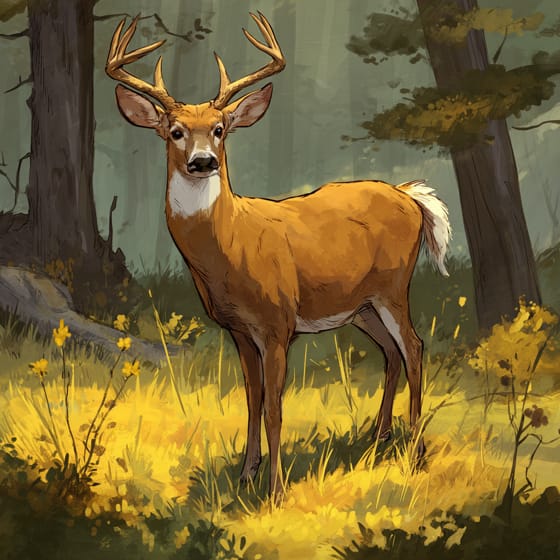
Odocoileus virginianus
Browses on its evergreen foliage, especially in winter.
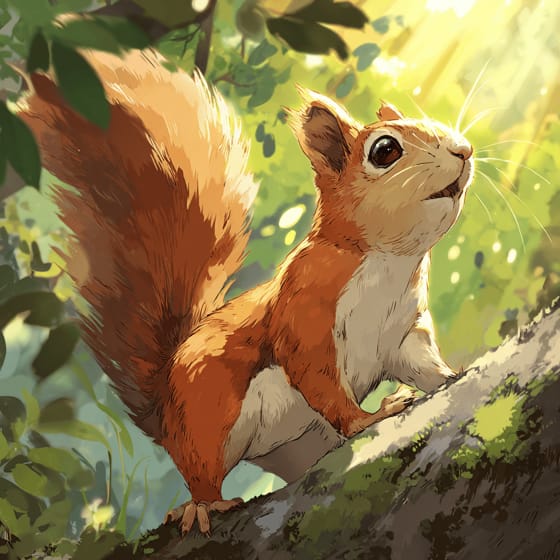
Sciurus carolinensis
Uses its dense ground cover for hiding and foraging.
Formica subsericea
Ants often forage among its creeping stems and leaf litter.
This trait characterizes plants lacking specialized vascular tissues (xylem and phloem) for transporting water and nutrients.
Shade tolerant plants are adapted to grow and thrive in areas with low light levels, requiring less direct sunlight.
Spore-producing organisms reproduce by releasing small, often single-celled, reproductive units called spores.
This trait signifies organisms belonging to a very old evolutionary group with ancestors dating back millions of years.

Forest habitats are terrestrial environments dominated by dense tree cover, supporting a high diversity of plant and animal life.

Describes a species whose presence and role have a disproportionately large effect on its environment.
No aliases listed yet.
Danger
1/5 · Very low
Always look but don't touch plants unless a grown-up says it's okay.
The easiest way to identify fan clubmoss is to use the Snappit nature identifier app.
5-30 cm
30-100 cm
No
None
Perennial
Wind
Forests
Zoom in to split clusters and explore where this object has been snapped.
Apr 11, 2026
New Boston Village Historic DistrictPhoto attribution
(c) Jonas Katona, some rights reserved (CC BY)
License: CC BY 4.0 ↗
Image may be shown cropped inside the card frame.
Apr 11, 2026
New Boston Village Historic DistrictPhoto attribution
(c) Jonas Katona, some rights reserved (CC BY)
License: CC BY 4.0 ↗
Image may be shown cropped inside the card frame.
Jan 14, 2026
Stony Brook Wildlife SanctuaryPhoto attribution
(c) John Baur, some rights reserved (CC BY)
License: CC BY 4.0 ↗
Image may be shown cropped inside the card frame.
Jul 4, 2025
Chesterfield GorgePhoto attribution
no rights reserved
License: CC0 1.0 ↗
Image may be shown cropped inside the card frame.
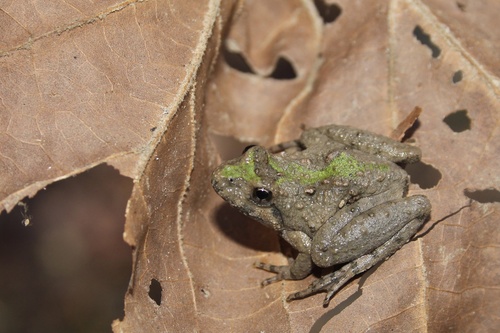
Delaware, US
You might spot Northern Cricket Frog, Fan Clubmoss, and Fowler's Toad.
View guide →
Maryland, US
You might spot Northern Cricket Frog and Common Whitetail.
View guide →

Massachusetts, US
You might spot Mountain Laurel, Azure Bluet, and Partridgeberry.
View guide →

Massachusetts, US
You might spot Threeleaf Goldthread and Spotted Salamander.
View guide →

Pennsylvania, US
You might spot Downy Rattlesnake Plantain and Striped Wintergreen.
View guide →

Massachusetts, US
You might spot Eastern Newt, Ghost Pipe, and Partridgeberry.
View guide →
Take the discovery with you
Snap it with Snappit to identify it, learn what makes it special, and add the discovery to your collection.








.jpg&width=800)



_001.jpg&width=800)



