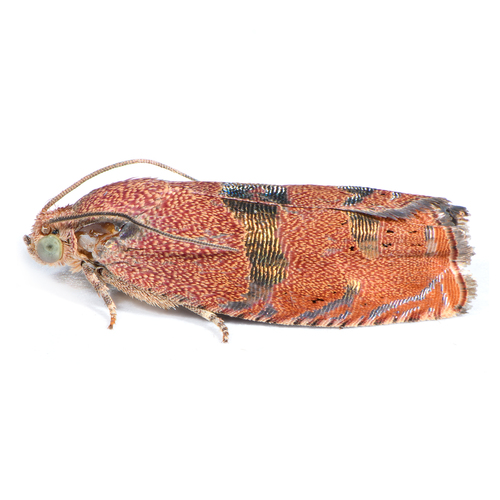


Filbertworm Moth
cydia latiferreana
The Filbertworm Moth (Cydia latiferreana) is a small but economically significant insect native to North America. Belonging to the family Tortricidae, it is best known for the destructive habits of its larvae, which bore into developing nuts and acorns. While orchard owners view these moths as a major agricultural pest—especially in commercial hazelnut and walnut groves—they play an important role in forest ecosystems by regulating oak acorn viability and providing a food source for numerous parasitoid wasps and insectivorous birds. Despite their reputation as crop destroyers, Filbertworm Moths are fascinating examples of evolutionary adaptation. They have seamlessly transitioned from feeding on wild native acorns to exploiting cultivated agricultural nuts. Adult moths are elusive, short-lived, and rarely seen by the casual observer, spending their brief flight periods mating and laying eggs under the cover of darkness. Uncovering the hidden life of the filbertworm provides a unique glimpse into the complex interactions between native insects and human agriculture.
Habitat: Found primarily in oak woodlands, mixed deciduous forests, and commercial nut orchards where host trees like oaks, hazels, and walnuts are abundant.
Adult Filbertworm Moths are relatively small with a wingspan of 11 to 16 millimeters. Their forewings feature a distinctive coppery-red to reddish-brown coloration, marked by two broad, darker metallic bands across the middle, which help camouflage them against tree bark. The hindwings are a plain, darker grayish-brown with pale fringes along the edges. In contrast, the larvae—which are the most commonly encountered life stage—are stout, fleshy caterpillars that range in color from whitish-yellow to a faint pink, topped with a heavily sclerotized, light brown head capsule.
Category
InsectsRarity
Common
Danger
1/5 · Very low
Snaps
1
Before commercial hazelnuts were introduced to North America by European settlers, the filbertworm relied almost entirely on wild oak acorns for its survival.
Filbertworms are notorious for ruining holiday nut assortments, as the larvae can remain hidden inside superficially perfect hazelnut shells.
To combat this pest without chemicals, orchard growers deploy thousands of pheromone dispensers to confuse the males and prevent them from finding mates.
When threatened by a predator, the caterpillars can violently wiggle backward and drop from a silken thread to quickly escape danger.
The larvae are equipped with highly adapted, powerful mandibles capable of chewing through the tough outer shells of developing acorns and hazelnuts.
Male filbertworm moths possess highly specialized antennae that can detect minute traces of female sex pheromones from vast distances across dense orchards.
Mature caterpillars can survive freezing winter temperatures by entering a state of suspended animation within dense silken cocoons spun in leaf litter.
Larvae are entirely granivorous, feeding on the nutrient-rich kernels of developing nuts, while adults typically do not feed.
Age differences: Larvae consume nut kernels to build fat reserves, whereas the short-lived adults do not feed and rely entirely on these stored nutrients.

Corylus cornuta
Primary native host plant where larvae develop inside the nuts.

Quercus agrifolia
Acorns serve as a major wild food source for the developing larvae.
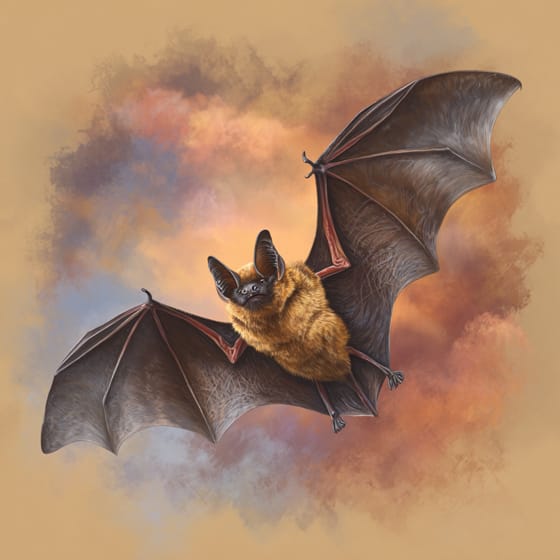
Eptesicus fuscus
Bats prey on the flying adult moths during their nocturnal mating flights.
Macrocentrus ancylivorus
Parasitoid wasps lay their eggs inside the developing caterpillars.
No trait badges are assigned for this object yet.
No aliases listed yet.
Collections for this object will appear here as more themes are added.
Danger
1/5 · Very low
No special safety notes yet.
The easiest way to identify Filbertworm Moth is to use the Snappit nature identifier app.
1 cm
1-2 cm
0.00005-0.0001 kg
1 years
5 km/h
Larvae are entirely granivorous, feeding on the nutrient-rich kernels of developing nuts, while adults typically do not feed.
Found primarily in oak woodlands, mixed deciduous forests, and commercial nut orchards where host trees like oaks, hazels, and walnuts are abundant.
Zoom in to split clusters and explore where this object has been snapped.
Take the discovery with you
Snap it with Snappit to identify it, learn what makes it special, and add the discovery to your collection.














.jpg&width=800)




