





Five-leaflet Bittercress
Cardamine pentaphyllos
The Five-leaflet Bittercress is a small plant with five leaflets on each leaf. It grows in many places and has pretty white flowers that attract bees and butterflies.
Habitat: Grasslands
The Five-leaflet Bittercress has delicate clusters of small, four-petaled flowers, usually white to pale pink or purple. Its most distinctive feature is its leaves, divided into five to seven oval leaflets. These form a rosette near the base and alternate up its slender, green stem.
Category
PlantsRarity
Common
Danger
1/5 · Very low
Snaps
Be the first to snap!
Bittercress plants are related to yummy vegetables like broccoli and cabbage!
Despite its delicate look, this tough plant often grows in cold mountain regions!
Its scientific name 'Cardamine' comes from the Greek for 'heart-strengthening!'
Some people call it 'Lamb's Cress' because lambs love to munch on its fresh leaves!
Five-leaflet Bittercress can launch its seeds far away when ripe pods burst open, helping it spread to new places.
Five-leaflet Bittercress has nutrient-rich leaves that can be eaten, providing a natural food source for various animals and humans.
Five-leaflet Bittercress can thrive in cool, shady, moist environments, allowing it to grow where many other plants struggle.
Apis mellifera
Bees visit its flowers for nectar and pollen.
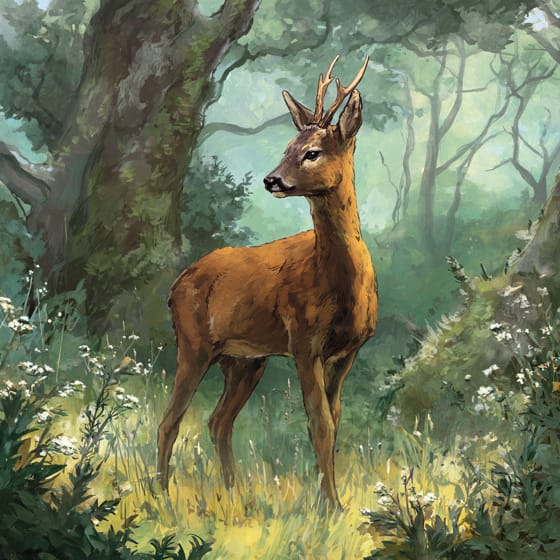
Capreolus capreolus
Deer browse on its tender leaves, especially in spring.

Helix aspersa
Snails and slugs munch on its leaves and stems.
Flowering plants are any plants that produce flowers as part of their reproductive cycle.
Biennial plants complete their life cycle over two growing seasons, typically forming foliage in the first year and flowering/seeding in the second.
Spring blooming plants produce their flowers during the spring season, often signifying the end of winter and the start of new growth.
Edible plants are those parts of a plant that are considered safe for human consumption.

Grassland habitats are terrestrial biomes dominated by grasses and herbaceous plants, supporting a variety of grazing animals.

Describes plants that are particularly attractive and beneficial to a wide range of pollinating organisms.
No aliases listed yet.
Danger
1/5 · Very low
Always check with an adult before touching or picking any plants.
The easiest way to identify Five-leaflet Bittercress is to use the Snappit nature identifier app.
10-30 cm
5-15 cm
0.5-1 cm
Spring to early summer
Yes
None
Perennial
Zoom in to split clusters and explore where this object has been snapped.
Recent snaps will appear here as new observations are added.
Take the discovery with you
Snap it with Snappit to identify it, learn what makes it special, and add the discovery to your collection.








.jpg&width=800)



_001.jpg&width=800)



