





Flat-Top White Aster
doellingeria umbellata
The Flat-Top White Aster is a beautiful flower that blooms in late summer. Its flat-topped clusters of white flowers attract many butterflies and bees!
Habitat: Fields, meadows, and roadside areas.
The Flat-Top White Aster is a tall, upright plant with stiff stems. It has lance-shaped leaves and distinctively flat-topped clusters of many small, white, daisy-like flowers, which make it visually different from other asters with domed flower heads.
Category
PlantsRarity
Common
Danger
0/5 · No known danger
Snaps
Be the first to snap!
Its scientific name, Doellingeria, honors a German botanist!
Rub its leaves, and you might smell a faint pine-like scent!
The 'flat-top' isn't one flower, but hundreds of tiny ones grouped together!
This plant can grow taller than an adult person!
Flat-Top White Aster has broad, flat flower clusters that act as perfect landing pads for many insects.
This aster blooms late in the season, providing a critical nectar source when other flowers fade.
Flat-Top White Aster produces seeds with fluffy tufts that help them travel far on the wind.
Apis mellifera
Gathers nectar and pollen
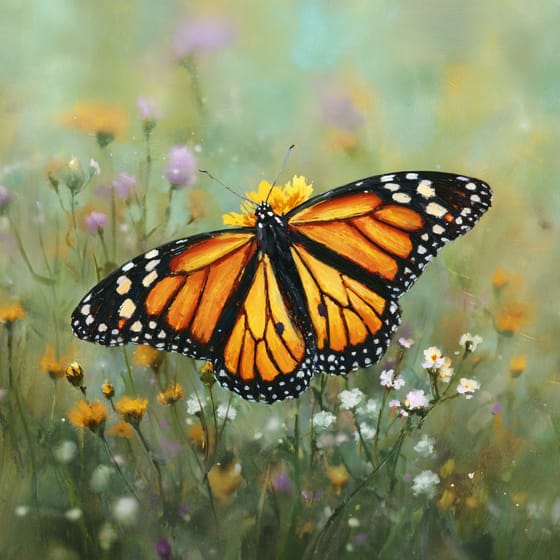
Danaus plexippus
Feeds on nectar during migration

Bombus impatiens
Key late-season pollinator
Margaritia asternana
Larvae bore into stems
Colorful describes organisms or objects displaying a wide range of bright and distinct colors.
Grassland habitats are terrestrial biomes dominated by grasses and herbaceous plants, supporting a variety of grazing animals.
This trait characterizes organisms whose diet consists entirely or primarily of plant material.
Diurnal animals are primarily active during daylight hours, typically resting or sleeping at night.

Describes organisms that transfer pollen, enabling the fertilization and reproduction of plants.
Danger
0/5 · No known danger
No special safety notes yet.
The easiest way to identify Flat-Top White Aster is to use the Snappit nature identifier app.
100-200 cm
30-60 cm
0.5-1.5 cm
Late summer to fall
No
None
Perennial
Zoom in to split clusters and explore where this object has been snapped.
Recent snaps will appear here as new observations are added.
Take the discovery with you
Snap it with Snappit to identify it, learn what makes it special, and add the discovery to your collection.









.jpg&width=800)



_001.jpg&width=800)




