





Foothill Yellow-legged Frog
Rana boylii
The Foothill Yellow-legged Frog is a small, colorful frog found near rivers and streams. They have bright yellow legs and love to hop around in the water and on land.
Habitat: Wetlands
The Foothill Yellow-legged Frog has mottled brown, gray, or reddish skin with small bumps, helping it blend into rocky streambeds. Its most distinctive feature is the bright yellow or orange wash on the underside of its hind legs and feet. It often lacks prominent dorsolateral folds.
Category
AmphibiansRarity
Common
Danger
1/5 · Very low
Snaps
Be the first to snap!
Adult frogs can use their powerful legs to create splashes, startling predators away!
Tadpoles have a sucker-like mouth, helping them cling to rocks in rushing water!
These frogs lay string-like egg clumps attached to rocks, protecting them from strong river currents.
These frogs love cool, clear mountain streams, avoiding murky ponds where they cannot thrive.
Foothill Yellow-legged Frogs have special rough skin on their belly and hind legs that helps them grip slippery rocks in fast-flowing water.
Foothill Yellow-legged Frogs can breathe through their skin, allowing them to stay underwater for a long time in oxygen-rich streams.
Foothill Yellow-legged Frogs have mottled, bumpy skin that perfectly matches the stones and pebbles of their streambed home, making them almost invisible.
These frogs are hungry insect-eaters, snatching up bugs that come too close to their watery home.
Age differences: Tadpoles are vegetarians, grazing on algae; adults are carnivores eating insects and other small invertebrates.
Thamnophis sirtalis
Snakes are a common predator along streambanks.
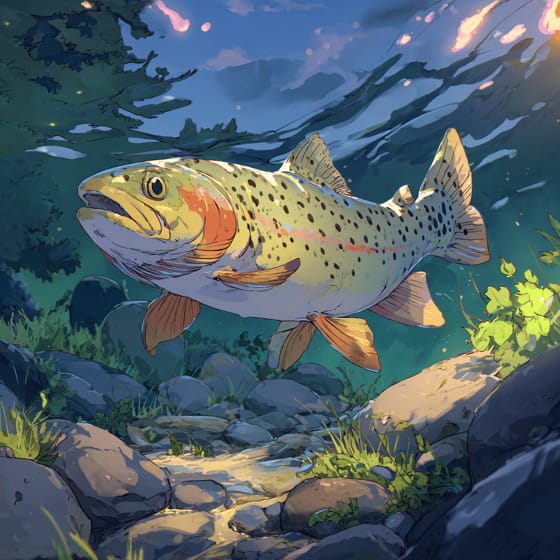
Oncorhynchus mykiss
Larger fish prey on tadpoles and young frogs.
Chironomus plumosus
Adult frogs ambush various stream-dwelling insects.
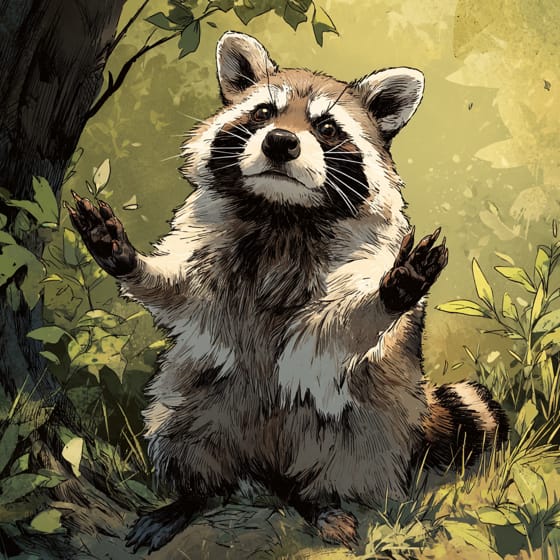
Procyon lotor
Raccoons forage along stream banks for frogs.
Social animals live in organized groups, cooperating for survival benefits such as foraging, defense, and raising offspring.
Camouflaged describes organisms that possess coloring or patterns that allow them to blend into their environment.
Colorful describes organisms or objects displaying a wide range of bright and distinct colors.
This trait identifies organisms whose diet primarily consists of insects and other small invertebrates.

This habitat trait identifies species found in wetlands, which are areas of land saturated with water, either permanently or seasonally, including marshes, swamps, and bogs.

Diurnal animals are primarily active during daylight hours, typically resting or sleeping at night.

Freshwater habitats include non-saline aquatic environments such as rivers, lakes, ponds, and wetlands, vital for numerous species.

Describes a species whose presence and role have a disproportionately large effect on its environment.

Describes organisms that transfer pollen, enabling the fertilization and reproduction of plants.

Endangered status indicates a species is at a very high risk of extinction in the wild in the near future.
No aliases listed yet.
Danger
1/5 · Very low
Always watch frogs from a distance and don't try to catch them. They need to stay safe in their homes!
The easiest way to identify Foothill Yellow-legged Frog is to use the Snappit nature identifier app.
3.7-7.8 cm
0.005-0.03 kg
5-7 years
8 km/h
These frogs are hungry insect-eaters, snatching up bugs that come too close to their watery home.
Wetlands
Ambush
Zoom in to split clusters and explore where this object has been snapped.
Recent snaps will appear here as new observations are added.
Take the discovery with you
Snap it with Snappit to identify it, learn what makes it special, and add the discovery to your collection.







.JPG&width=800)


.jpg&width=800)
