Fragile Papershell
Potamilus fragilis
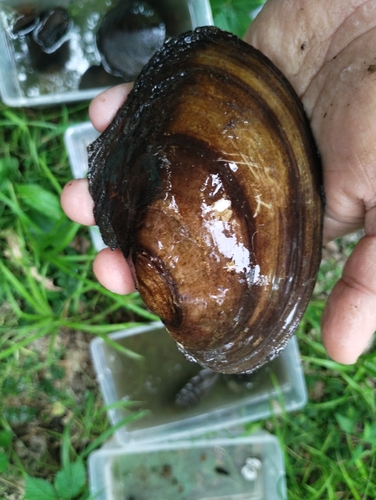
The Fragile Papershell is a special kind of freshwater mussel that lives in rivers and lakes. It has a smooth, thin shell that can be light-colored and is very delicate, making it unique among its friends in the water.
Habitat: Freshwater rivers and lakes
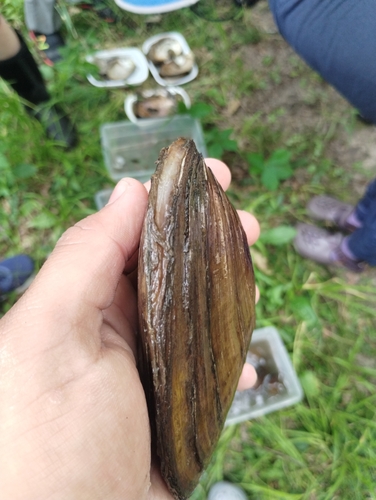
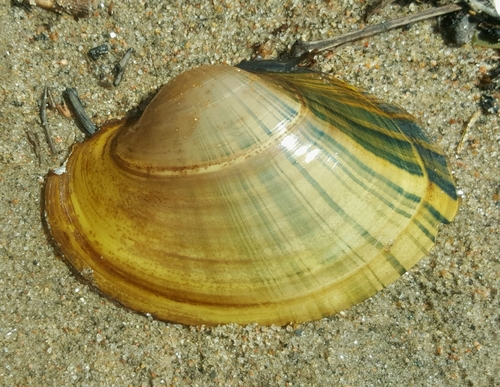
The Fragile Papershell has a thin, oval shell that is smooth and often greenish-yellow to light brown. Its delicate, papery texture distinguishes it from most other freshwater mussels, which typically have much thicker, heavier shells.
Category
InvertebrateRarity
Rare
Danger
1/5 · Very low
Snaps
2
A single Fragile Papershell can filter many gallons of water every day!
The Fragile Papershell is so delicate that its shell can break easily if dropped!
Their babies need to hitch a ride on a fish's gills to grow up!
These mussels can live for over 15 years, quietly cleaning the water.
Fragile Papershell can burrow into soft river sediment using its strong, muscular foot to hide from predators.
Fragile Papershell has specialized gills that help them filter tiny food particles from water, keeping rivers clean and clear.
Fragile Papershell can wiggle a special mantle flap that looks like a small fish, attracting bigger fish to approach them.
They filter tiny bits of algae and other small particles from the water to eat.
Solitary animals live alone for most of their lives, only interacting with others for mating or parental care.
Filter feeders obtain nutrients by straining suspended food particles and small organisms from water.
This trait characterizes organisms whose diet consists entirely or primarily of plant material.
This trait characterizes organisms with an exceptionally long lifespan compared to others of their kind.

Freshwater habitats include non-saline aquatic environments such as rivers, lakes, ponds, and wetlands, vital for numerous species.

Describes a species whose presence and role have a disproportionately large effect on its environment.

Pertaining to species that are significantly smaller than typical or average for their kind.

Describes organisms that transfer pollen, enabling the fertilization and reproduction of plants.

Endangered status indicates a species is at a very high risk of extinction in the wild in the near future.
No aliases listed yet.
Danger
1/5 · Very low
Be careful when exploring near water; slippery rocks can be dangerous!
The easiest way to identify Fragile Papershell is to use the Snappit nature identifier app.
12 cm
1 mm
15 years
They filter tiny bits of algae and other small particles from the water to eat.
Freshwater rivers and lakes
Filter Feeding
Zoom in to split clusters and explore where this object has been snapped.
Jun 3, 2026
Robert Allerton ParkPhoto attribution
no rights reserved
License: CC0 1.0 ↗
Image may be shown cropped inside the card frame.
Jun 3, 2026
Robert Allerton ParkPhoto attribution
no rights reserved
License: CC0 1.0 ↗
Image may be shown cropped inside the card frame.
Take the discovery with you
Snap it with Snappit to identify it, learn what makes it special, and add the discovery to your collection.