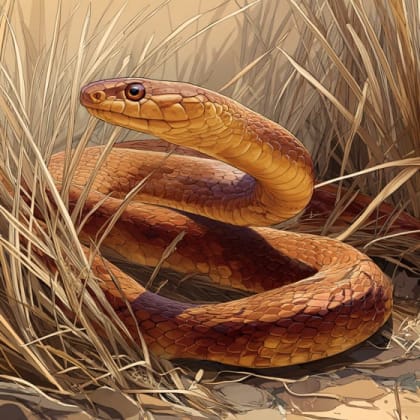





Brown Snake

Robert Allerton Park is a sprawling estate offering a unique fusion of art, sculpted gardens, and pristine natural landscapes.
Robert Allerton Park is a sprawling estate offering a unique fusion of art, sculpted gardens, and pristine natural landscapes. This 1,500-acre park in central Illinois is a National Natural Landmark and listed on the National Register of Historic Places, renowned for its Georgian-Revival mansion, diverse formal gardens, and extensive collection of outdoor sculptures. It invites visitors to step into a meticulously crafted world that feels miles away from the everyday.
The park boasts over 14 miles of hiking trails that wind through woodlands, prairies, and along the Sangamon River, offering opportunities for both leisurely strolls and invigorating hikes. Its 14 formal gardens are a true highlight, featuring over 100 garden ornaments and sculptures, each telling a story. Iconic features include the vibrant Fu Dog Garden with its 22 blue porcelain statues, the impressive 16-foot bronze "Sun Singer" statue depicting Apollo, and the serene Sunken Garden often used for special events. Other notable art installations include the "Death of the Last Centaur" sculpture nestled in the woods and the captivating "Avenue of the Musicians."
Visiting Robert Allerton Park is an immersive experience, offering a tranquil escape where art enhances nature's beauty. It’s a place where you can wander through diverse garden "rooms," discover hidden sculptures around every turn, and reconnect with the natural world. Whether you're seeking artistic inspiration, a peaceful walk, or simply a beautiful backdrop for reflection, the park provides memorable moments amidst its stunning landscapes. Be ready to snap and learn! Get the Snappit app to identify any nature species you find here.
Robert Allerton Park originated as the private estate of Robert Henry Allerton, an industrialist heir, avid art collector, and accomplished garden designer. Construction of his stately 40-room Georgian-Revival mansion, "The Farms," began in 1899 and was largely completed by 1900. Allerton, along with his protégé and later adopted son, John Gregg Allerton, spent decades transforming the Illinois farmland into an evolving landscape, incorporating formal gardens and an extensive collection of sculptures gathered from their world travels. In 1946, Robert Allerton made the incredibly generous decision to gift his house and grounds, along with an additional 3,600 acres of farmland, to the University of Illinois. The deed stipulated that the property be used as an education and research center, a forest and wildlife and plant-life reserve, an example of landscape gardening, and a public park. This gift was, at the time, the largest ever extended to the University. The park has been open to the public ever since, maintained by the University of Illinois to honor Allerton's vision.
Explore the diverse formal gardens, wander the 14 miles of hiking trails, admire the extensive collection of over 100 outdoor sculptures, and relax by the reflecting pond. Visit the McCraw Family Visitor Center for maps and information, and grab refreshments at the seasonal Greenhouse Café.
Spring: Witness thousands of bulbs blooming.
Early Summer: Ideal for vibrant garden displays, especially irises.
Fall: Enjoy the beauty of 500 mums and autumn foliage.
Winter: Offers a serene, stark beauty and can be a peaceful time for walks, often with special holiday events like Holiday Glow.
The Fu Dog Garden includes an ADA wheelchair ramp, and some garden paths have been converted to hard pebble aggregate to be wheelchair accessible. However, due to the historic nature of the property, not all areas of the park are fully accessible.
Don't miss the 40-room Robert Allerton Mansion (first floor often available for self-guided tours), the captivating Fu Dog Garden, the iconic "Sun Singer" statue, and the tranquil Sunken Garden. The Brick Walled Garden, featuring the "Girl with the Scarf" sculpture, is also a must-see.
Each card links to a full Explore page with photos, traits, and fun facts.
Start with the big picture, then zoom in to explore individual wildlife observations around this place.
Wear appropriate footwear
With 14 miles of trails and numerous gardens, comfortable shoes are a must.
Bring insect repellent
Especially during warmer months, repellent is recommended to protect against mosquitoes and ticks.
Check for events and closures
Before your visit, consult the park's official website for any seasonal events, guided tours, or temporary closures of specific areas due to private events or maintenance.
Consider a donation
Since admission is free, a donation helps support the park's extensive maintenance and preservation efforts.
Drive carefully
Observe the 25 MPH speed limit within the park and only park in designated lots, avoiding roadsides or grassy areas.
Allow ample time
Plan for at least three hours, but consider a full day to fully experience the beauty and diversity of the gardens, trails, and sculptures.
Jun 3, 2026
Photo attribution
no rights reserved
License: CC0 1.0 ↗
Image may be shown cropped inside the card frame.
Jun 3, 2026
Photo attribution
no rights reserved
License: CC0 1.0 ↗
Image may be shown cropped inside the card frame.
Jun 3, 2026
Photo attribution
no rights reserved
License: CC0 1.0 ↗
Image may be shown cropped inside the card frame.
Jun 3, 2026
Photo attribution
no rights reserved
License: CC0 1.0 ↗
Image may be shown cropped inside the card frame.
Jun 3, 2026
Photo attribution
no rights reserved
License: CC0 1.0 ↗
Image may be shown cropped inside the card frame.

Maryland, US
You might spot White-Tailed Deer and Eastern Gray Squirrel.
View guide →
.jpg)
District of Columbia, US
You might spot Eastern Gray Squirrel, Duck, and House Sparrow.
View guide →

Illinois, US
You might spot American Robin, Canada Goose, and House Sparrow.
View guide →

Virginia, US
You might spot Spotted Lanternfly and Northern Cardinal.
View guide →
Take the discovery with you
Identify the wildlife you spot, learn as you go, and keep a collection of the adventure.