_2.jpg&width=800)





Geoffroy’s Tamarin
Saguinus geoffroyi
Geoffroy's Tamarin is a small monkey with a cute face and a long tail. They love to swing through trees and live in family groups, making them very social and playful!
Habitat: Forests
The Geoffroy’s Tamarin has a striking appearance with a distinctive white head, face, and chest that sharply contrasts with its reddish-brown back. Its tail is long and completely black, making it visually different from many other tamarins.
Category
MammalsRarity
Common
Danger
2/5 · Low
Snaps
Be the first to snap!
Geoffroy’s Tamarins live in family groups of up to 10 members, working together!
These tiny monkeys have sharp claws, not nails, helping them grip tree bark like squirrels!
They can often be seen 'tree-gobbling' to get nutritious sap from specific plants.
They play a big role in helping rainforests grow by scattering seeds from fruits they eat.
Geoffroy’s Tamarin can leap incredible distances between tree branches, using its strong legs and long tail for balance.
Geoffroy’s Tamarin has a complex array of chirps, whistles, and trills that help them communicate and warn their family of danger.
Geoffroy’s Tamarin dads often carry their twin babies on their backs, sharing the parenting load to protect them.
Tiny omnivores, they munch on tasty fruits, juicy insects, and tree sap!
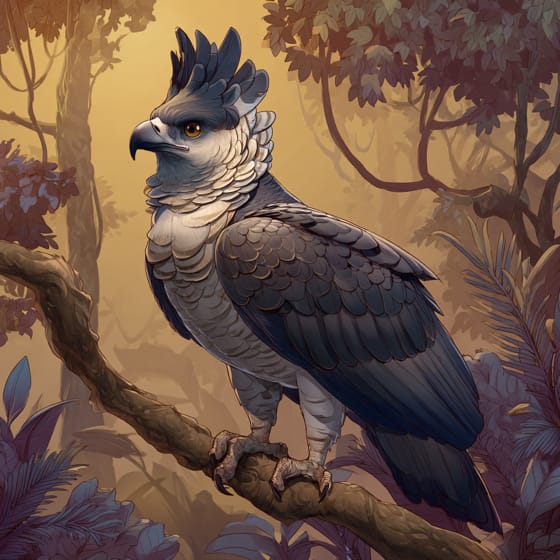
Harpia harpyja
is a powerful raptor that preys on arboreal mammals
Boa constrictor
hides in trees, ambushing small primates and other animals
Ficus insipida
relies on this common fig tree for its abundant, energy-rich fruits
Furry describes animals possessing a dense covering of soft hair or fur.
Social animals live in organized groups, cooperating for survival benefits such as foraging, defense, and raising offspring.
This trait identifies organisms whose diet includes both plant and animal matter.
Colorful describes organisms or objects displaying a wide range of bright and distinct colors.

Forest habitats are terrestrial environments dominated by dense tree cover, supporting a high diversity of plant and animal life.

Diurnal animals are primarily active during daylight hours, typically resting or sleeping at night.

This trait identifies organisms that exhibit exceptional swiftness in movement for hunting, escape, or travel.

Endangered status indicates a species is at a very high risk of extinction in the wild in the near future.
Danger
2/5 · Low
Always watch these monkeys from a distance and never try to touch them.
The easiest way to identify Geoffroy’s Tamarin is to use the Snappit nature identifier app.
20-29 cm
0.4-0.55 kg
10-15 years
15 km/h
Tiny omnivores, they munch on tasty fruits, juicy insects, and tree sap!
Forests
Foraging
Zoom in to split clusters and explore where this object has been snapped.
Recent snaps will appear here as new observations are added.
Take the discovery with you
Snap it with Snappit to identify it, learn what makes it special, and add the discovery to your collection.




.jpg&width=800)

.JPG&width=800)



.jpg&width=800)
