




gerenuk
Litocranius walleri
The gerenuk is a tall, graceful antelope that can stand on its hind legs to reach high leaves. With its long neck and big eyes, it looks very special in the wild!
Habitat: Savannas
The gerenuk is a slender antelope distinguished by its remarkably long neck and thin legs. It has a reddish-brown coat with lighter undersides and a distinct white ring around its large eyes. Males possess short, sturdy, ringed horns.
Category
MammalsRarity
Common
Danger
2/5 · Low
Snaps
Be the first to snap!
Gerenuk babies hide for weeks after birth, camouflaged by their spots!
Gerenuk males rub scent from glands onto twigs to mark their territory for rivals!
Its name means 'long-necked' in Somali, perfectly describing this unique antelope!
Unlike most antelope, gerenuks rarely graze on grass; they are specialized browsers!
Gerenuks can stand on their hind legs to reach high branches, supported by strong leg muscles.
Their extra-long neck helps them access leaves and twigs other browsers simply can't reach.
Gerenuks stay hydrated by eating succulent plants, rarely needing to drink any water.
A long, agile tongue and pointed muzzle let them precisely pick leaves and thorns.
These unique antelopes are expert browsers, munching on leaves, shoots, and flowers from shrubs.
Panthera leo
Gerenuks are a prey animal for the mighty African lion.
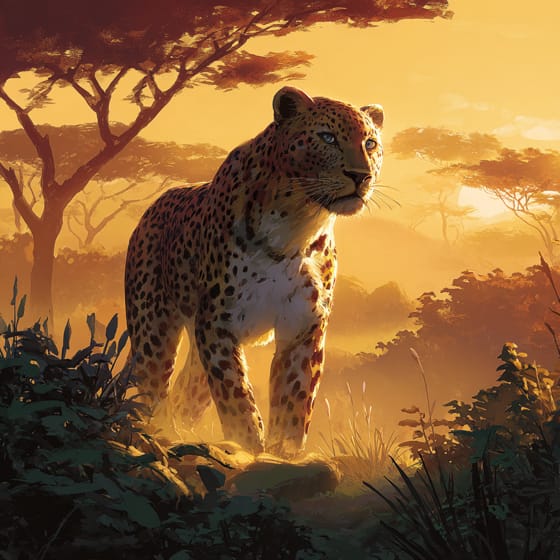
Panthera pardus
Leopards are ambush predators that hunt gerenuks.
Acinonyx jubatus
Cheetahs prey on gerenuks, using their speed.
Acacia tortilis
Gerenuks frequently browse on the leaves and shoots of acacia trees.
Furry describes animals possessing a dense covering of soft hair or fur.
Social animals live in organized groups, cooperating for survival benefits such as foraging, defense, and raising offspring.
This trait characterizes organisms whose diet consists entirely or primarily of plant material.
This habitat trait denotes species native to savannas, which are grasslands with scattered trees, typically found in tropical or subtropical regions with distinct wet and dry seasons.

Diurnal animals are primarily active during daylight hours, typically resting or sleeping at night.

Endangered status indicates a species is at a very high risk of extinction in the wild in the near future.
No aliases listed yet.
Danger
2/5 · Low
Always watch animals from a safe distance and never try to touch or feed them.
The easiest way to identify gerenuk is to use the Snappit nature identifier app.
140-160 cm
29-52 kg
8-12 years
60 km/h
These unique antelopes are expert browsers, munching on leaves, shoots, and flowers from shrubs.
Savannas
Foraging
Zoom in to split clusters and explore where this object has been snapped.
Recent snaps will appear here as new observations are added.
Take the discovery with you
Snap it with Snappit to identify it, learn what makes it special, and add the discovery to your collection.




.jpg&width=800)


.JPG&width=800)


.jpg&width=800)
