





Ghost Pipe
Monotropa uniflora
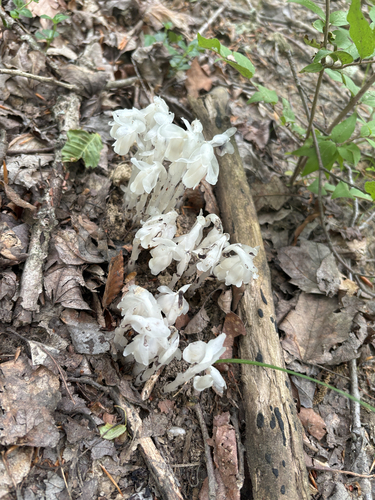
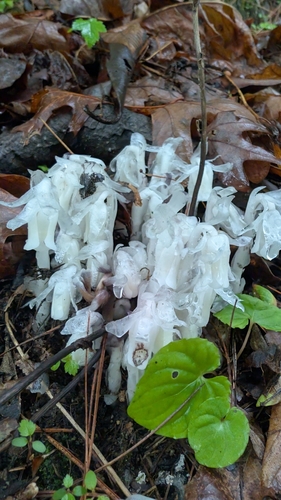
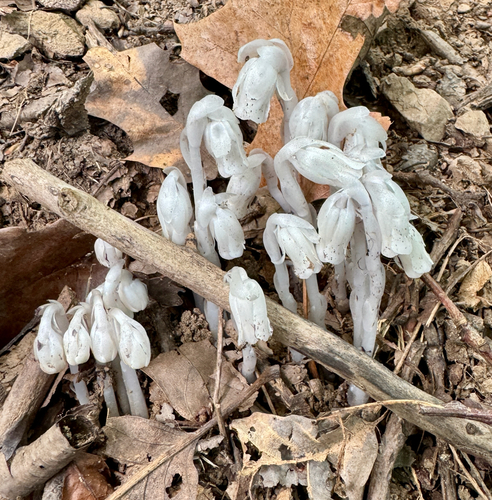
The Ghost Pipe is a special plant that looks like it's made of ghostly white wax! It doesn’t need sunlight to grow because it gets its food from the forest floor.
Habitat: Forests
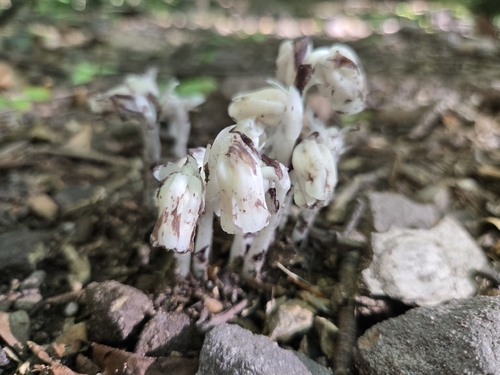
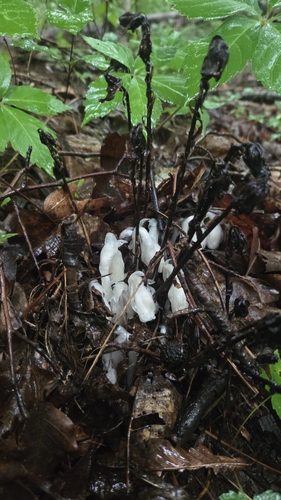
The Ghost Pipe is a ghostly white, translucent plant with a waxy texture. It has scale-like leaves instead of green ones and a single, nodding, bell-shaped flower at the top. Sometimes it has pink or purple tints, standing out against the dark forest floor.
Category
PlantsRarity
Rare
Danger
1/5 · Very low
Snaps
73
Ghost Pipes pop up quickly after summer rains.
It doesn't need sunlight at all to grow!
Its flower usually points downwards, then straightens when ripe!
Native Americans used it traditionally for eye ailments.
Ghost Pipe can 'steal' nutrients from fungi by living underground, helping it grow without sunlight.
Ghost Pipe has no chlorophyll, allowing it to thrive in deep, dark forests where other plants can't grow.
Ghost Pipe quickly emerges from the ground, blooms, and fades away, making it a rare forest treasure.
Russula compacta
Ghost Pipe 'steals' nutrients from this fungus.
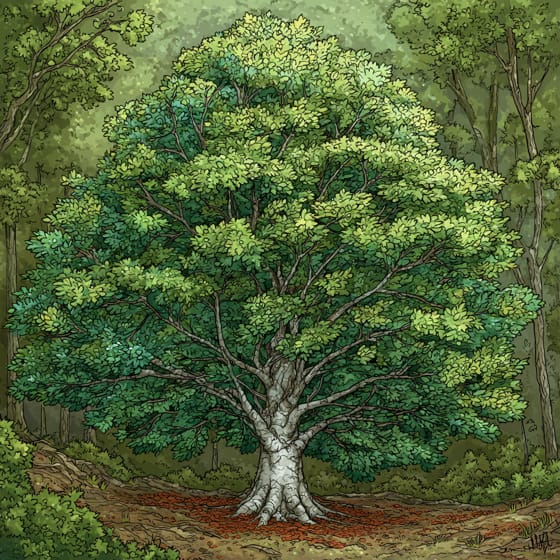
Fagus grandifolia
This tree forms a vital link in the Ghost Pipe's food chain.
Bombus impatiens
This bee visits the Ghost Pipe's unique flower.
This trait describes a symbiotic relationship between a fungus and the roots of a plant, benefiting both organisms.
Flowering plants are any plants that produce flowers as part of their reproductive cycle.
Shade tolerant plants are adapted to grow and thrive in areas with low light levels, requiring less direct sunlight.
Summer blooming plants produce their flowers during the summer season, often providing vibrant color when many other plants have finished.

Medicinal plants possess chemical compounds that can be used for therapeutic purposes to treat illnesses or maintain health.

Forest habitats are terrestrial environments dominated by dense tree cover, supporting a high diversity of plant and animal life.
This trait describes organisms that live on or in a host organism, obtaining nutrients at the host's expense.

Endangered status indicates a species is at a very high risk of extinction in the wild in the near future.
Danger
1/5 · Very low
Do not touch or pick plants without asking an adult first.
The easiest way to identify Ghost Pipe is to use the Snappit nature identifier app.
10-30 cm
1.5-2.5 cm
Summer to early Fall (July-September)
No
Mild
Perennial
Insect
Zoom in to split clusters and explore where this object has been snapped.
Jun 16, 2026
Reading Public MuseumPhoto attribution
no rights reserved
License: CC0 1.0 ↗
Image may be shown cropped inside the card frame.
Jun 9, 2026
ConcordPhoto attribution
(c) Ben Gruhot, some rights reserved (CC BY)
License: CC BY 4.0 ↗
Image may be shown cropped inside the card frame.
Jun 6, 2026
Peninsula Village Historic DistrictPhoto attribution
no rights reserved
License: CC0 1.0 ↗
Image may be shown cropped inside the card frame.
May 31, 2026
DuPont State ForestPhoto attribution
(c) James, some rights reserved (CC BY)
License: CC BY 4.0 ↗
Image may be shown cropped inside the card frame.
May 30, 2026
Roanoke City Market Historic DistrictPhoto attribution
(c) Walker Scott, some rights reserved (CC BY)
License: CC BY 4.0 ↗
Image may be shown cropped inside the card frame.

South Carolina, US
You might spot Anole, Green Treefrog, and Eastern Gray Squirrel.
View guide →

Tennessee, US
You might spot Black Bear, Yellow Wakerobin, and Pipevine Swallowtail.
View guide →

Rhode Island, US
You might spot Common Mugwort, Duck, and Azure Bluet.
View guide →

New Jersey, US
You might spot Brant, Laughing Gull, and Great Black-Backed Gull.
View guide →

Maryland, US
You might spot American Cancer-Root and Rue Anemone.
View guide →

Connecticut, US
You might spot American Robin, Eastern Poison Ivy, and Duck.
View guide →
Take the discovery with you
Snap it with Snappit to identify it, learn what makes it special, and add the discovery to your collection.








.jpg&width=800)



_001.jpg&width=800)



