





Goeldi's Marmoset
Callimico goeldii
Goeldi's Marmosets are small, playful monkeys that live in the trees of South America. They have soft, fluffy fur and love to jump around with their families in the forest.
Habitat: Forests
The Goeldi's Marmoset has striking dark blackish-brown fur, appearing almost entirely black. Its shaggy mane around the head and neck gives it a distinctive, slightly "punk rock" look, unlike other smaller, often lighter-colored marmosets.
Category
MammalsRarity
Common
Danger
2/5 · Low
Snaps
Be the first to snap!
Goeldi's marmosets use over a dozen different chirps and trills to chat!
They are the ONLY species in their unique genus, Callimico!
They often join groups of other monkey species for extra safety in the jungle.
Unlike other marmosets, they almost always have just one baby at a time!
Goeldi's Marmoset has a keen sense of smell that helps them locate hidden fungi on the forest floor.
Goeldi's Marmoset can move quietly through dense foliage that helps them sneak up on insects and small prey.
These tiny monkeys munch on juicy fruits, tasty insects, and even some mushrooms from the forest floor!
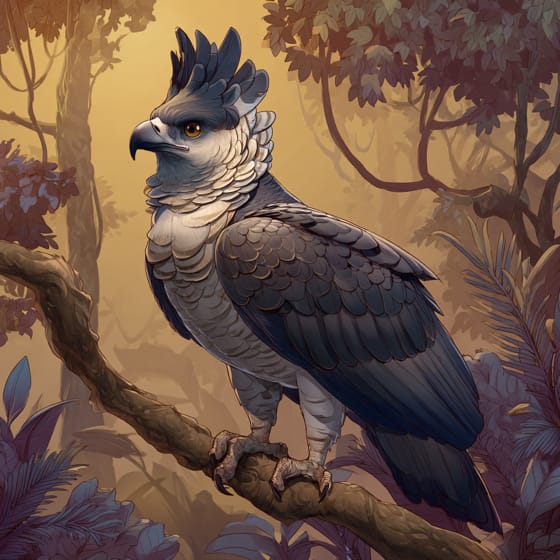
Harpia harpyja
A powerful predator that hunts monkeys from above.
Boa constrictor
These large snakes can ambush marmosets in trees.
Ficus insipida
They love to feast on the sweet fruits of this tree.
Schistocerca nitens
Insect hunting is a key part of their diet.
Russula brevipes
They often forage for these mushrooms on the forest floor.
Furry describes animals possessing a dense covering of soft hair or fur.
Social animals live in organized groups, cooperating for survival benefits such as foraging, defense, and raising offspring.
This trait identifies organisms whose diet includes both plant and animal matter.
Arboreal animals live primarily in trees, utilizing them for shelter, food, and protection from predators.

Forest habitats are terrestrial environments dominated by dense tree cover, supporting a high diversity of plant and animal life.

Diurnal animals are primarily active during daylight hours, typically resting or sleeping at night.

Endangered status indicates a species is at a very high risk of extinction in the wild in the near future.
No aliases listed yet.
Danger
2/5 · Low
Always watch from a distance and never try to touch wild animals.
The easiest way to identify Goeldi's Marmoset is to use the Snappit nature identifier app.
20-24 cm
0.35-0.67 kg
10-18 years
15 km/h
These tiny monkeys munch on juicy fruits, tasty insects, and even some mushrooms from the forest floor!
Forests
Foraging
Zoom in to split clusters and explore where this object has been snapped.
Recent snaps will appear here as new observations are added.
Take the discovery with you
Snap it with Snappit to identify it, learn what makes it special, and add the discovery to your collection.




.jpg&width=800)

.JPG&width=800)



.jpg&width=800)
