





Golden-bellied capuchin
Cebus xanthosternos
The Golden-bellied capuchin is a playful monkey with a bright golden belly! They are very smart and love to swing through the trees in their forest homes.
Habitat: Forests
The Golden-bellied capuchin has distinctive dark brown to black fur covering most of its body and head, which sharply contrasts with its bright, golden-yellow belly, flanks, and inner limbs. Its face is typically pale, often featuring a darker cap on its crown, making its vibrant underside truly stand out.
Category
MammalsRarity
Rare
Danger
3/5 · Moderate
Snaps
Be the first to snap!
Golden-bellied capuchins can live for over 40 years in captivity, making them quite long-lived!
These clever monkeys sometimes rub plants like citrus on their fur, possibly as insect repellent!
These curious primates even use 'handshakes' or finger-sniffing greetings to bond with troop members!
They often share food with each other, showing strong social bonds within their monkey families!
Golden-bellied capuchins can cleverly use sticks and stones as tools to crack nuts or extract insects, showing incredible problem-solving skills.
Golden-bellied capuchins have a powerful sense of smell that helps them locate hidden food, even ripe fruits concealed under leaves or soil.
Golden-bellied capuchins have highly dextrous hands, allowing them to manipulate objects with precision, making them adept at foraging.
These smart monkeys eat a mix of fruits, nuts, insects, and small animals from the forest.
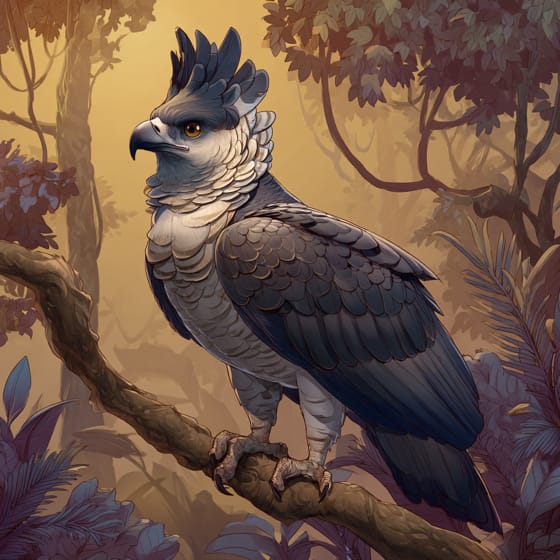
Harpia harpyja
Powerful raptor that preys on monkeys in the forest canopy.
Boa constrictor
Large snake ambushes capuchins from branches or on the ground.
Ficus guianensis
Consumes ripe figs, dispersing seeds throughout their forest habitat.
Formica fusca
Forages for ants and other insects found in bark or leaf litter.
Furry describes animals possessing a dense covering of soft hair or fur.
Social animals live in organized groups, cooperating for survival benefits such as foraging, defense, and raising offspring.
This trait identifies organisms whose diet includes both plant and animal matter.
This trait describes organisms that manipulate external objects to achieve a specific goal.

Forest habitats are terrestrial environments dominated by dense tree cover, supporting a high diversity of plant and animal life.

Diurnal animals are primarily active during daylight hours, typically resting or sleeping at night.

Endangered status indicates a species is at a very high risk of extinction in the wild in the near future.
No aliases listed yet.
Danger
3/5 · Moderate
Always watch monkeys from a distance. They are wild animals and can be unpredictable.
The easiest way to identify Golden-bellied capuchin is to use the Snappit nature identifier app.
33-40 cm
1.8-3.5 kg
15-25 years
25 km/h
These smart monkeys eat a mix of fruits, nuts, insects, and small animals from the forest.
Forests
Foraging
Zoom in to split clusters and explore where this object has been snapped.
Recent snaps will appear here as new observations are added.
Take the discovery with you
Snap it with Snappit to identify it, learn what makes it special, and add the discovery to your collection.




.jpg&width=800)


.JPG&width=800)



.jpg&width=800)
