
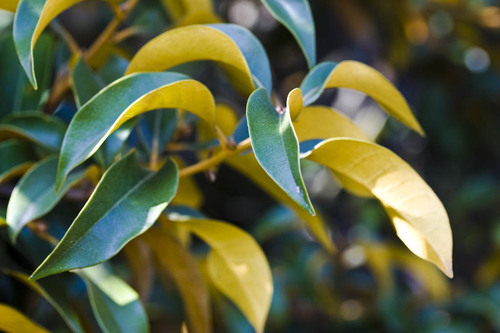


Golden Chinquapin
chrysolepis chrysophylla
The Golden Chinquapin (Chrysolepis chrysophylla) is a stunning evergreen tree or large shrub native to the Pacific Coast of North America. Renowned for its unique botanical features that bridge the characteristics of oaks and chestnuts, this resilient plant stands out in dry, rocky soils and coniferous forests. Its most striking feature is the brilliant golden-yellow undersides of its leaves, which shimmer beautifully in the breeze. As a member of the beech family (Fagaceae), it plays a crucial role in its local ecosystem, offering shelter and high-energy food to a wide variety of montane wildlife. Whether growing as a towering forest giant in wet coastal zones or a compact shrub on exposed mountain ridges, the Golden Chinquapin is a testament to botanical adaptation and beauty.
Habitat: Found in coastal coniferous forests, mixed woodlands, and rocky montane slopes of the Pacific Northwest.
This species is easily recognized by its lance-shaped, leathery evergreen leaves, which are dark green and glossy on top but coated with a dense, scurfy layer of bright golden-yellow scales underneath. Its bark is thick, furrowed, and reddish-brown. In summer, it produces creamy-white catkins that emit a strong, musky odor, followed by spiny, chestnut-like burrs that contain one or two small, sweet, edible triangular nuts (chinquapins). Depending on the environment, it can range from a low, multi-stemmed shrub of 2 meters to a massive tree reaching up to 45 meters in height.
Category
PlantsRarity
Common
Danger
1/5 · Very low
Snaps
Be the first to snap!
Its spiny golden seed burrs closely resemble those of European chestnuts, and the nuts inside are edible and sweet.
The common name 'chinquapin' is derived from an Algonquian word meaning 'chestnut'.
The wood of the tree form is incredibly durable and close-grained, though it is rarely harvested commercially due to its limited distribution.
The dense layer of yellow lipids and scales on the underside of the leaves reflects harsh sunlight and conserves moisture in dry conditions.
The seeds are protected inside sharp, needle-like husks that deter most herbivores until the nuts are fully ripe.
It can vigorously sprout from its root crown after wildfire damages or destroys the aboveground canopy.
As a photoautotrophic plant, it produces its own food using sunlight, water, and carbon dioxide through photosynthesis.
Callospermophilus lateralis
Feeds on the nutritious fallen nuts.
Tamiasciurus douglasii
Harvests the spiny burrs to extract and consume the seeds.

Neotoma fuscipes
Uses the leaves and twigs for building nests and consumes the nuts.
No trait badges are assigned for this object yet.
No aliases listed yet.
Collections for this object will appear here as more themes are added.
Danger
1/5 · Very low
No special safety notes yet.
Start with the whole plant, then compare leaf arrangement, leaf edges, stems and any flowers or fruit. Opposite leaves grow in pairs; alternate leaves come one at a time along the stem. These details tell you far more together than a single green leaf does. Plant Identifier: upload a photo and compare the visible details.
200-4500 cm
100-500 years
As a photoautotrophic plant, it produces its own food using sunlight, water, and carbon dioxide through photosynthesis.
Found in coastal coniferous forests, mixed woodlands, and rocky montane slopes of the Pacific Northwest.
Photosynthesis
Zoom in to split clusters and explore where this object has been snapped.
Recent snaps will appear here as new observations are added.
Take the discovery with you
Snap it with Snappit to identify it, learn what makes it special, and add the discovery to your collection.


















