





Fairy-slipper
Calypso bulbosa
The Fairy-slipper is a beautiful flower that looks like a tiny slipper! It grows in the forest and has lovely pink and white colors that make it special and magical.
Habitat: Forests
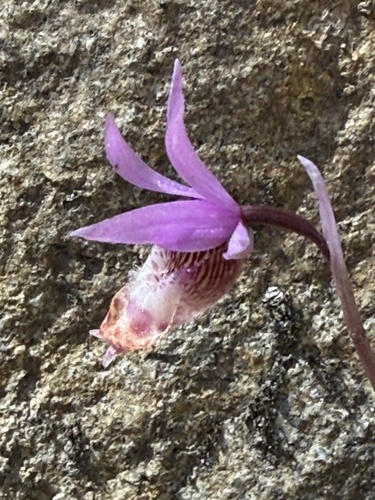
The Fairy-slipper is a small, striking orchid with a single pink to magenta flower. Its lower petal forms a distinctive pouch, often spotted with purple and fringed with yellow hairs. A single green, corrugated leaf appears earlier and withers before blooming.
Category
PlantsRarity
Rare
Danger
1/5 · Very low
Snaps
8
It takes special fungi to help the tiny seeds sprout and grow into a plant!
Its name comes from a mythical Greek nymph who lived in secret!
This orchid grows a single leaf in fall that survives winter to feed the spring flower!
Unlike most flowers, it offers no nectar, tricking pollinators with its beautiful looks!
Fairy-slipper flowers mimic nectar-rich plants, tricking bees into pollinating them without offering a reward!
Fairy-slipper has a bulb-like corm that allows it to survive harsh winters hidden beneath the soil.
Fairy-slipper depends on a special underground fungus to help it absorb vital nutrients, especially when young.
Bombus bifarius
visits flowers, seeking a deceptive nectar reward
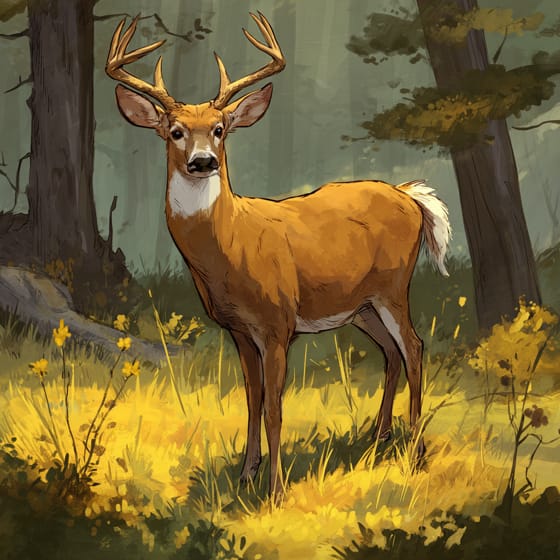
Odocoileus virginianus
browses its leaves and flowers when abundant
Deroceras reticulatum
may browse its leaves and flowers on the forest floor
Flowering plants are any plants that produce flowers as part of their reproductive cycle.
Shade tolerant plants are adapted to grow and thrive in areas with low light levels, requiring less direct sunlight.
Spring blooming plants produce their flowers during the spring season, often signifying the end of winter and the start of new growth.
Fragrant flowers emit a pleasant aroma, often to attract pollinators or for defense.

Colorful describes organisms or objects displaying a wide range of bright and distinct colors.

Describes plants that are particularly attractive and beneficial to a wide range of pollinating organisms.

Forest habitats are terrestrial environments dominated by dense tree cover, supporting a high diversity of plant and animal life.

Pertaining to species that are significantly smaller than typical or average for their kind.

Endangered status indicates a species is at a very high risk of extinction in the wild in the near future.
Danger
1/5 · Very low
Always look but don't pick the flowers, so they can keep growing!
The easiest way to identify Fairy-slipper is to use the Snappit nature identifier app.
5-20 cm
5-10 cm
2-4 cm
Spring
No
None
Perennial
Zoom in to split clusters and explore where this object has been snapped.
May 31, 2026
Sunrise Historic DistrictPhoto attribution
(c) Hill Craddock, some rights reserved (CC BY)
License: CC BY 4.0 ↗
Image may be shown cropped inside the card frame.

California, US
You might spot Redwood Sorrel, Redwood, and Button's Banana Slug.
View guide →

California, US
You might spot Redwood, Pacific Trillium, and Evergreen Huckleberry.
View guide →

Montana, US
You might spot Great Blanketflower and Seven-Spotted Lady Beetle.
View guide →

Colorado, US
You might spot Rocky Mountain Marsh-Marigold and American Bistort.
View guide →

Colorado, US
You might spot Black-Billed Magpie and Twinberry Honeysuckle.
View guide →

British Columbia, CA
You might spot Western Rattlesnake Plantain and Shinyleaf Meadowsweet.
View guide →
Take the discovery with you
Snap it with Snappit to identify it, learn what makes it special, and add the discovery to your collection.








.jpg&width=800)


_001.jpg&width=800)



