

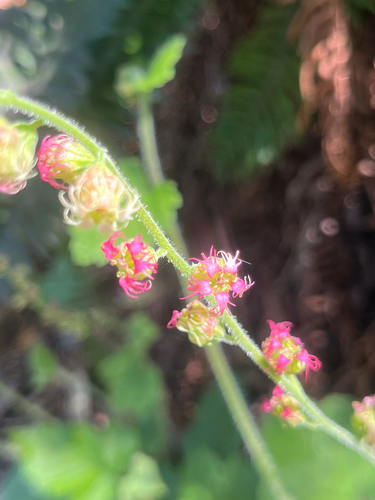
Currant Bush

Huckleberry Botanic Regional Preserve offers a vibrant tapestry of California's unique flora.
Huckleberry Botanic Regional Preserve offers a vibrant tapestry of California's unique flora. This 241-acre regional park in the Oakland Hills is a living museum, preserving a rare "relic plant association" found in few other places in the East Bay. Visitors can immerse themselves in a continuously blooming landscape, making it a standout destination for nature lovers and plant enthusiasts alike.
The preserve's crown jewel is its 1.7-mile self-guided Interpretive Loop Trail, Huckleberry Path, where shaded paths wind through a diverse ecosystem. Along this trail, interpretive panels highlight fascinating species like the endangered Pallid Manzanita, Golden Chinquapin, and the rare Western Leatherwood, which blooms with golden flowers in winter. You'll encounter a rich understory of ferns, California Bay trees filling the air with their aromatic scent, and in late summer, the namesake California Huckleberry.
A visit to Huckleberry Botanic Regional Preserve is an invitation to slow down and connect with the natural world. It's a refreshing escape, offering a cool, damp forest environment even in warmer months, and occasional views of Mount Diablo through the trees. The preserve's tranquil atmosphere, combined with its educational opportunities, creates a memorable experience that showcases the botanical heritage of California. Be ready to snap and learn! Get the Snappit app to identify any nature species you find here.
Huckleberry Botanic Regional Preserve is an ecological jewel, specifically set aside to protect a relic plant association unique to certain coastal climate regions of California where specific soil and climatic conditions exist. This unique environment has been shaped by ancient geological processes, with the preserve's rock layers once being part of the ocean floor, uplifted and eroded approximately 12 million years ago. The preserve was established, in part, to safeguard the endangered Pallid Manzanita, a species whose entire global range is confined to a few East Bay locations.
Hike the Huckleberry Path, identify native plants using the interpretive signs, enjoy the cool and shaded environment, seek out views of Mount Diablo, and in winter, look for clusters of ladybugs.
The preserve remains relatively cool and damp even in summer due to its tree canopy and fog. Trails can be muddy after heavy rains, particularly on the lower loop, so appropriate footwear is recommended. Ladybug clusters are a unique winter phenomenon.
The preserve is generally not wheelchair accessible due to narrow, unpaved trails and elevation changes. Portable toilets are available near the parking lot.
The self-guided Interpretive Loop Trail with its 21 numbered markers is the primary feature. Look for the endangered Pallid Manzanita, the Golden Chinquapin, and the rare Western Leatherwood. The dense fern and California Bay forests are also key attractions.
Each card links to a full Explore page with photos, traits, and fun facts.
Start with the big picture, then zoom in to explore individual wildlife observations around this place.
Dress in layers
** The preserve's dense canopy and frequent fog mean it can be significantly cooler than surrounding areas, even in summer.
Wear appropriate footwear
Trails can be muddy and slippery, especially after rain, so sturdy hiking shoes or boots are recommended.
Arrive early for parking
The parking lot is small and can fill up, particularly on weekends. Additional parking may be found along Skyline Boulevard.
Grab a map at the trailhead
A map will help you navigate the loop and locate the numbered interpretive panels. You can also take a photo of the map with your phone.
Bring water and snacks
There are limited facilities on-site beyond portable toilets.
Don't forget hand sanitizer
While portable toilets are available, bringing your own hand sanitizer is a good idea.
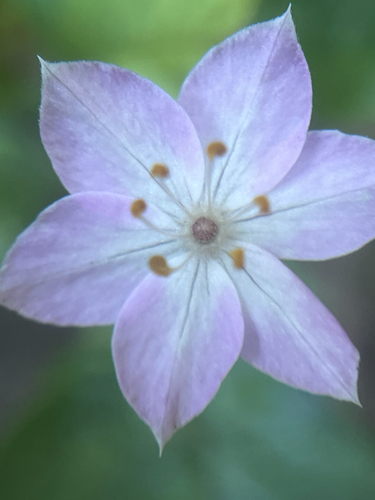
May 10, 2026
Photo attribution
no rights reserved
License: CC0 1.0 ↗
Image may be shown cropped inside the card frame.
May 10, 2026
Photo attribution
no rights reserved
License: CC0 1.0 ↗
Image may be shown cropped inside the card frame.
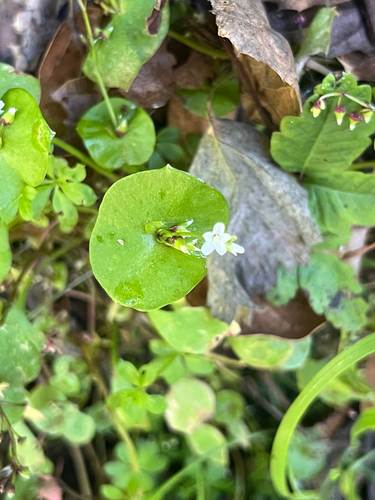
May 10, 2026
Photo attribution
no rights reserved
License: CC0 1.0 ↗
Image may be shown cropped inside the card frame.
Jun 1, 2026
Jun 1, 2026

Maryland, US
You might spot White-Tailed Deer and Eastern Gray Squirrel.
View guide →
.jpg)
District of Columbia, US
You might spot Eastern Gray Squirrel, Duck, and House Sparrow.
View guide →

Illinois, US
You might spot American Robin, Canada Goose, and House Sparrow.
View guide →

Virginia, US
You might spot Spotted Lanternfly and Northern Cardinal.
View guide →
Take the discovery with you
Identify the wildlife you spot, learn as you go, and keep a collection of the adventure.








.jpg&width=800)