




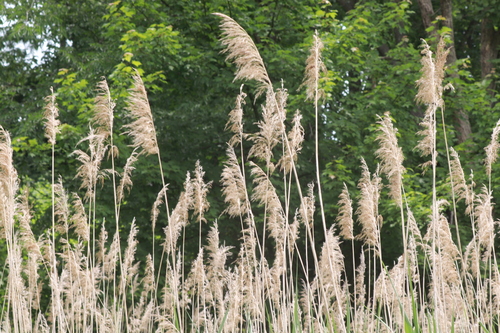
common reed
Phragmites australis
Common reed is a tall grass that grows near water. It has fluffy flower heads that look like soft feathers and can sway gently in the breeze. It's a great home for many animals!
Habitat: Wetlands
The common reed is a tall, grass-like plant with stout, hollow stems and long, flat, blue-green leaves. Its most distinctive feature is a large, feathery, purplish-brown to golden plume-like flower head that sways in the wind.
Category
PlantsRarity
Common
Danger
1/5 · Very low
Snaps
21
It's one of the most widespread plants on Earth, found on every continent except Antarctica!
Its tough, hollow stems were historically used to make arrows, mats, and even roofs!
Some cultures have made musical instruments, like flutes, from its sturdy, hollow stalks!
The roots can grow incredibly deep, helping the plant survive droughts and strong winds!
Common reed can spread rapidly using tough underground stems called rhizomes, helping it colonize new areas.
Common reed has roots that can absorb pollutants and heavy metals from water, helping to clean its environment.
Common reed has a dense network of roots that stabilize soil, preventing erosion along water bodies.
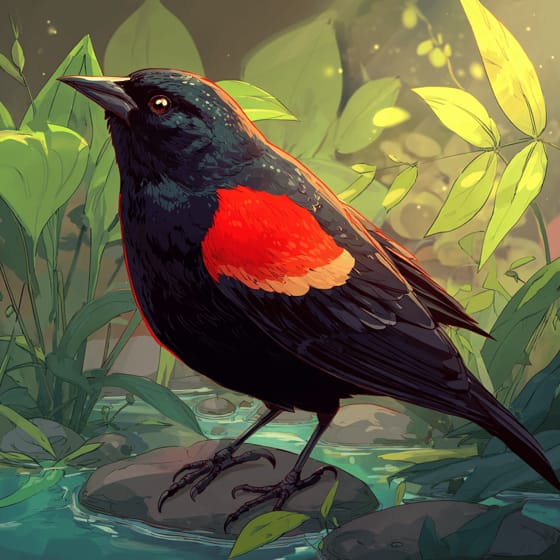
Agelaius phoeniceus
Builds nests in dense reed beds.
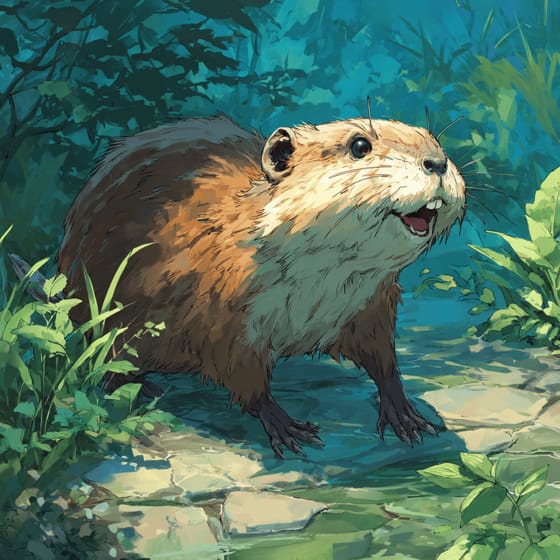
Ondatra zibethicus
Consumes stems and rhizomes.
Anas platyrhynchos
Eats seeds and sometimes shoots.
Cistothorus palustris
Weaves globe-shaped nests within the reeds.
Flowering plants are any plants that produce flowers as part of their reproductive cycle.
Describes organisms capable of converting atmospheric nitrogen into compounds usable by plants.
Grass-like plants are herbaceous plants that visually resemble true grasses, typically having long, narrow leaves.
This human use trait identifies species that yield natural fibers, used by humans for textiles, rope, paper, and other manufactured goods.

Describes plants that are particularly attractive and beneficial to a wide range of pollinating organisms.

Rapid growing plants exhibit accelerated growth rates, quickly increasing in size and biomass within a short period.

This habitat trait identifies species found in wetlands, which are areas of land saturated with water, either permanently or seasonally, including marshes, swamps, and bogs.

Freshwater habitats include non-saline aquatic environments such as rivers, lakes, ponds, and wetlands, vital for numerous species.

Describes a species whose presence and role have a disproportionately large effect on its environment.
No aliases listed yet.
Danger
1/5 · Very low
Stay on paths when exploring near water and be careful of slippery areas.
The easiest way to identify common reed is to use the Snappit nature identifier app.
100-600 cm
1-1.7 cm
Summer-fall
Yes
None
Perennial
Wind
Zoom in to split clusters and explore where this object has been snapped.
Jun 6, 2026
East Windsor Hill Historic DistrictPhoto attribution
(c) Mark Apgar, some rights reserved (CC BY)
License: CC BY 4.0 ↗
Image may be shown cropped inside the card frame.

Rhode Island, US
You might spot Common Eastern Bumble Bee and Osprey.
View guide →

New York, US
You might spot American Robin, Pond Slider, and Northern Cardinal.
View guide →

South Carolina, US
You might spot Brown Pelican, Boat-Tailed Grackle, and Great Egret.
View guide →

Connecticut, US
You might spot Eastern Gray Squirrel, Dark-Eyed Junco, and House Sparrow.
View guide →

US
You might spot Brown Pelican, Boat-Tailed Grackle, and Great Egret.
View guide →

Indiana, US
You might spot Common Reed, Rosepink, and Bearberry.
View guide →
Take the discovery with you
Snap it with Snappit to identify it, learn what makes it special, and add the discovery to your collection.








.jpg&width=800)



_001.jpg&width=800)




