





great mullein
Verbascum thapsus
Great mullein is a tall plant with fuzzy leaves and bright yellow flowers. It grows in sunny places and is often found along roadsides and in fields.
Habitat: Grasslands
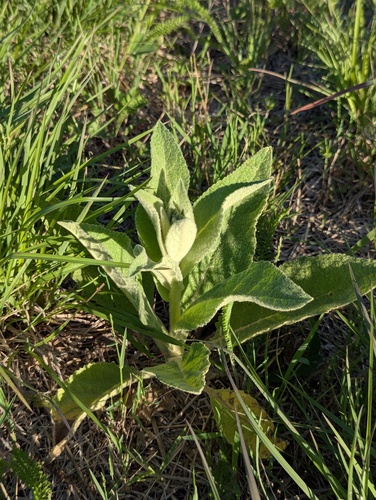
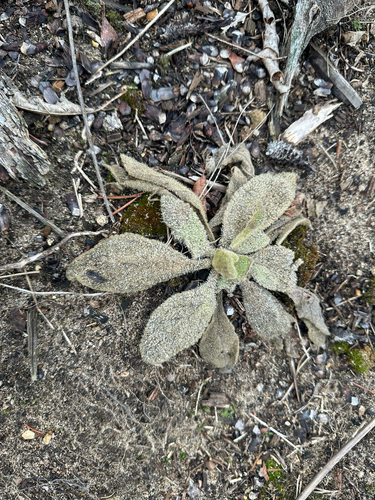
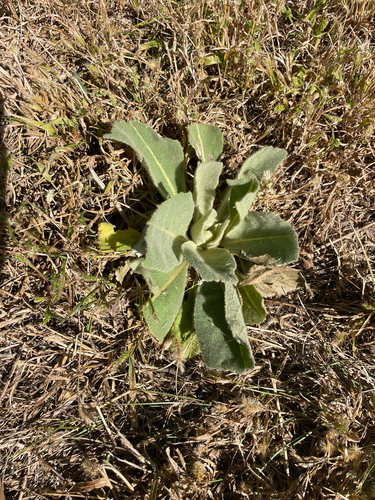
The great mullein has distinctive velvety, grey-green leaves forming a large basal rosette, from which a towering flower stalk emerges. Its vibrant yellow, five-petaled flowers bloom sequentially up the spire, making it appear like a fuzzy, living candelabra.
Category
PlantsRarity
Common
Danger
1/5 · Very low
Snaps
99
Ancient Romans dipped its dry stalks in oil to make towering torches!
Its yellow flowers can be boiled to create a natural, beautiful yellow dye!
Mullein is a "pioneer plant," often the very first to grow in newly disturbed soil.
Some cultures believed mullein could ward off evil spirits and bad luck!
Great mullein has soft, woolly hairs covering its leaves and stem, which trap moisture and protect it from harsh sun and cold.
Great mullein can grow a towering flower stalk up to 8 feet tall, helping its many small seeds scatter widely with wind.
Great mullein produces thousands of tiny seeds that can lie dormant in the soil for over 100 years, waiting to sprout.
Apis mellifera
collects nectar from its flowers
Cucullia verbasci
caterpillars feed on its leaves
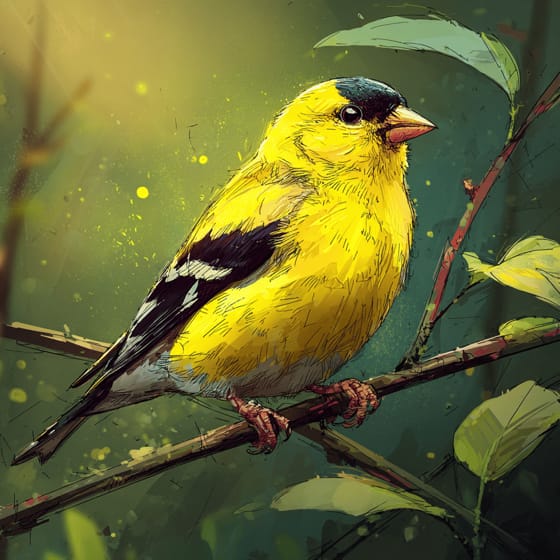
Spinus tristis
consumes its tiny seeds
Furry describes animals possessing a dense covering of soft hair or fur.
Flowering plants are any plants that produce flowers as part of their reproductive cycle.
Biennial plants complete their life cycle over two growing seasons, typically forming foliage in the first year and flowering/seeding in the second.
Summer blooming plants produce their flowers during the summer season, often providing vibrant color when many other plants have finished.

Medicinal plants possess chemical compounds that can be used for therapeutic purposes to treat illnesses or maintain health.

Grassland habitats are terrestrial biomes dominated by grasses and herbaceous plants, supporting a variety of grazing animals.

Describes plants that are particularly attractive and beneficial to a wide range of pollinating organisms.
Danger
1/5 · Very low
Always look but don't touch plants without asking an adult, as some can be harmful.
The easiest way to identify great mullein is to use the Snappit nature identifier app.
50-250 cm
30-60 cm
1.5-3 cm
Summer
Yes
None
Biennial
Zoom in to split clusters and explore where this object has been snapped.
May 30, 2026
East Granby Historic DistrictPhoto attribution
no rights reserved
License: CC0 1.0 ↗
Image may be shown cropped inside the card frame.
Apr 1, 2026
Five Channels DamPhoto attribution
(c) jyoung2399, some rights reserved (CC BY)
License: CC BY 4.0 ↗
Image may be shown cropped inside the card frame.
Sep 26, 2025
High Trestle TrailPhoto attribution
no rights reserved
License: CC0 1.0 ↗
Image may be shown cropped inside the card frame.

New Mexico, US
You might spot Tree Cholla, Colorado Pinyon, and House Finch.
View guide →

Ohio, US
You might spot Large White Trillium, Fire Pink, and Christmas Fern.
View guide →

New York, US
You might spot Dame's Rocket, American Pokeweed, and American Toad.
View guide →

Indiana, US
You might spot Eastern Fox Squirrel, Duck, and Canada Goose.
View guide →

Massachusetts, US
You might spot Common Eastern Bumble Bee and Asian Lady Beetle.
View guide →

District of Columbia, US
You might spot Spotted Lanternfly and Eastern Gray Squirrel.
View guide →
Take the discovery with you
Snap it with Snappit to identify it, learn what makes it special, and add the discovery to your collection.








.jpg&width=800)



_001.jpg&width=800)




