


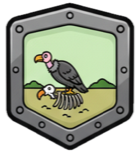


Greater Adjutant
Leptoptilos dubius
The Greater Adjutant is a large bird with long legs and a big beak. It often stands tall and can be found near wetlands, where it looks for food like fish and frogs.
Habitat: Wetlands
The Greater Adjutant is a very large, grey-bodied stork with whitish underparts and a massive, wedge-shaped bill. It has a bare, reddish head and neck featuring a distinctive large gular pouch hanging from its throat.
Category
BirdsRarity
Rare
Danger
1/5 · Very low
Snaps
Be the first to snap!
Once common, they are now one of the world's most endangered stork species.
Sometimes, Greater Adjutants swallow really large bones whole after eating carrion!
Their bare head and neck help them stay clean when eating messy meals.
These giant storks make loud clattering sounds with their huge bills, not vocal calls!
Greater Adjutants have a large gular pouch that helps them cool down by releasing excess body heat.
Greater Adjutants can tear apart large carcasses because they have a powerful, thick bill for tough scavenging.
Greater Adjutants can soar high in the sky for hours because their huge wings catch warm air currents.
These giant birds are important scavengers, often eating rotting meat, but also hunting small animals.
Bos indicus
cleans up carcasses of dead livestock.
Rana tigrina
preys on frogs in wetland habitats.
Varanus salvator
sometimes preys on eggs and chicks.
Corvus splendens
occasionally raids nests for eggs or chicks.
Feathered describes animals, primarily birds, possessing a covering of feathers.
Social animals live in organized groups, cooperating for survival benefits such as foraging, defense, and raising offspring.
Scavengers consume dead organic matter, helping to decompose carcasses and other waste in the ecosystem.
Filter feeders obtain nutrients by straining suspended food particles and small organisms from water.

Piscivorous organisms are animals that primarily subsist on a diet of fish.

This habitat trait identifies species found in wetlands, which are areas of land saturated with water, either permanently or seasonally, including marshes, swamps, and bogs.

Diurnal animals are primarily active during daylight hours, typically resting or sleeping at night.

Giant describes organisms or objects of significantly larger size than average for their species or type.

Endangered status indicates a species is at a very high risk of extinction in the wild in the near future.
Danger
1/5 · Very low
Always watch birds from a distance and don't try to touch them.
The easiest way to identify Greater Adjutant is to use the Snappit nature identifier app.
130-150 cm
200-280 cm
8-15 kg
15-25 years
45 km/h
These giant birds are important scavengers, often eating rotting meat, but also hunting small animals.
Wetlands
Zoom in to split clusters and explore where this object has been snapped.
Recent snaps will appear here as new observations are added.
Take the discovery with you
Snap it with Snappit to identify it, learn what makes it special, and add the discovery to your collection.




.jpg&width=800)










