





Hackberry Emperor
Asterocampa celtis
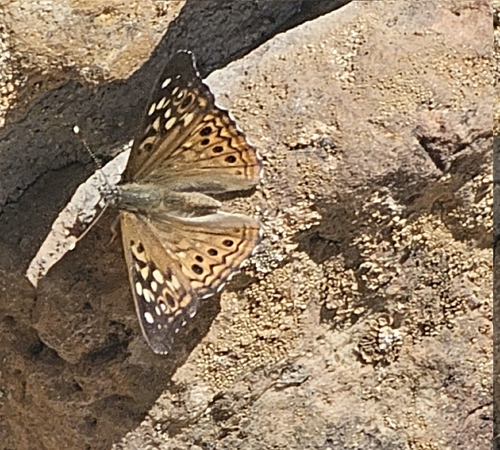
The Hackberry Emperor is a beautiful butterfly with orange and brown wings. It loves to flutter around in sunny spots and can often be seen resting on tree trunks.
Habitat: Forests
The Hackberry Emperor is a medium-sized butterfly, featuring mottled gray-brown or brownish-orange wings with a few small, pale spots and dark markings. Its underside is cryptically patterned, allowing it to blend seamlessly with tree bark, particularly the hackberry tree.
Category
InsectsRarity
Common
Danger
1/5 · Very low
Snaps
76
Adult Hackberry Emperors almost never drink nectar from flowers.
Their caterpillars wear a "head crown" with two tiny, branched horns.
These butterflies love to land on people, tasting their skin with their feet!
They often "dance" together in the air, especially in the afternoon sun!
Hackberry Emperor has mottled gray-brown wings that help them perfectly camouflage on tree trunks, making them very hard to spot.
Hackberry Emperor can sip on tree sap, rotting fruit, or even animal droppings because of its specialized proboscis, helping them get nutrients.
Hackberry Emperor can use its clubbed antennae to detect host plants and find suitable mates, helping them navigate their world.
Caterpillars munch hackberry leaves; adults prefer tree sap, rotting fruit, and other liquids.
Age differences: Larvae are herbivorous, feeding on hackberry leaves. Adults are saprophagous/scavengers, drinking tree sap, rotting fruit, and animal waste.
Celtis occidentalis
Caterpillars eat its leaves; adults feed on its sap and perch.
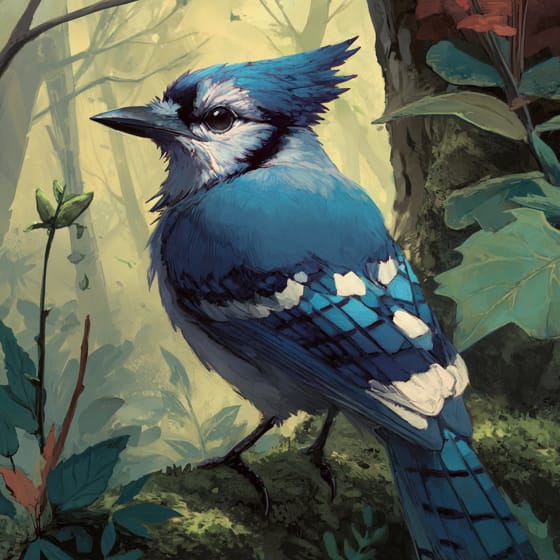
Cyanocitta cristata
Blue Jays prey on caterpillars and adult butterflies.
Cotesia congregata
Parasitic wasps lay eggs on caterpillars, consuming them from within.
Didelphis virginiana
Opossums can consume larvae and pupae when foraging.
Solitary animals live alone for most of their lives, only interacting with others for mating or parental care.
Colorful describes organisms or objects displaying a wide range of bright and distinct colors.
This trait characterizes organisms whose diet consists entirely or primarily of plant material.
Describes plants that are particularly attractive and beneficial to a wide range of pollinating organisms.

Forest habitats are terrestrial environments dominated by dense tree cover, supporting a high diversity of plant and animal life.

Diurnal animals are primarily active during daylight hours, typically resting or sleeping at night.

Describes organisms that transfer pollen, enabling the fertilization and reproduction of plants.
Danger
1/5 · Very low
Butterflies are gentle creatures, but it's best to watch them without touching.
The easiest way to identify Hackberry Emperor is to use the Snappit nature identifier app.
45-65 mm
20-30 mm
15-20 days
Caterpillars munch hackberry leaves; adults prefer tree sap, rotting fruit, and other liquids.
Forests
Foraging
6
Zoom in to split clusters and explore where this object has been snapped.
Jun 19, 2026
Dinosaur RidgePhoto attribution
no rights reserved
License: CC0 1.0 ↗
Image may be shown cropped inside the card frame.

Tennessee, US
You might spot House Sparrow, Northern Mockingbird, and Gulf Fritillary.
View guide →

Illinois, US
You might spot Common Eastern Bumble Bee and Brown-Belted Bumble Bee.
View guide →

South Carolina, US
You might spot Anole, Green Treefrog, and Eastern Gray Squirrel.
View guide →

Alabama, US
You might spot Anole, Eastern Gray Squirrel, and Asian Lady Beetle.
View guide →

Arkansas, US
You might spot Eastern Gray Squirrel and Asian Lady Beetle.
View guide →

Arkansas, US
You might spot Widow's-Cross, Yucca Giant-Skipper, and Outis Skipper.
View guide →
Take the discovery with you
Snap it with Snappit to identify it, learn what makes it special, and add the discovery to your collection.







.jpg&width=800)


