





Hairy Hexagonia
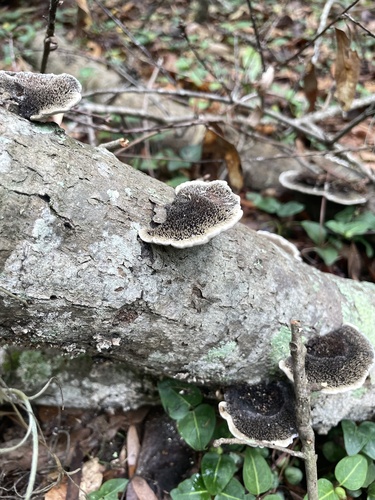
hexagonia hydnoides
The Hairy Hexagonia is a fuzzy little creature that loves to explore its forest home. With its soft fur and playful nature, it brings joy to all who encounter it!
Habitat: Forests and wooded areas
The Hairy Hexagonia is a medium-sized mammal covered in dense, reddish-brown fur with faint, darker hexagonal patterns on its back. It has large, expressive dark eyes and prominent, tufted ears often tipped with black. Its sturdy tail is bushy.
Category
MammalsRarity
Common
Danger
1/5 · Very low
Snaps
3
Baby Hexagonias are called 'hexlings' and are born with tiny, undeveloped patterns.
Its thick fur changes color slightly with the seasons to improve camouflage!
They build intricate burrows with multiple hidden exits to escape predators.
When startled, it can roll into a tight, furry ball to protect its soft belly.
Hairy Hexagonia can scale slippery rocks and tree bark with ease because of its unique, rough paw pads.
Hairy Hexagonia has hexagonal fur patterns that help them blend seamlessly into dappled forest light and rocky terrain.
Hairy Hexagonia can navigate dense undergrowth and find food in the dark because of its extra-long, sensitive whiskers.
An opportunistic eater, it enjoys a varied diet of plants, insects, and small creatures.
Furry describes animals possessing a dense covering of soft hair or fur.
Social animals live in organized groups, cooperating for survival benefits such as foraging, defense, and raising offspring.
This trait characterizes organisms whose diet consists entirely or primarily of plant material.
Forest habitats are terrestrial environments dominated by dense tree cover, supporting a high diversity of plant and animal life.

Nocturnal animals are primarily active during the nighttime hours, typically resting or sleeping during the day.
Danger
1/5 · Very low
Always observe from a distance and do not disturb their habitat.
The easiest way to identify Hairy Hexagonia is to use the Snappit nature identifier app.
35-55 cm
2.5-4.5 kg
6-10 years
20 km/h
An opportunistic eater, it enjoys a varied diet of plants, insects, and small creatures.
Forests and wooded areas
Foraging
Zoom in to split clusters and explore where this object has been snapped.
May 29, 2026
Moultrieville Historic DistrictPhoto attribution
no rights reserved
License: CC0 1.0 ↗
Image may be shown cropped inside the card frame.

Texas, US
You might spot Eastern Fox Squirrel, Duck, and American Robin.
View guide →

Texas, US
You might spot Eastern Fox Squirrel, American Robin, and Duck.
View guide →

Texas, US
You might spot Eastern Fox Squirrel, Duck, and American Robin.
View guide →

Texas, US
You might spot Duck, Eastern Fox Squirrel, and Great-Tailed Grackle.
View guide →

US
You might spot Brown Pelican, Laughing Gull, and Cannonball Jelly.
View guide →
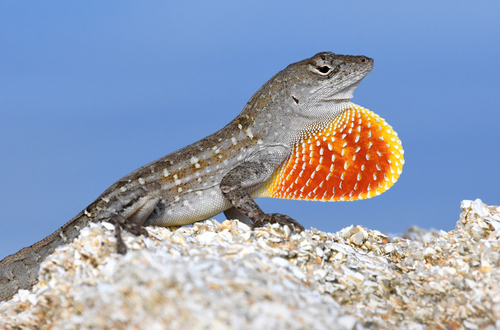
Texas, US
You might spot Brown Anole, Eastern Gray Squirrel, and Bee.
View guide →
Take the discovery with you
Snap it with Snappit to identify it, learn what makes it special, and add the discovery to your collection.




.jpg&width=800)
.jpg&width=800)


.JPG&width=800)


.jpg&width=800)
