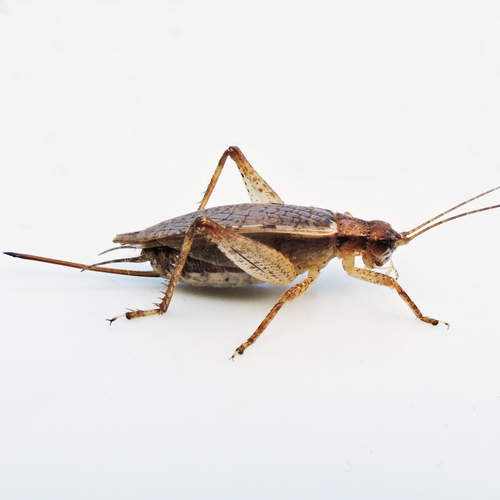





Hapithus
hapithus
The Hapithus, commonly known as a type of tree cricket, belongs to the family Oecanthidae and is a fascinating nocturnal insect. These small, arboreal orthopterans are primarily recognized by the distinct calls of the males, which are a characteristic sound of warm summer and autumn evenings in their habitats. They play an important ecological role as both an herbivore and a predator of smaller insects, contributing to the balance of their ecosystems. Hapithus crickets are masters of camouflage, their subtle coloration allowing them to blend seamlessly into their leafy surroundings, making them more often heard than seen. Their life cycle typically spans a year, with nymphs developing through several instars before maturing into adults ready to reproduce.
Habitat: Found in various vegetated areas, including forests, shrublands, meadows, and gardens, Hapithus crickets typically inhabit herbaceous plants, shrubs, or trees.
Hapithus crickets are generally slender, small to medium-sized insects, typically ranging from 1 to 2.5 centimeters in length. Their coloration often varies from pale green or yellowish to light brown, providing excellent camouflage amongst foliage. They possess long, delicate antennae that are often longer than their body, used for sensing their environment. The hind legs are robust and adapted for jumping. Males are distinguished by their broad, flattened forewings (tegmina) which are specially modified for stridulation, while females have a long, needle-like ovipositor at the rear for egg-laying.
Category
InsectsRarity
Common
Danger
1/5 · Very low
Snaps
Be the first to snap!
Each species within the Hapithus genus typically possesses a distinct song pattern, allowing for species identification based purely on their calls.
Male Hapithus crickets have a unique 'comb and scraper' mechanism on their forewings, which they rub together to produce their characteristic courtship songs.
Their long, thread-like antennae are highly sensitive, enabling them to detect subtle changes in air currents, chemical cues, and vibrations in their environment, even in complete darkness.
When threatened, Hapithus crickets can use their powerful hind legs to jump considerable distances to escape predators.
Male Hapithus crickets produce distinct, rhythmic chirping or trilling sounds at night by rubbing their forewings together, primarily to attract receptive females for mating.
Their pale green, yellow, or brown coloration and slender body shape allow them to blend almost perfectly with leaves and stems, making them very difficult for predators and observers to spot.
Beyond auditory signals, Hapithus crickets are capable of detecting subtle vibrations through their legs and antennae, helping them locate food, avoid predators, and even communicate with conspecifics over short distances through substrate-borne signals.
Hapithus crickets exhibit an omnivorous diet, consuming both plant matter and small insects. They forage on soft plant tissues, pollen, and nectar, while also preying on small, slow-moving arthropods.
Age differences: The diet of Hapithus nymphs is generally similar to that of adults, primarily consisting of a mix of plant material and small insects.
Turdus migratorius
Adult crickets are preyed upon by insectivorous birds.

Araneidae spp.
Young crickets and adults can be caught and consumed by various spiders.
Solidago spp.
Hapithus crickets feed on the foliage and pollen of these plants.
Gryon spp.
Parasitic wasps lay eggs on or in cricket eggs or nymphs, with the developing wasp larva consuming the cricket.
Furry describes animals possessing a dense covering of soft hair or fur.
Social animals live in organized groups, cooperating for survival benefits such as foraging, defense, and raising offspring.
Arboreal animals live primarily in trees, utilizing them for shelter, food, and protection from predators.
Colorful describes organisms or objects displaying a wide range of bright and distinct colors.
Diurnal animals are primarily active during daylight hours, typically resting or sleeping at night.
Collections for this object will appear here as more themes are added.
Danger
1/5 · Very low
No special safety notes yet.
Look for six legs, antennae, three body sections and the shape of the wings. Beetles have hardened front wings; flies have just one working pair. Tiny insects may need a close view before their group is clear. Insect Identifier: upload a photo and compare the visible details.
1-2 cm
2-5 cm
0.0005-0.002 kg
up to 1 years
Hapithus crickets exhibit an omnivorous diet, consuming both plant matter and small insects. They forage on soft plant tissues, pollen, and nectar, while also preying on small, slow-moving arthropods.
Found in various vegetated areas, including forests, shrublands, meadows, and gardens, Hapithus crickets typically inhabit herbaceous plants, shrubs, or trees.
Foraging
Zoom in to split clusters and explore where this object has been snapped.
Recent snaps will appear here as new observations are added.
Take the discovery with you
Snap it with Snappit to identify it, learn what makes it special, and add the discovery to your collection.