

Harpactorini
harpactorini
Harpactorini is the largest and most diverse tribe of assassin bugs within the family Reduviidae. Renowned for their predatory prowess, these remarkable insects serve as vital natural pest control agents in both agricultural and wild ecosystems. They actively stalk a wide variety of crop-damaging insects, using a strong, curved rostrum to inject a highly efficient cocktail of paralyzing toxins and digestive enzymes that liquefies the prey's internal organs for consumption. Their active hunting style and intriguing behaviors make them a fascinating group for nature observers.
Habitat: Found in diverse terrestrial environments including grasslands, agricultural fields, forests, and suburban gardens, usually perched on foliage or flowers waiting for prey.
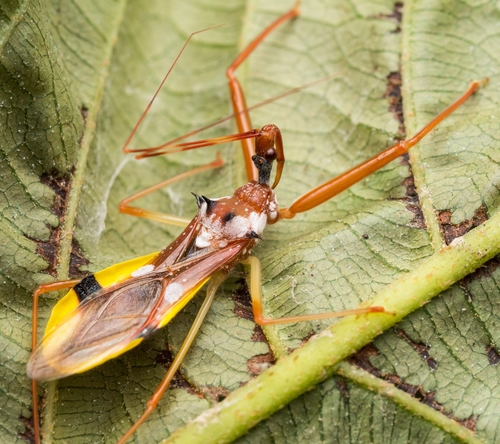
These striking insects typically feature elongated, robust bodies ranging from 1 to 4 centimeters in length, often adorned with warning coloration like bright orange, red, and deep black. They are characterized by a narrow head with a distinct neck-like constriction, prominent compound eyes, and a stout, three-segmented curved beak folded under the head. Their long, slender legs are sometimes coated in sticky hairs, and their membranous wings lie flat over the abdomen when resting.
Category
InsectsRarity
Common
Danger
1/5 · Very low
Snaps
Be the first to snap!
Certain female harpactorines guard their egg masses to protect them from parasitic wasps.
Some species in this tribe coat their legs in sticky tree sap to trap prey like insect flypaper.
Their painful defensive bite is compared to a wasp sting because of the digestive enzymes they inject.
Injects a potent venom that simultaneously paralyzes prey and liquefies their internal tissues for easy ingestion.
Some species harvest sticky plant resins on their forelegs to easily snare and secure flying or crawling insects.
Advertises their painful defensive bite to potential predators using bright, conspicuous warning colors.
They are strictly predatory insects that hunt other arthropods, using extra-oral digestion to consume liquefied prey contents.
Trichoplusia ni
Predates heavily on caterpillars, acting as a biological control agent.

Poecile carolinensis
Forks over as a nutritious food source for insectivorous woodland birds.
Chrysoperla carnea
Shares the same canopy space and competes for small soft-bodied insect prey.
No trait badges are assigned for this object yet.
No aliases listed yet.
Collections for this object will appear here as more themes are added.
Danger
1/5 · Very low
No special safety notes yet.
Look for six legs, antennae, three body sections and the shape of the wings. Beetles have hardened front wings; flies have just one working pair. Tiny insects may need a close view before their group is clear. Insect Identifier: upload a photo and compare the visible details.
1-4 cm
2-5 cm
0.0001-0.002 kg
1-2 years
5 km/h
They are strictly predatory insects that hunt other arthropods, using extra-oral digestion to consume liquefied prey contents.
Found in diverse terrestrial environments including grasslands, agricultural fields, forests, and suburban gardens, usually perched on foliage or flowers waiting for prey.
Zoom in to split clusters and explore where this object has been snapped.
Recent snaps will appear here as new observations are added.
Take the discovery with you
Snap it with Snappit to identify it, learn what makes it special, and add the discovery to your collection.