

Hawaiian Coot
fulica alai
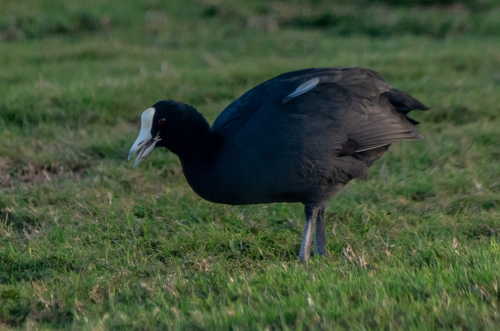
The Hawaiian Coot, locally known as the 'alae ke'oke'o, is a fascinating waterbird endemic to the Hawaiian Islands. Often seen bobbing its head as it swims across freshwater ponds and coastal marshes, this resilient species is a key member of Hawaii's native wetland ecosystems. Although it resembles its mainland relative, the American Coot, the Hawaiian Coot is a distinct species with unique behaviors adapted to its isolated island home. These birds are highly opportunistic and incredibly territorial, especially during the nesting season when they will aggressively defend their territory from other waterbirds. Observing them is a treat for birdwatchers, as they exhibit lively social dynamics, splashing, calling, and skittering across the water's surface to establish dominance. Their presence serves as an important indicator of wetland health in Hawaii.
Habitat: Found in coastal wetlands, freshwater marshes, taro patches, and open ponds across the Hawaiian Islands.
The Hawaiian Coot is a medium-sized waterbird characterized by its dark slate-grey to charcoal body, which contrasts sharply with its bright white bill and large, prominent white frontal shield on its forehead. Some individuals may display a faint reddish spot at the top of the frontal shield. They have short, white undertail coverts that are highly visible when they swim or tilt forward. Instead of webbed feet, they possess large, lobed toes colored pale greenish-grey, which aid in both swimming and walking over soft mud. Adults typically measure 33 to 41 centimeters in length with a compact, oval body.
Category
BirdsRarity
Common
Danger
1/5 · Very low
Snaps
Be the first to snap!
In Hawaiian mythology, the 'alae coot was believed to hold the secret of fire, which it reluctantly shared with the demigod Maui, resulting in the white mark on its forehead.
They are known to build floating nests out of aquatic vegetation, which can rise and fall with changing water levels to prevent flooding of their eggs.
Unlike ducks, Hawaiian Coots do not have webbed feet; instead, they have large, leaf-like lobes on their toes that help them swim and walk on mud.
Large, independent lobes on their toes fold back as the foot is pulled through the water and open to provide propulsion on the downstroke, allowing efficient swimming.
Despite appearing clumsy on takeoff, they are capable of strong, sustained flight, allowing them to migrate between islands to seek out newly created wetlands.
They utilize aggressive pattering runs across the water surface, flapping their wings and splashing loudly to deter rivals and defend their nesting sites.
The Hawaiian Coot is an opportunistic feeder that consumes a mix of aquatic plants, seeds, and small invertebrates found in the water or mud.
Age differences: Chicks are initially fed a higher proportion of protein-rich insects and small invertebrates by their parents before transitioning to the standard omnivorous adult diet.
Himantopus mexicanus knudseni
Competes for nesting territory and shallow water foraging space in shared wetland habitats.
Urva auropunctata
An introduced predator that preys upon coot eggs, chicks, and occasionally nesting adults.

Nycticorax nycticorax
Preys on young coot chicks in shallow waters.
No trait badges are assigned for this object yet.
No aliases listed yet.
Collections for this object will appear here as more themes are added.
Danger
1/5 · Very low
No special safety notes yet.
Compare the silhouette, bill shape, tail length, wing bars and markings around the eyes. The same small brown bird at your feeder can look quite different in breeding plumage, winter plumage or its first year. Bird Identifier: upload a photo and compare the visible details.
33-41 cm
58-68 cm
0.5-0.9 kg
5-10 years
40 km/h
The Hawaiian Coot is an opportunistic feeder that consumes a mix of aquatic plants, seeds, and small invertebrates found in the water or mud.
Found in coastal wetlands, freshwater marshes, taro patches, and open ponds across the Hawaiian Islands.
Zoom in to split clusters and explore where this object has been snapped.
Recent snaps will appear here as new observations are added.
Hawaii, US
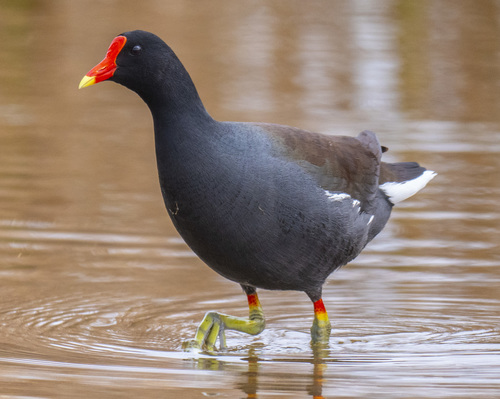
You might spot Common Gallinule and Red-Crested Cardinal.
View guide →

Hawaii, US
You might spot Red Junglefowl, Brown Anole, and Common Gallinule.
View guide →
Take the discovery with you
Snap it with Snappit to identify it, learn what makes it special, and add the discovery to your collection.