





Hemlock Woolly Adelgid
Adelges tsugae
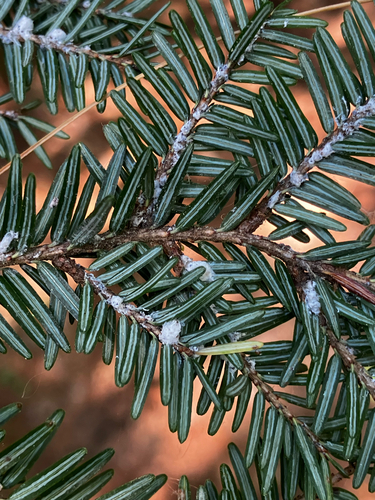
The Hemlock Woolly Adelgid is a tiny bug that loves to live on hemlock trees. It has a fluffy white coating that makes it look like a little cotton ball!
Habitat: Forests
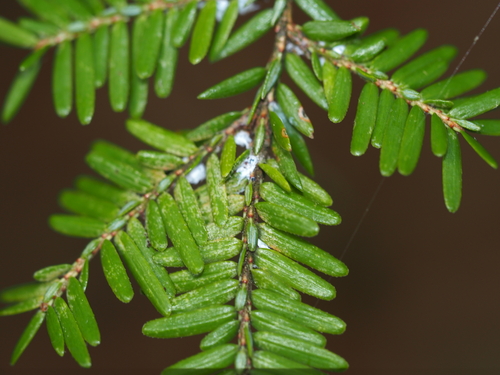
The Hemlock Woolly Adelgid is a tiny, oval-shaped insect covered in a distinctive white, cottony wax that makes it look like a speck of snow. Its reddish-brown body is mostly hidden beneath this fluffy protective coating, making it easy to spot against green hemlock needles.
Category
InsectsRarity
Common
Danger
1/5 · Very low
Snaps
11
Hemlock woolly adelgids don't even need a male to have babies!
They arrived in the US from Japan over 100 years ago!
They lay hundreds of tiny eggs, all hidden under their woolly fluff!
This tiny insect causes huge problems for massive hemlock trees!
Hemlock Woolly Adelgid has a fluffy white wax coating that helps them hide and protects them from predators and harsh weather.
Hemlock Woolly Adelgid can suck vital sap from hemlock trees because of its piercing mouthparts, making trees sick.
Hemlock Woolly Adelgid has a unique reproductive method called parthenogenesis that helps them multiply quickly without a mate.
This tiny bug is a plant-sap feeder, sucking nutrients directly from hemlock tree needles.
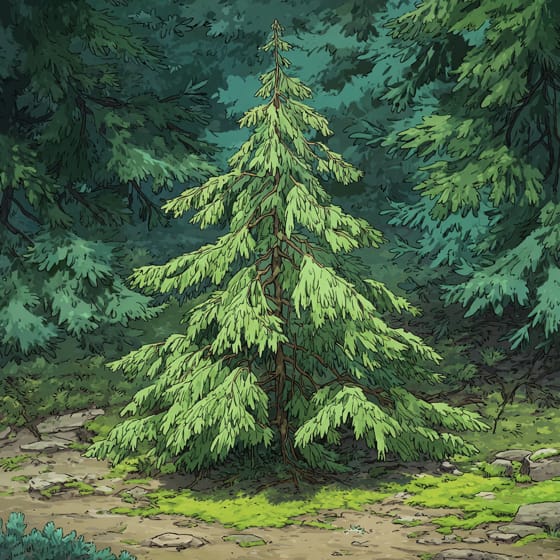
Tsuga canadensis
The primary food source and habitat.
Laricobius nigrinus
This introduced beetle preys specifically on adelgids.
Leucopis argenticollis
Its larvae are important predators of adelgids.
Solitary animals live alone for most of their lives, only interacting with others for mating or parental care.
This trait characterizes organisms whose diet consists entirely or primarily of plant material.
Forest habitats are terrestrial environments dominated by dense tree cover, supporting a high diversity of plant and animal life.
Pertaining to species that are significantly smaller than typical or average for their kind.
This trait describes organisms that live on or in a host organism, obtaining nutrients at the host's expense.
Vampiric organisms are those that obtain nutrients by feeding on the blood or bodily fluids of other animals.

Invasive species are non-native organisms that cause harm to the environment, economy, or human health.

Threatened status denotes a species likely to become endangered in the foreseeable future without effective conservation interventions.
No aliases listed yet.
Danger
1/5 · Very low
It's best to look at these insects from a distance and not touch them.
The easiest way to identify Hemlock Woolly Adelgid is to use the Snappit nature identifier app.
0.5-1.5 mm
60-300 days
This tiny bug is a plant-sap feeder, sucking nutrients directly from hemlock tree needles.
Forests
6
Zoom in to split clusters and explore where this object has been snapped.
Jun 2, 2026
Central Village Historic DistrictPhoto attribution
(c) Bryan Connolly, some rights reserved (CC BY)
License: CC BY 4.0 ↗
Image may be shown cropped inside the card frame.
May 28, 2026
Days Ferry Historic DistrictPhoto attribution
(c) Clay Gibbons, some rights reserved (CC BY)
License: CC BY 4.0 ↗
Image may be shown cropped inside the card frame.

Massachusetts, US
You might spot Mountain Laurel, Azure Bluet, and Partridgeberry.
View guide →

New York, US
You might spot Allegheny Mountain Dusky Salamander.
View guide →

US
You might spot Pink Lady's Slipper and Canada Mayflower.
View guide →

Massachusetts, US
You might spot Hemlock Woolly Adelgid, Eastern Newt, and Red Trillium.
View guide →

New Jersey, US
You might spot Rock Harlequin, Pink Lady's Slipper, and Eastern Hemlock.
View guide →

Connecticut, US
You might spot American Nursery Web Spider and Red-Tailed Hawk.
View guide →
Take the discovery with you
Snap it with Snappit to identify it, learn what makes it special, and add the discovery to your collection.








.jpg&width=800)



