





American Dog Tick
Dermacentor variabilis
The American Dog Tick is a small bug that likes to hang out in grassy areas. It can latch onto animals and people to drink their blood, but it’s important to be careful around them.
Habitat: Grasslands
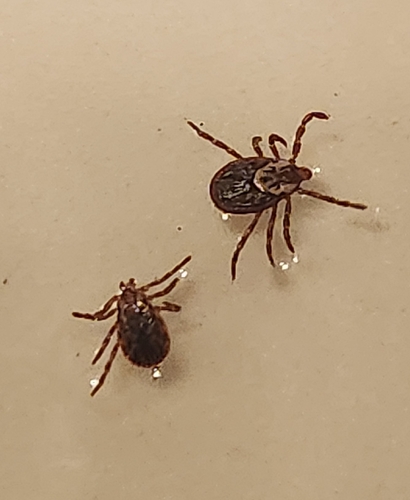
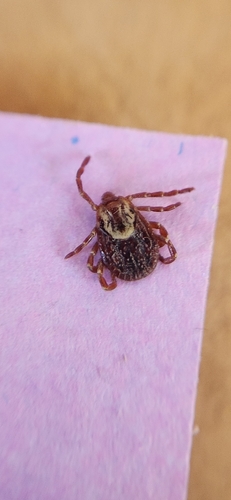
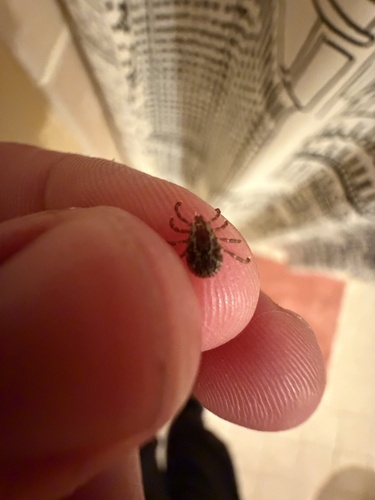
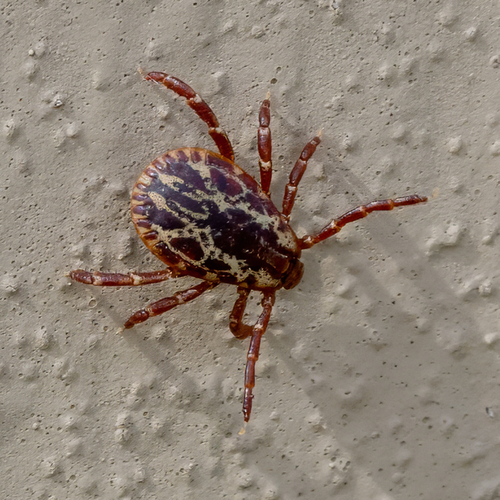
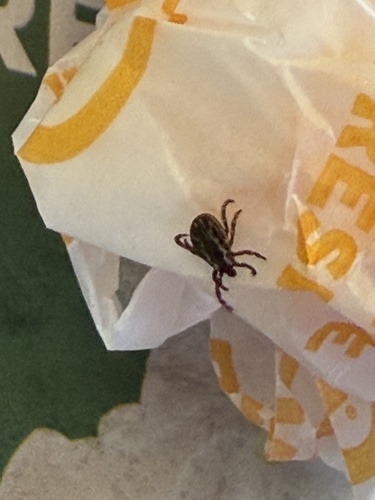
The American Dog Tick is an oval-shaped arachnid, reddish-brown with distinctive white or gray mottled patterns on its back. Males have patterns covering their whole back, while females have a smaller shield behind their head, appearing mostly solid reddish-brown when unfed.
Category
InsectsRarity
Common
Danger
3/5 · Moderate
Snaps
58
A female American Dog Tick can lay thousands of tiny eggs after feeding!
Despite their name, these ticks feed on many mammals, not just dogs!
They can greatly increase their size, sometimes tripling, after a full blood meal!
Ticks are not insects; they are arachnids, related to spiders and scorpions.
American Dog Ticks can detect hosts by sensing carbon dioxide and body heat, helping them find meals on vegetation.
American Dog Ticks have barbed mouthparts that anchor them firmly into a host's skin, making them very hard to remove.
American Dog Ticks have special saliva that prevents blood from clotting and numbs the bite area, helping them feed for days unnoticed.
American Dog Ticks can survive long periods, sometimes over a year, without a blood meal by slowing down their metabolism.
These tiny arachnids are parasitic, feeding on the blood of various mammals.
Age differences: Larvae and nymphs feed on smaller hosts like rodents, while adults feed on larger mammals.
Canis familiaris
Feeds on dog blood, potentially transmitting diseases.

Homo sapiens
Bites humans, potentially transmitting harmful pathogens.
Didelphis virginiana
Attaches to opossums, which may reduce tick populations.

Peromyscus leucopus
Larvae/nymphs feed on small rodents like mice.
Solitary animals live alone for most of their lives, only interacting with others for mating or parental care.
Grassland habitats are terrestrial biomes dominated by grasses and herbaceous plants, supporting a variety of grazing animals.
Pertaining to species that are significantly smaller than typical or average for their kind.
This trait identifies organisms that exhibit exceptional swiftness in movement for hunting, escape, or travel.
This trait describes organisms that live on or in a host organism, obtaining nutrients at the host's expense.
No aliases listed yet.
Danger
3/5 · Moderate
Always check for ticks after playing outside, especially in tall grass.
The easiest way to identify American Dog Tick is to use the Snappit nature identifier app.
3-5 mm
365-730 days
These tiny arachnids are parasitic, feeding on the blood of various mammals.
Grasslands
Ambush
8
Zoom in to split clusters and explore where this object has been snapped.
Jun 14, 2026
Wellfleet Bay Wildlife SanctuaryPhoto attribution
(c) Natasha Haggard, some rights reserved (CC BY)
License: CC BY 4.0 ↗
Image may be shown cropped inside the card frame.
Jun 4, 2026
Busse WoodsPhoto attribution
(c) Chris, some rights reserved (CC BY-SA)
License: CC BY-SA 4.0 ↗
Image may be shown cropped inside the card frame.
Jun 1, 2026
Lauritzen GardensPhoto attribution
no rights reserved
License: CC0 1.0 ↗
Image may be shown cropped inside the card frame.
May 18, 2026
International Crane FoundationPhoto attribution
(c) Dan Vickers, some rights reserved (CC BY)
License: CC BY 4.0 ↗
Image may be shown cropped inside the card frame.
Apr 8, 2026
Howard County CourthousePhoto attribution
no rights reserved
License: CC0 1.0 ↗
Image may be shown cropped inside the card frame.

New York, US
You might spot Sundial Lupine, Spotted Horsemint, and New Jersey Tea.
View guide →

Virginia, US
You might spot Cope's Gray Tree Frog and Basilica Orbweaver.
View guide →

Michigan, US
You might spot Eastern Gray Squirrel, Tree-Of-Heaven, and House Sparrow.
View guide →

Rhode Island, US
You might spot Rugosa Rose and American Herring Gull.
View guide →

Michigan, US
You might spot Monarch, Canada Goose, and Eastern Gray Squirrel.
View guide →

Michigan, US
You might spot Monarch, Canada Goose, and Eastern Gray Squirrel.
View guide →
Take the discovery with you
Snap it with Snappit to identify it, learn what makes it special, and add the discovery to your collection.









.jpg&width=800)




